

How to Get Value from a Data Protection Conference

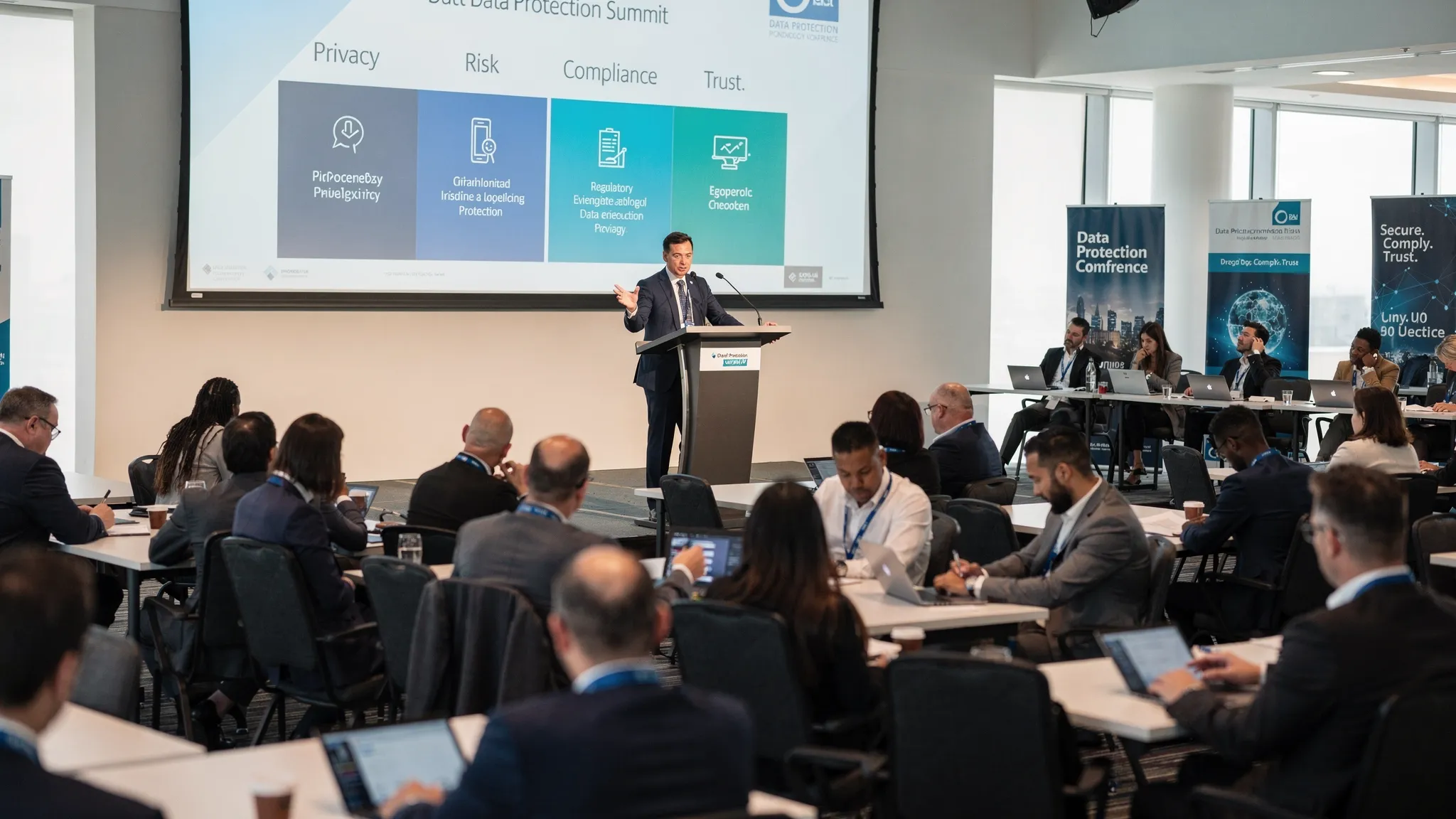
A data protection conference can be one of the fastest ways to level up your privacy programme, but only if you treat it like a work project, not a calendar item. Too many teams attend, take a few photos, collect a stack of slides, then return to business as usual. The real value shows up when conference learning turns into better decisions, better evidence, and better outcomes for customers, employees, and the organisation.
Below is a practical, Jamaica-friendly playbook for getting measurable value from a data protection conference, whether you are attending locally, travelling, or joining virtually.
Start by defining what “value” looks like for your organisation
Before you pick sessions or book flights, decide what success means for your role and your organisation. In governance, risk, and compliance (GRC), “value” is usually one (or more) of these outcomes:
Compliance progress: clearer policies, better records of processing, stronger vendor contracts, or a more workable rights-handling process aligned to the Jamaica Data Protection Act.
Risk reduction: fewer high-risk processing activities, better retention discipline, improved access control, or better incident readiness.
Operational efficiency: shorter response times for access requests, fewer manual steps, better handoffs between HR, IT, Legal, and Customer Service.
Capability building: training materials you can reuse internally, updated awareness messages, or improved confidence across managers.
Decision support: evidence to justify budget, tooling, or headcount.
If you want a simple way to frame it, choose one “primary win” and two “secondary wins”. For example:
Primary win: strengthen incident readiness and breach response.
Secondary wins: improve vendor due diligence and refresh retention practices.
That focus will keep you from attending interesting sessions that do not move your programme forward.
Choose sessions based on your real gaps (not what sounds trendy)
Most agendas mix strategy, legal updates, cyber security, AI governance, and product/vendor showcases. Your job is to map sessions to your current gaps.
If your organisation is still building fundamentals, prioritise sessions on:
data mapping and records of processing
transparency and privacy notices
rights requests workflows (access, correction, erasure where applicable)
retention and disposal governance
vendor management and cross-border data considerations
If your organisation is more mature, prioritise sessions on:
privacy engineering and privacy by design
measurement and assurance (testing, KPIs, internal audit readiness)
incident simulations and crisis communications
AI use cases, DPIAs, and model governance
If you need a baseline to compare your current posture, PLMC’s practical resources can help you identify gaps before you attend, so you know exactly what to listen for at sessions:
Prepare like an auditor: go in with questions, not just curiosity
A high-value conference plan includes a short list of questions you need answered. These questions should be tied to deliverables back at work.
Examples of useful questions to bring:
“What evidence do regulators or auditors typically expect for this control?”
“What failure points cause rights requests to slip past deadlines?”
“How are teams documenting legitimate interests or consent in practice?”
“What is a realistic retention schedule rollout plan for a medium-sized organisation?”
“What does ‘good’ vendor due diligence look like when you use cloud services?”
Also prepare a one-paragraph summary of your context. You will use it repeatedly in conversations:
what sector you are in (financial services, healthcare, retail, education, public sector)
your role (DPO, compliance, IT security, HR, operations)
your top two pain points
what you are trying to implement in the next 90 days
That short intro makes networking and vendor discussions far more productive.
Use a simple capture method that converts learning into action
Most people take notes in a way that is impossible to apply later. Use a structure that forces the “so what?”
Create a note template with three fields:
Insight: the key point or practice you learned.
Impact: why it matters for your organisation (risk, compliance, cost, reputation).
Next step: the action you will take, including an owner and timeframe.
This approach does two things: it reduces “conference fog”, and it produces the beginnings of your post-conference action plan.
A practical pre, during, and post plan
Stage | Your goal | What to do | Output you should leave with |
Before | Attend with focus | Pick 4 to 6 sessions tied to your gaps; book 3 to 5 meetings with peers or vendors; draft your question list | Personal agenda + questions + meeting schedule |
During | Capture evidence and decisions | Use the Insight/Impact/Next step template; collect references and artifacts; confirm follow-up contacts | Actionable notes + artifacts + named contacts |
After (within 72 hours) | Turn learning into deliverables | Debrief internally; prioritise actions; assign owners; update your risk register and compliance plan | 30/60/90-day plan + updated risk and compliance backlog |
Network with purpose (and make it easy to follow up)
The highest ROI from a data protection conference often comes from people, not sessions. A ten-minute conversation can save you weeks of trial and error.
A practical networking goal is to leave with:
3 peers in similar roles (for ongoing benchmarking)
2 subject-matter experts (for “how did you solve this?” questions)
1 to 2 local contacts (for Jamaica-specific operational realities)
To make follow-up easy, send a short message within 24 to 48 hours that includes:
what you discussed (one sentence)
the one resource you promised (slide, template name, link)
one proposed next step (a 15-minute call, an email exchange, or sharing a sample policy outline)
Be disciplined with vendors and tools: request proof, not promises
Conferences are full of privacy tech, cyber security services, e-learning platforms, and consulting offers. Treat vendor conversations like structured discovery.
Instead of focusing only on features, ask for:
implementation effort: what internal resources are needed, and what usually slows projects down
evidence outputs: what reports or logs you can export for compliance and assurance
integration realities: how the tool fits with your ticketing system, IAM, HR platform, or case management
data handling: where data is stored, subcontractors used, and how cross-border processing is managed
If you are not ready to buy, you can still extract value by learning how mature teams structure workflows (for example, how they triage rights requests or track retention exceptions).
Attend at least one session outside your lane (but only one)
If you are privacy, attend one security-led session on incident response or identity and access management. If you are cyber security, attend one privacy-led session on lawful processing, rights handling, or accountability. Real-world compliance is cross-functional, and your programme will move faster when teams understand each other’s constraints.
For Jamaican organisations, it is also worth staying grounded in regulator guidance and the direction of travel. Keep the Office of the Information Commissioner (Jamaica) on your reference list as you interpret conference content and adapt it to local expectations.
The 72-hour rule: debrief while it is still fresh
The biggest difference between “nice conference” and “conference that changed our programme” is what happens immediately after.
Within 72 hours, hold a short internal debrief with the stakeholders who will actually implement changes (often privacy, legal, IT, HR, customer operations, and procurement). Keep it practical:
What are the top 5 changes we should make based on what we learned?
What can we implement in 30 days with minimal budget?
What needs leadership buy-in, budget, or policy approval?
What evidence will prove we did it?
Then convert your notes into a 30/60/90-day plan. If you already maintain a risk register or GRC backlog, record each action as a tracked item with an owner.

Measure the value: pick a few metrics you can actually move
Conference ROI is easiest to justify when you can point to outcomes. Choose metrics tied to your “primary win” and report progress after 30 to 90 days.
Here are examples that work for many organisations:
Outcome area | Metric you can track | What “better” looks like |
Rights handling | Average time to acknowledge and fulfil requests | Fewer delays, clearer ownership, fewer escalations |
Training | Completion rate for role-based privacy training | Higher completion and fewer repeat errors |
Vendor governance | % of high-risk vendors assessed or updated | Reduced unknowns, clearer contract terms |
Retention | % of high-risk datasets with defined retention and disposal | Less stored data, fewer exceptions |
Incident readiness | Tabletop exercise results and time to initial containment steps | Faster coordination, clearer communications |
If you need a framework for organising privacy work and measurement, the NIST Privacy Framework can be a helpful reference for structuring outcomes and controls without turning your programme into paperwork.
Common ways teams waste a conference (and how to avoid them)
A few patterns consistently reduce ROI:
No pre-work: you attend without knowing your gaps, so you collect ideas instead of solutions.
No artifacts: you leave without templates, references, or examples you can adapt.
No internal ownership: you return with insights but nobody is accountable to implement them.
Chasing shiny objects: you focus on tools before fixing process and governance basics.
No leadership translation: you cannot explain to executives how the learning reduces risk or supports strategic goals.
Avoiding these is less about effort and more about discipline.
Turn conference momentum into a stronger privacy programme
If your organisation is working toward stronger compliance and operational privacy in Jamaica, the conference should feed directly into implementation: updated policies, better workflows, improved training, and clearer risk decisions.
When you want support turning conference learning into action, PLMC can help you plan and execute the next steps through data protection implementation, GRC integration, cyber security services, and training sessions. You can also use PLMC resources to align your internal plan to practical requirements under the Act, including:
To explore what a realistic post-conference 30/60/90-day implementation plan could look like for your organisation, start at Privacy & Legal Management Consultants Ltd..