
What to Expect From a Privacy Summit in 2026
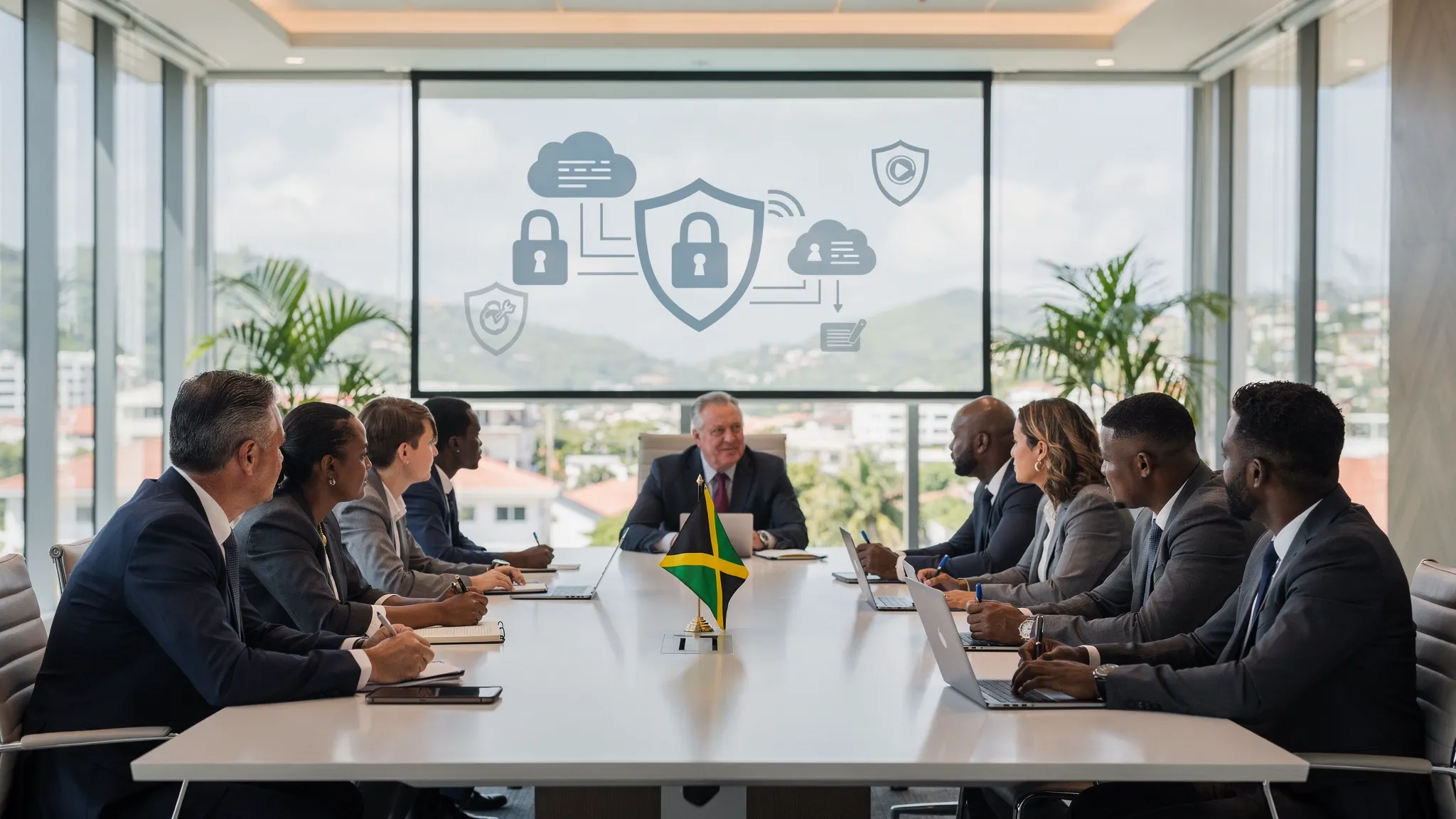
A privacy summit in 2026 should be more than a room full of presentations. For Jamaican organisations, it should be a practical forum for understanding how privacy, cyber security, governance, risk, compliance, and digital transformation now connect.
The organisations that gain the most from a privacy summit are not just looking for inspiration. They arrive with real questions: Are our data protection practices defensible? Are we ready for a breach? Can we explain how we use customer, employee, patient, student, or client data? Do our vendors and cloud providers meet the standards we are accountable for?
As Jamaica’s privacy landscape continues to mature under the Data Protection Act, 2020, privacy events in 2026 are likely to focus less on basic awareness and more on implementation, evidence, accountability, and resilience.
Why privacy summits matter more in 2026
Privacy is no longer a narrow legal issue. It affects customer trust, cyber security readiness, procurement decisions, board oversight, employee training, artificial intelligence, marketing, HR, and cross-border business operations.
In Jamaica, organisations must understand and operationalise their obligations under the Data Protection Act. Guidance from the Office of the Information Commissioner is especially important for organisations seeking to understand regulatory expectations, registration requirements, and accountability obligations.
At the same time, international developments continue to influence local risk. Many Jamaican businesses use global cloud platforms, serve overseas customers, process payment data, outsource functions, or share information with regional and international partners. That means privacy teams must understand both local legal requirements and broader global expectations.
A well-designed privacy summit helps participants connect these moving parts. It gives legal, compliance, IT, HR, marketing, audit, and executive teams a shared language for managing privacy risk.
Key themes to expect at a privacy summit in 2026
While each summit will have its own agenda, several themes are likely to dominate serious privacy conversations in 2026.
1. Moving from policy to proof
Many organisations now have privacy notices, policies, and consent wording. The next challenge is proving that those documents reflect real operational practice.
Expect sessions to focus on evidence: data inventories, processing records, risk assessments, training logs, vendor due diligence, incident response records, access controls, retention schedules, and board reports. Regulators, auditors, customers, and business partners increasingly want to see that privacy is embedded in the organisation, not stored in a folder and forgotten.
For organisations still building their foundation, PLMC’s guide to Jamaica’s Data Protection Act explained for businesses is a useful starting point before attending a summit.
2. AI governance and automated decision-making
Artificial intelligence is one of the biggest reasons privacy discussions are changing. Organisations are using AI for customer service, fraud detection, recruitment screening, analytics, productivity, marketing, and security monitoring. These tools may involve personal data, sensitive data, profiling, or automated recommendations.
A privacy summit in 2026 should help leaders ask better questions about AI: What data was used to train or operate the system? Is the output explainable? Can individuals challenge decisions? Are human reviews required? Are there risks of bias, unfairness, or excessive surveillance?
The NIST AI Risk Management Framework is one useful reference point for organisations seeking a structured approach to AI risk. It reinforces a message that privacy professionals already understand: innovation must be governed, documented, and monitored.
3. Cyber security as a privacy obligation
Privacy and cyber security can no longer be separated. If personal data is exposed through weak access controls, poor vendor security, phishing, ransomware, or misconfigured systems, the issue is both a security incident and a privacy risk.
Expect summit sessions to address breach readiness, incident response planning, tabletop exercises, cyber insurance, identity and access management, encryption, logging, monitoring, and third-party risk.
The NIST Cybersecurity Framework 2.0 places governance at the centre of cyber risk management. That aligns closely with privacy compliance, because organisations must not only implement controls but also assign responsibility, monitor performance, and report risk to leadership.
4. Vendor, outsourcing, and cloud risk
Few organisations process all personal data internally. Payroll providers, software platforms, cloud hosting services, marketing tools, payment processors, consultants, and managed IT providers may all handle personal data on behalf of a business.
A strong privacy summit should include practical discussion on vendor due diligence, contractual clauses, audit rights, data transfer arrangements, breach notification obligations, data deletion, and the difference between a data controller and a data processor.
This topic is especially important for small and medium-sized businesses, which often rely heavily on external platforms but may not have reviewed the privacy implications of those relationships.
5. Privacy culture and staff training
Technology and policies cannot protect personal data if people do not understand their responsibilities. In 2026, expect summit speakers to place greater emphasis on culture, role-based training, and leadership accountability.
A privacy-aware organisation does not depend only on the legal department or the IT team. Front desk staff, HR officers, finance teams, sales teams, managers, board members, and customer service representatives all make decisions that affect personal data.
The best privacy training is practical. It uses real scenarios, such as misdirected emails, access requests, social engineering attempts, employee records, CCTV use, customer complaints, and document retention.
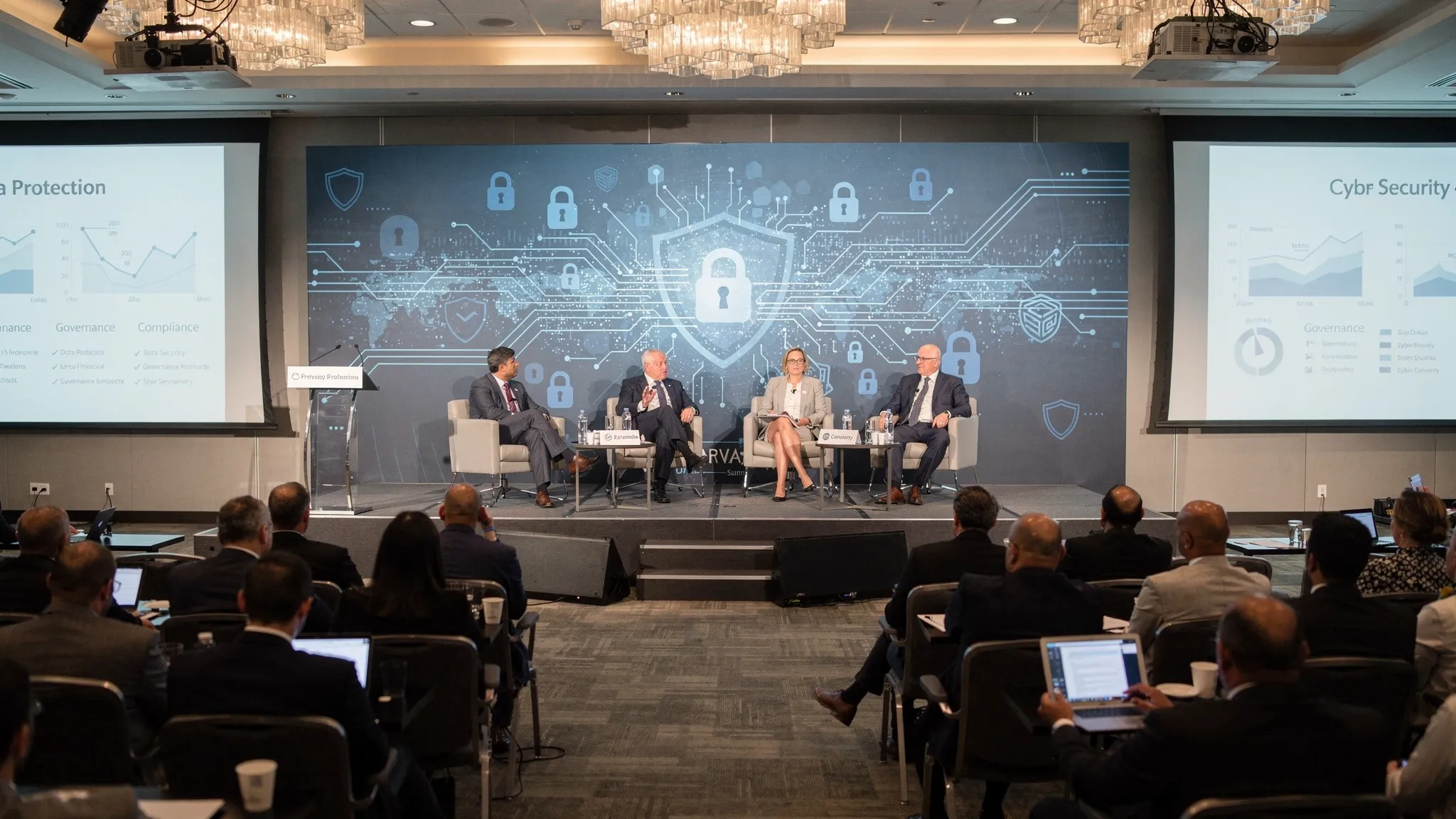
Privacy summit topics and what to listen for
A summit agenda can look impressive, but attendees should evaluate whether sessions produce practical takeaways. The table below highlights common topics and what Jamaican organisations should listen for.
Summit topic | Why it matters | What to listen for |
Data protection implementation | Policies must become daily practice | Evidence, ownership, workflows, monitoring, and reporting |
AI and analytics | New tools can create privacy, fairness, and transparency risks | Governance, human review, data minimisation, and explainability |
Cyber security and breach response | Security failures can become privacy incidents | Incident plans, breach roles, testing, and communication protocols |
Vendor management | Organisations remain accountable for outsourced processing | Due diligence, contracts, transfer controls, and exit procedures |
Board and executive oversight | Privacy risk is a governance issue | Metrics, risk appetite, escalation, and accountability structures |
Staff awareness | Human error remains a major source of privacy risk | Role-based training, refreshers, and practical scenarios |
Who should attend a privacy summit?
Privacy summits are not only for lawyers or data protection officers. The most valuable delegations are often cross-functional, because privacy decisions sit across departments.
Organisations should consider participation from:
Legal, compliance, and governance teams responsible for interpreting obligations and maintaining accountability.
IT and cyber security teams responsible for technical controls, system access, monitoring, and incident response.
HR teams that process sensitive employee information and manage workplace privacy issues.
Marketing and customer experience teams that collect consent, manage communications, and analyse customer behaviour.
Procurement and vendor management teams that review contracts and third-party risk.
Executives, directors, and senior managers who need visibility into privacy risk and resource requirements.
For smaller organisations, one person may wear several of these hats. That makes attendance even more valuable, provided the participant returns with an action plan and leadership support.
What a useful summit agenda should include
A privacy summit can quickly become too theoretical if it focuses only on high-level principles. Good events balance strategy with implementation.
Look for agendas that include regulatory updates, practical workshops, sector-specific case studies, panel discussions, technology demonstrations, and opportunities to ask questions. The best sessions show how an organisation can move from “we know we need to comply” to “we have assigned owners, controls, evidence, and a review cycle.”
Workshops are particularly valuable because they help participants test their own readiness. A workshop on data mapping, for example, can reveal that a business does not fully understand where customer data is stored. A breach simulation can expose confusion about who approves notifications, who speaks to customers, and who contacts regulators.
Networking also matters. Privacy professionals often learn as much from peers as from formal presentations. Hearing how another Jamaican organisation handled staff training, vendor review, or board reporting can help teams avoid common mistakes.
How to prepare before attending
To get real value from a privacy summit, prepare before you arrive. Do not wait for the event to define your priorities.
Start by reviewing your organisation’s current privacy position. Identify the main personal data you collect, the systems that store it, the vendors that process it, and the policies or procedures already in place. If your organisation has not yet completed a structured privacy review, PLMC’s privacy and data protection practical checklist can help you identify key areas to assess.
It is also useful to bring three priority questions. These should be specific to your organisation rather than generic. For example, a school may ask about student records and parent communications, while a financial services firm may focus on fraud monitoring, AML compliance, and customer due diligence.
Before the summit, brief your team on what you want to learn. After the summit, schedule a debrief immediately. Valuable insights are often lost because attendees return to busy schedules without translating notes into assigned actions.
Questions to ask speakers, vendors, and panellists
A privacy summit is an opportunity to ask practical questions that may not be answered in formal guidance. Consider asking:
What privacy evidence should a Jamaican organisation prioritise first if it has limited resources?
How should organisations document decisions about lawful processing, retention, and data sharing?
What are the most common weaknesses seen in privacy programmes?
How should privacy teams evaluate AI tools before allowing staff to use them?
What should be included in a vendor privacy and security review?
How often should breach response plans and staff training be tested?
What privacy metrics are useful for boards and senior management?
Good answers should be practical, risk-based, and proportionate. Be cautious of advice that sounds like a one-size-fits-all checklist without considering sector, data sensitivity, organisational size, and processing activities.
Turning summit insights into action
The real test of a privacy summit begins after the event. A notebook full of ideas does not reduce risk unless the organisation converts those ideas into implementation.
A simple 30, 60, and 90-day plan can help convert learning into progress.
Timeline | Focus | Practical outcome |
First 30 days | Debrief and prioritise | Share key lessons, identify gaps, assign owners, and agree quick wins |
Days 31 to 60 | Build or improve controls | Update policies, review vendors, refine training, and document workflows |
Days 61 to 90 | Test and report | Run a tabletop exercise, review evidence, and prepare a management update |
The goal is not to fix everything at once. The goal is to create momentum, demonstrate accountability, and build a repeatable privacy programme.
For organisations planning their next stage of compliance work, PLMC’s Data Protection Jamaica compliance roadmap for 2026 offers a structured way to think about quarterly priorities.
What to watch for in 2026 and beyond
Privacy expectations will continue to grow. In 2026, organisations should pay close attention to several developments.
AI governance will become more important as staff adopt new tools, sometimes without formal approval. Boards will expect clearer reporting on privacy and cyber risk. Customers will become more aware of their rights and more willing to ask how their data is used. Regulators and business partners will continue to expect documentation, not informal assurances.
Organisations should also expect more convergence between privacy, cyber security, corporate governance, and anti-money laundering compliance. These areas often use overlapping controls: identity verification, access management, monitoring, due diligence, recordkeeping, training, escalation, and audit trails.
That is why a privacy summit in 2026 should not be treated as a one-day learning event. It should be treated as part of a wider governance, risk, and compliance journey.
Frequently Asked Questions
What is a privacy summit? A privacy summit is a conference or professional event focused on data protection, privacy law, cyber security, governance, risk, compliance, and responsible data use. It may include keynotes, panels, workshops, case studies, and networking.
Who should attend a privacy summit in 2026? Privacy officers, compliance professionals, legal teams, IT and cyber security leaders, HR teams, procurement teams, executives, directors, and business owners can all benefit. Privacy affects multiple departments, so cross-functional participation is ideal.
How can Jamaican organisations benefit from a privacy summit? Jamaican organisations can gain practical insight into Data Protection Act compliance, vendor risk, breach readiness, staff training, AI governance, and board reporting. The value increases when attendees convert lessons into a post-event action plan.
Should small businesses attend privacy events? Yes. Small businesses often process customer, employee, financial, or health-related information but may lack dedicated privacy teams. A summit can help them prioritise the most important controls and avoid common compliance gaps.
What should I do after attending a privacy summit? Hold a debrief, identify the most urgent gaps, assign owners, update your documentation, test your incident response process, and report progress to management. The summit should lead to measurable improvements.
Build a stronger privacy programme after the summit
A privacy summit can clarify the risks, but implementation still requires structure, evidence, and accountability.
Privacy & Legal Management Consultants Ltd. supports organisations in Jamaica with data protection implementation, corporate governance, anti-money laundering compliance, cyber security services, GRC integration, training sessions, risk assessment tools, educational resources, and free consultations.
If your organisation wants to turn privacy summit insights into a practical compliance plan, contact PLMC to discuss your next steps.