
Purpose of Data Protection Act: Why It Exists and Who It Helps

Data protection laws are not just a “legal requirement” that arrived with the rise of technology. They exist because personal information can be used to harm people, undermine trust in institutions, and create real financial and reputational risk for organisations.
In Jamaica, the Data Protection Act is designed to set clear rules for how personal data is collected, used, shared, stored, and secured. When those rules are followed, everyone benefits: individuals gain meaningful privacy safeguards, and organisations gain the trust and operational discipline needed to compete in a digital economy.
What is the purpose of a Data Protection Act?
At its core, the purpose of a Data Protection Act is to protect people from the misuse of their personal information while still allowing legitimate, beneficial use of data (for example, providing healthcare, delivering services, preventing fraud, paying salaries, or fulfilling contracts).
Most modern data protection laws are built around a few practical outcomes:
Fairness and transparency: People should understand what is happening to their information.
Limits on use: Data collected for one reason should not quietly be repurposed for another.
Security and confidentiality: Organisations should implement reasonable safeguards to prevent unauthorised access, leaks, and loss.
Accountability: Organisations should be able to prove what they are doing, why they are doing it, and how they are controlling risk.
These outcomes align closely with well-established international privacy frameworks such as the OECD Privacy Guidelines, which have shaped privacy regulation globally.
Why data protection laws exist (the real-world problems they address)
A strong privacy law is a response to predictable harms that occur when personal data is left unmanaged.
1) Identity theft and fraud
When personal data is over-collected, poorly secured, or shared carelessly, it can be used for account takeovers, SIM swap scams, unauthorised credit applications, or social engineering. Data protection requirements push organisations to collect less, secure more, and keep proof of good practices.
2) Discrimination and unfair treatment
Personal data can reveal or suggest sensitive attributes (health status, family situation, financial distress, location patterns). Without guardrails, this can lead to unequal treatment in lending, employment, insurance, housing, and access to services.
3) Loss of dignity and personal autonomy
Privacy is not only about secrecy. It is also about control and dignity. People should be able to decide when and how their information is used, especially in contexts like healthcare, education, employment, and public services.
4) Erosion of trust in institutions and the digital economy
If customers, employees, and citizens assume their information will be mishandled, they share less, engage less, and resist digitisation. Good data governance is a competitive advantage, especially for organisations building online services or using cloud platforms.
Who the Data Protection Act helps (and how)
The Data Protection Act is often described as “compliance.” In practice, it is a trust framework that supports multiple stakeholder groups.
Who it helps | What they gain | What it looks like in practice |
Individuals (customers, patients, employees, students) | More control, fewer harms, clearer rights | Better notices, access to their data, corrections where needed, safer handling of sensitive information |
Organisations (private sector and non-profits) | Reduced risk, stronger trust, better governance | Clear processes, defined responsibilities, tighter security, documented decisions |
Government and public bodies | Increased legitimacy and confidence in services | Better data handling in service delivery, fewer scandals, improved public trust |
The wider economy | Increased confidence in digital and cross-border business | More secure vendor relationships, improved reputation, more sustainable digital growth |
What “personal data” protection is trying to achieve
Data protection is sometimes misunderstood as “stop collecting information.” That is not the intent.
The goal is to ensure personal data is handled in a way that is:
Necessary (not excessive)
Legitimate (based on a clear reason)
Transparent (people are not surprised later)
Secure (protected from known threats)
Governed (someone is responsible, and evidence exists)
This is why privacy programmes are as much about operations as they are about legal interpretation.
Why the Act matters specifically in Jamaica
Jamaican organisations handle high volumes of personal data across payroll, banking, remittances, telecoms, e-commerce, education, healthcare, hospitality, and government services.
As digital services expand, common pressure points include:
Vendor and outsourcing risk (especially when using overseas platforms or cloud providers)
Cyber security incidents that expose customer and employee data
Informal data sharing (for example, sending spreadsheets, screenshots, or ID documents via chat)
Retention creep where files are kept “just in case” with no schedule
The Data Protection Act helps by establishing a consistent baseline for what good looks like, so privacy is not dependent on individual discretion.
If you want a practical grounding in the concepts behind the law (without turning it into a legal textbook), see Data Privacy in Jamaica: Key Principles and Rights.
The Act protects people, but it also protects organisations
Many leadership teams view privacy law as a one-sided burden. In reality, it can protect organisations in at least four ways.
1) Clear rules reduce internal confusion
Without a standard, teams improvise. Marketing creates its own contact lists, HR stores sensitive files in ad-hoc folders, and vendors are onboarded without consistent checks. A data protection framework reduces this variability.
2) Stronger incident readiness
Data breaches are not only a technical failure. They are also a governance failure (unclear ownership, poor access controls, no retention discipline, weak vendor oversight). Privacy programmes help build the organisational muscle to prevent incidents and respond credibly.
3) Better customer relationships
Transparent privacy notices, respectful consent practices, and well-run rights processes are visible signals of professionalism. In competitive sectors, that trust matters.
4) Reduced downstream costs
When data is minimised and well-governed, it is cheaper to secure, easier to search, simpler to delete, and less risky to share.
How the Act helps employees as much as customers
A common blind spot is that privacy compliance is not only about “customer data.” Employees are data subjects too.
The purpose of the Act includes guarding against:
Over-collection during recruitment (for example, requesting sensitive details too early)
Uncontrolled sharing of performance, disciplinary, or medical information
Poor access management to HR files
Indefinite retention of old records
When HR data is handled properly, organisations reduce workplace conflict, improve morale, and lower legal exposure.
Why “purpose” is a key idea (not just a slogan)
One of the most important privacy concepts in any data protection regime is purpose.
Put simply: organisations should be able to answer two questions at any time:
Why do we need this data?
What exactly will we do with it?
When a team cannot answer those questions clearly, the organisation is more likely to:
Collect excessive data
Reuse data in ways people would not expect
Keep data longer than needed
Struggle to respond to access requests
Experience preventable security incidents
If you need a structured way to assess these gaps, PLMC has a practical, evidence-based guide here: Privacy and Data Protection: A Practical Checklist.
What good looks like: privacy as governance, not paperwork
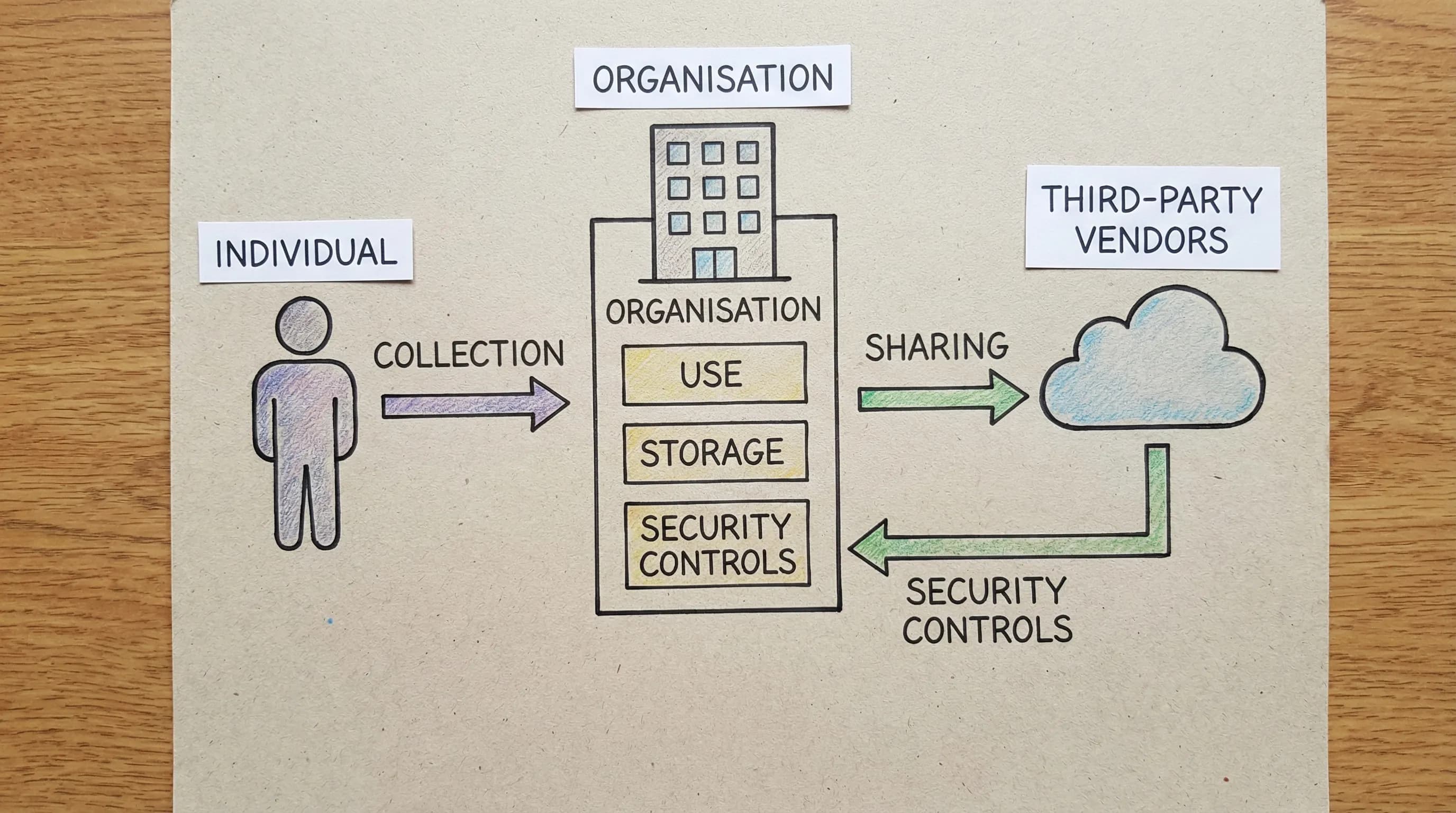
A strong privacy programme is not only a policy folder. It is a working system that connects legal obligations to day-to-day decisions.
For many organisations, “good” includes:
Clear ownership (who is accountable for privacy decisions)
A current data inventory (what data you have, where it lives, who can access it)
Controlled sharing with vendors (contracts, due diligence, defined roles)
A practical retention approach (keep what you need, delete what you do not)
Training that matches job roles (HR, customer service, IT, marketing, procurement)
Regular risk reviews (especially for new systems, apps, and data uses)
For a time-based implementation approach tailored to current realities, see Data Protection Jamaica: Compliance Roadmap for 2026.
Frequently Asked Questions
What is the main purpose of the Data Protection Act? The main purpose is to protect individuals by setting rules for fair, transparent, secure, and accountable handling of personal data, while allowing legitimate use of data for services and operations.
Who benefits from the Data Protection Act in Jamaica? Individuals benefit through stronger privacy protections and clearer rights, while organisations benefit through better governance, reduced incident risk, improved trust, and more consistent data handling practices.
Is the Data Protection Act only about cyber security? No. Cyber security is part of the picture, but data protection also covers lawful and fair collection, transparency, purpose limits, retention, vendor sharing, and how people can exercise their rights.
Does the Act apply only to customer data? No. It also applies to employee data and other personal information an organisation handles (for example, suppliers, applicants, patients, students, members, and website users).
What is the first practical step an organisation should take? Start with understanding what personal data you have and why you have it. A basic data inventory and clear purpose statements make every other compliance activity easier.
Need help turning privacy requirements into a working programme?
Privacy & Legal Management Consultants Ltd. (PLMC) supports Jamaican organisations with data protection implementation, training, risk assessments, and GRC integration. If you want to move beyond policies and build an audit-ready, operational privacy programme, explore PLMC’s resources and request a consultation via Privacy & Legal Management Consultants Ltd..