

A Practical Guide to Privacy Representative Requirements
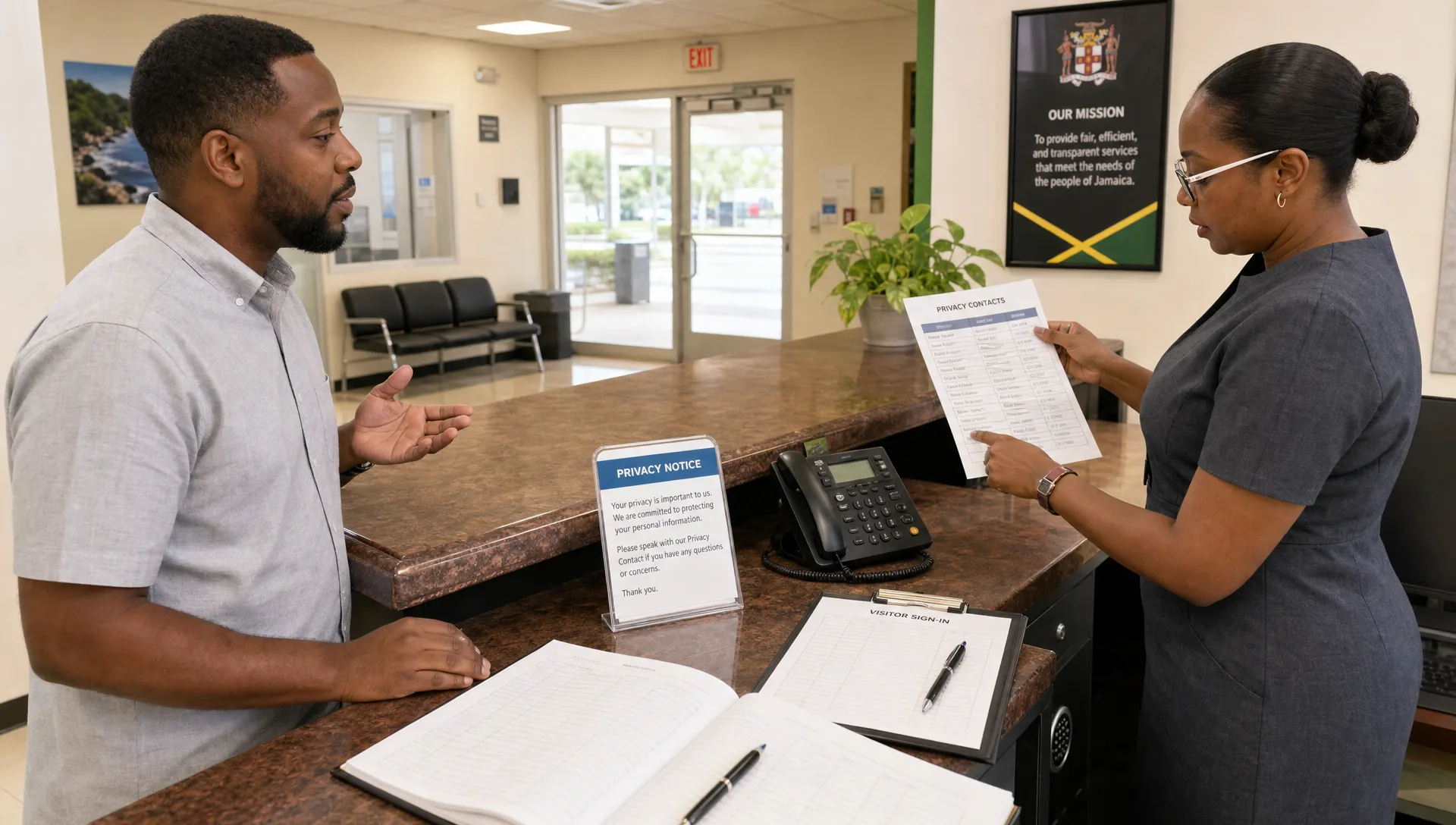
For many Jamaican organisations, privacy work becomes difficult not because the law is impossible to understand, but because no one is clearly appointed to own the day-to-day controls. That is why privacy representative requirements matter: they turn a broad compliance duty into a named role with authority, records and a practical route for responding to people whose personal data you handle.
This guide is for boards, managers, compliance officers, data protection officers and business owners who need a workable approach under Jamaica's Data Protection Act, 2020. It is practical guidance, not a substitute for legal advice on a specific structure, especially if your organisation operates across Jamaica, the United States, the United Kingdom, the European Union or the wider Caribbean.
What privacy representative requirements mean in Jamaica
The phrase privacy representative is used in different ways. In some organisations it refers to an internal privacy lead. In others, it describes a local representative for an organisation that is not physically established in the country where the personal data is being processed. It may also be used in contracts to identify the person authorised to receive notices, coordinate data subject requests or speak with the regulator.
In Jamaica, the starting point is the Data Protection Act, 2020 and the role of the Office of the Information Commissioner, which regulates data protection compliance. The Act focuses on accountability for data controllers and the practical controls needed to process personal data lawfully, fairly and securely.
Term used in practice | Typical purpose | Key compliance point |
Privacy representative | Named contact for privacy matters, often internal or local | Must have clear authority and access to information |
Data protection officer or privacy officer | Oversees privacy compliance and advises the organisation | Needs independence, competence and management support |
Data controller contact | Represents the organisation in notices, requests or contracts | Accountability remains with the controller |
Processor privacy contact | Coordinates processor duties under a service contract | Cannot replace the controller's legal responsibilities |
Once the privacy representative requirements are mapped to your actual business, the next question is not simply who has the title. The better question is whether that person can perform the role in practice, with enough time, authority and evidence to show that privacy obligations are being managed.
When does an organisation need a privacy representative?
A privacy representative is most useful when personal data processing is material to your operations. That includes customer onboarding, employee records, health information, financial services data, school records, marketing databases, surveillance footage, online platforms and vendor managed systems.
For Jamaican entities, appointing a named representative is often part of a broader governance structure, even where the specific title is not the main legal requirement. The organisation still needs a reliable person or team to coordinate privacy notices, consent practices, data subject rights, breach escalation, vendor due diligence and record keeping.
A formal representative may also be relevant where an organisation outside Jamaica has activities that bring it within Jamaican data protection obligations. This should be assessed carefully because cross-border structures can trigger more than one legal regime. For example, a Jamaican firm serving EU residents may need to consider GDPR requirements separately from Jamaican data privacy obligations.
Signs that you should formalise the role include:
You process sensitive or high volume personal data.
You rely on several vendors to store or process data.
You receive regular access, correction or deletion requests.
You operate in a regulated sector such as finance, health, education or telecommunications.
You have overseas affiliates, cloud providers or customers.
A useful way to test privacy representative requirements is to ask what would happen if a regulator, customer or employee made a privacy complaint tomorrow. If no one knows who receives it, who investigates it and who approves the response, the role needs to be clarified.
Core duties the representative should be able to perform
The role should be defined around outcomes, not job titles. A privacy representative must help the organisation demonstrate that personal data is handled in line with lawful purposes, data minimisation, transparency, retention limits, security safeguards and data subject rights.
Serving as the contact point
The representative should be available to receive and route privacy queries from individuals, staff, vendors and management. This does not mean every answer must come from one person. It means there is one accountable coordination point so requests do not sit unanswered in an inbox or get passed between departments.
For example, a customer asking for access to their records may require input from customer service, IT, legal and operations. The representative should know how to gather that information, verify identity, apply the correct deadline and document the decision.
Coordinating operational controls
The representative should also help keep privacy controls alive after policies are approved. A policy that sits in a shared folder is not compliance. The representative should know where personal data is collected, who has access, which vendors are involved, how long records are retained and what happens if data is compromised.
A practical starting point is to run a focused data privacy assessment before finalising the role. That assessment gives the representative a factual view of the organisation's risks instead of relying on assumptions.
Qualifications, authority and independence
A privacy representative does not have to be the most senior person in the organisation, but they must have enough authority to be effective. If the role is assigned to a junior employee with no access to systems, contracts or decision makers, the appointment will not stand up well when a serious issue arises.
The right person usually needs a mix of legal awareness, operational understanding and communication skills. They should understand the Data Protection Act, 2020, the organisation's data flows, sector risks and the difference between routine requests and matters that require escalation.
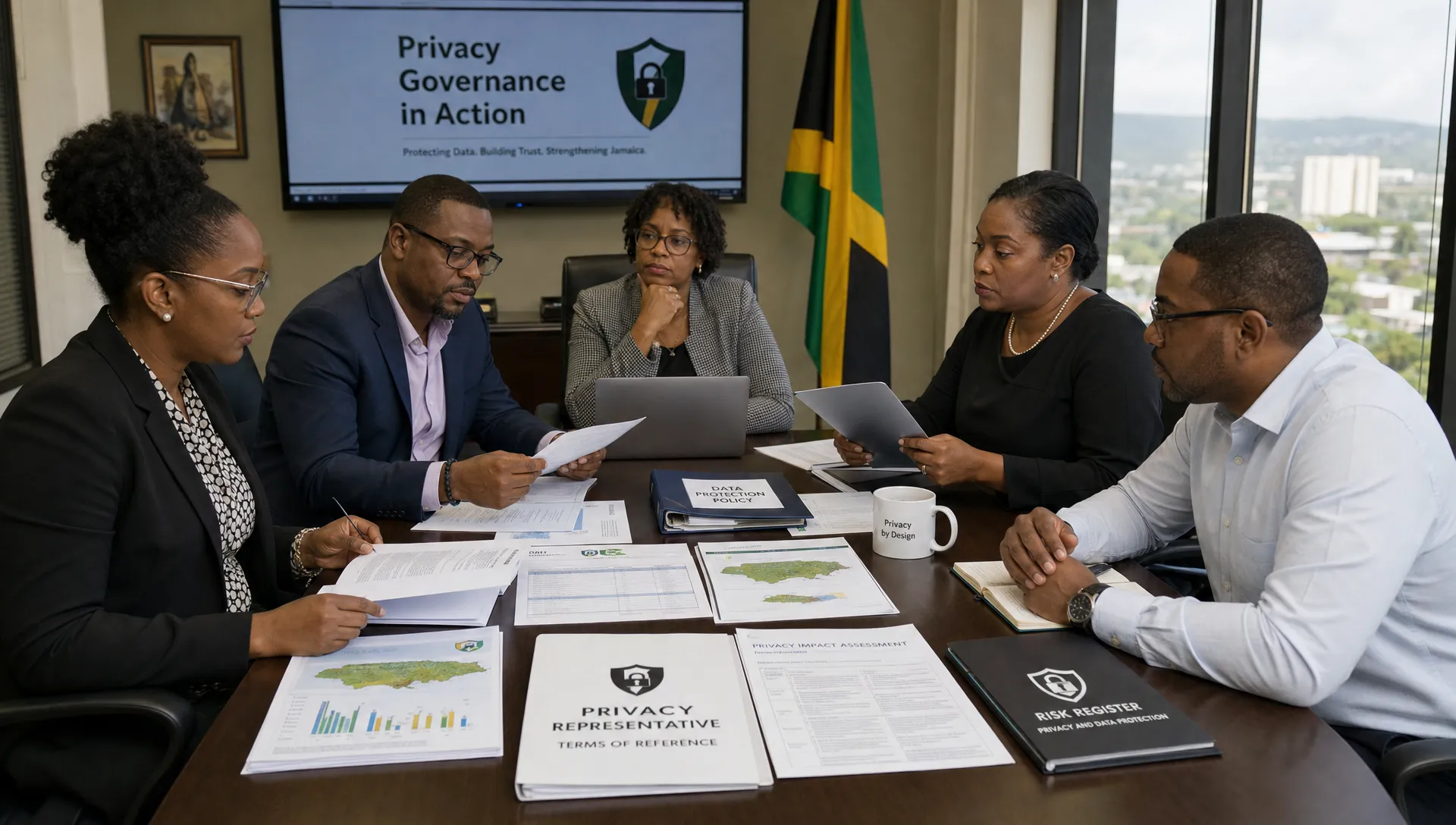
Authority should be documented. The appointment should state what the representative can request, which records they may access, who they report to and when they can escalate directly to senior management or the board. Independence also matters. A person whose performance is measured only by sales growth, for instance, may face conflicts when assessing marketing uses of personal data.
The evidence side of privacy representative requirements is often overlooked. Keep proof of training, appointment letters, role descriptions, minutes of privacy meetings, data subject request logs, breach assessments, vendor reviews and policy approvals. If challenged, the organisation should be able to show what the representative did, not merely that the title existed.
What to include in the appointment document
The appointment document should be short enough to be used and detailed enough to remove doubt. It can be a board resolution, letter of appointment, job description, contract schedule or internal governance note, depending on the organisation's size and risk profile.
At minimum, it should identify the appointed person or service provider, the effective date, reporting line, scope of authority, main duties, access rights, confidentiality obligations, escalation triggers and review date. If the representative is external, the agreement should also deal with availability, secure communications, conflicts of interest and how records will be returned or retained at the end of the engagement.
This document should connect with the wider compliance framework. Your representative cannot operate properly if privacy notices, data protection policies, retention schedules and incident procedures are missing or inconsistent. If those materials are still being developed, use a staged approach and prioritise the documents that support live risks. PLMC has a separate guide on documenting privacy policy and procedures that can help align the appointment with the rest of your evidence file.
How the role fits into governance
Privacy representation should not sit outside corporate governance. It should be linked to board reporting, risk management, internal audit, cybersecurity, vendor management, anti-money laundering controls where relevant and staff training. This is especially important in financial services and other sectors where personal data risks overlap with fraud, customer due diligence and regulatory reporting.
The representative should provide periodic updates to management. These updates do not need to be lengthy, but they should cover practical indicators such as open data subject requests, completed training, unresolved policy gaps, vendor issues, security incidents and upcoming regulatory deadlines.
Outsourcing can satisfy practical privacy representative requirements in some cases, but it does not outsource accountability. If you appoint an external consultant, keep a senior internal sponsor who can make decisions, approve resources and ensure recommendations are implemented. Without that internal owner, even strong external advice may not translate into actual change.
Staff awareness is another governance issue. A representative cannot personally prevent every privacy incident if employees routinely collect unnecessary data, share files casually or ignore retention rules. Frontline teams need simple handling rules for daily work, and this guide on personal information privacy handling rules for staff is a useful companion to the representative role.
Common mistakes to avoid
The most common mistake is appointing someone only because a policy template says the organisation needs a named contact. A name on a page is not enough. The person must understand the role, accept it and have the resources to perform it.
Another mistake is treating privacy as an IT-only issue. Cybersecurity is essential, but privacy also covers lawful basis, transparency, retention, access rights, marketing practices, employee monitoring, vendor contracts and board accountability. The representative should be able to work across departments.
Organisations also create risk when they fail to separate legal responsibility from operational support. A vendor may host your data and help respond to incidents, but the data controller still needs to make key decisions and maintain oversight. Contracts should reflect that distinction clearly.
Finally, do not ignore cross-border obligations. A Jamaican organisation with overseas customers, cloud infrastructure or affiliated companies may face several privacy regimes at the same time. Your representative should know when to escalate for specialist advice rather than assuming one law answers every question.
A 30 day action plan
If your organisation has not formalised the role, use the next 30 days to move from uncertainty to a defensible baseline. Keep the plan simple and evidence based.
Confirm your processing activities: Identify the main categories of personal data, systems, departments, vendors and locations involved.
Decide what type of representative is needed: Clarify whether you need an internal privacy lead, statutory officer, local representative, external adviser or a combination.
Write the appointment terms: Document authority, reporting lines, duties, escalation points and review dates.
Give the role working tools: Provide access to policies, data maps, contracts, request logs, incident procedures and training records.
Schedule management reporting: Set a recurring privacy update for leadership so risks and decisions are recorded.
Review privacy representative requirements at least annually, and sooner after a major system change, acquisition, new vendor arrangement, security incident or expansion into a new market.
Frequently Asked Questions
Is a privacy representative the same as a data protection officer? Not always. Some organisations use the terms informally, but the duties may differ depending on the law, contract or internal governance structure. Define the role in writing instead of relying on the title alone.
Can a small business appoint the owner as the privacy representative? Yes, if the owner has the knowledge, time and authority to perform the role. For higher risk processing, the owner may still need external support for assessments, policies, training or breach response.
Can the role be outsourced? It can be supported or performed externally in many practical arrangements, but the organisation remains accountable for compliance. The contract should define availability, confidentiality, reporting and access to information.
How often should the appointment be reviewed? Review it at least once a year and whenever processing changes significantly. Privacy representative requirements should also be revisited after incidents, regulatory inquiries, new systems or changes in leadership.
What evidence should be kept? Keep the appointment document, training records, privacy reports, request logs, incident records, data inventories, vendor reviews and decisions made by management. These records show that the role operates in practice.
Need practical support with the role?
A privacy representative works best when the appointment is connected to real governance, risk and compliance activity. Privacy & Legal Management Consultants Ltd. helps organisations in Jamaica strengthen data protection implementation, privacy awareness, risk assessment and compliance documentation.
If your organisation needs help assessing its structure or preparing a practical appointment framework, you can start with Privacy & Legal Management Consultants Ltd. and request guidance tailored to your operations.