
Privacy Events Worth Attending for Compliance Teams
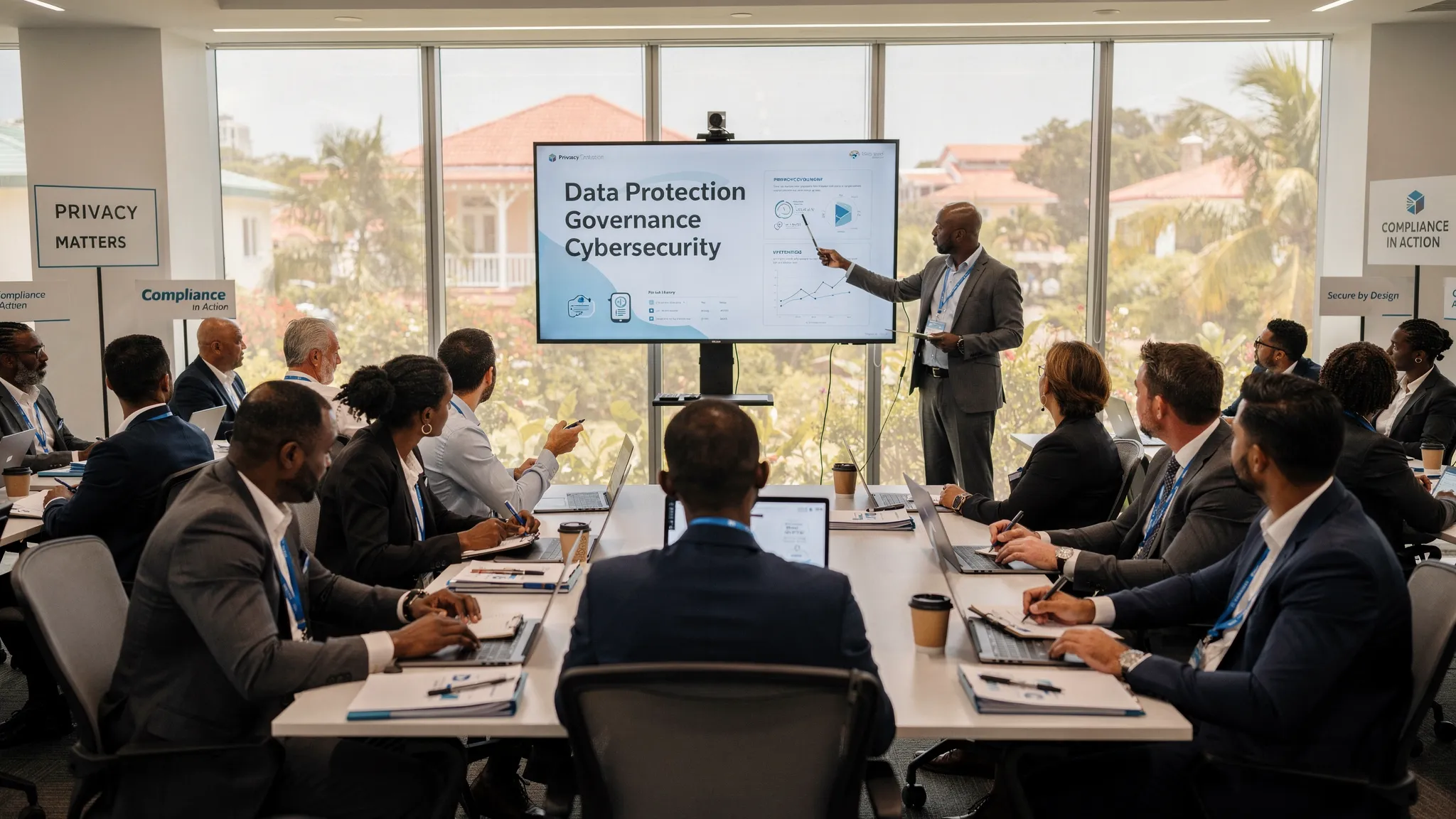
For compliance teams, privacy events are more than calendar fillers. The right conference, workshop, regulator briefing, or training session can help a team interpret legal obligations, benchmark its programme, and return with practical improvements that can be evidenced to management, auditors, regulators, and customers.
For Jamaican organisations, that matters. Privacy work under Jamaica’s Data Protection Act is not only about having policies on file. It is about showing that data handling practices, vendor controls, security measures, training, and governance processes are actually operating. Well-chosen privacy events can give compliance teams the current insight and peer perspective needed to close those gaps.
The challenge is selection. There are global privacy conferences, cybersecurity summits, legal seminars, governance forums, industry roundtables, and local training sessions. Not all will be worth the same investment. This guide explains which privacy events are worth considering, how to prioritise them, and how to convert event attendance into measurable compliance progress.
What Makes a Privacy Event Worth Attending?
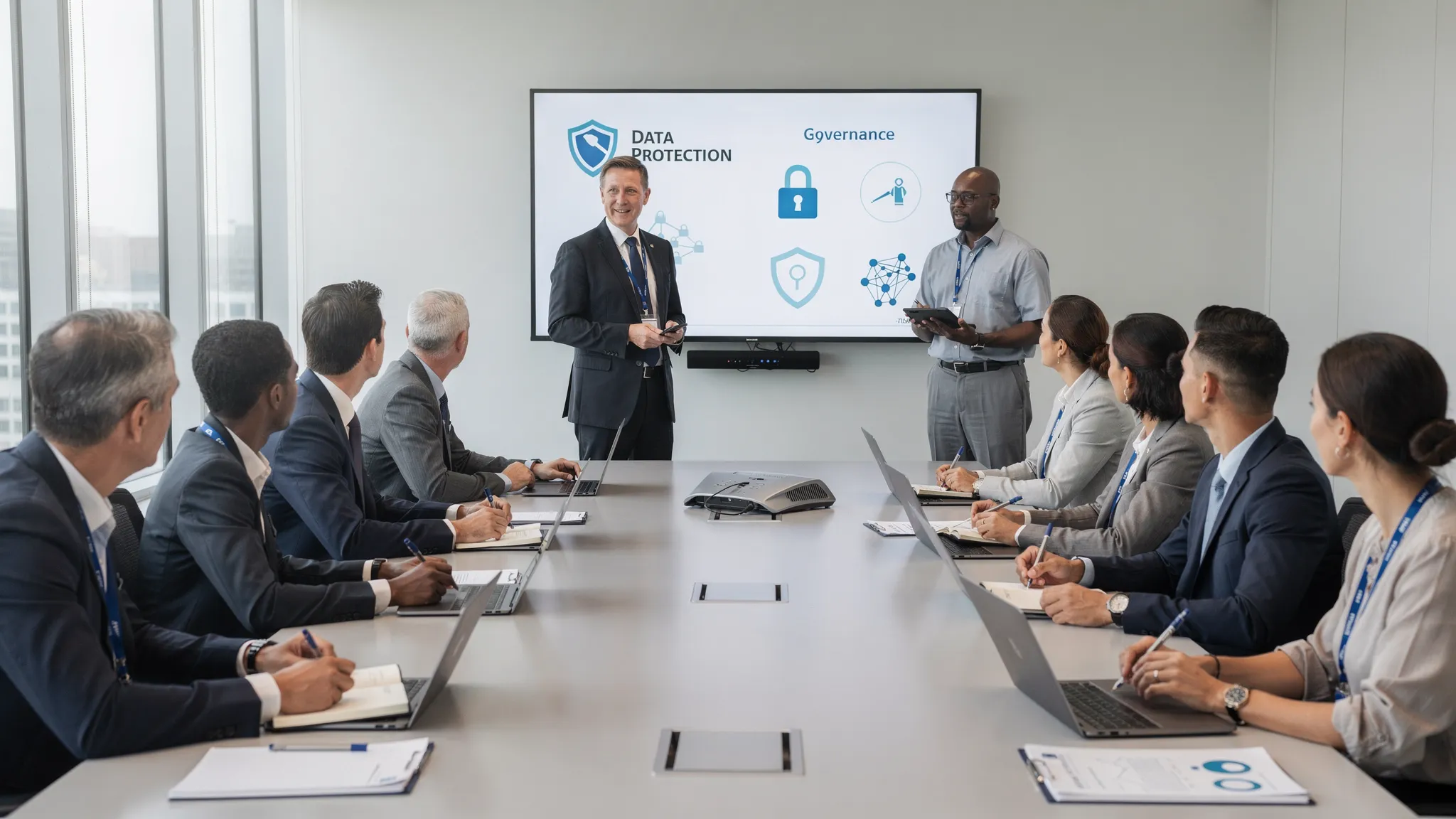
A useful privacy event should help your team make better decisions. Networking is valuable, but the real test is whether the event improves how your organisation identifies risk, documents compliance, handles personal data, responds to incidents, or trains staff.
Before registering, ask what problem the event helps solve. A data protection officer may need regulator updates and legal interpretation. A cybersecurity lead may need practical controls for access management, encryption, monitoring, and incident response. A board secretary or governance professional may need reporting structures and accountability frameworks. A marketing or HR leader may need clarity on consent, privacy notices, retention, and data subject rights.
The best events usually share a few characteristics. They feature credible speakers, include practical examples, address current regulatory developments, and allow attendees to ask questions. They also connect privacy to adjacent risk areas such as cyber security, anti-money laundering, vendor management, artificial intelligence, employment practices, and corporate governance.
For a Jamaican compliance team, local relevance should carry significant weight. Global privacy trends are important, especially where your organisation uses overseas cloud services, serves international clients, or operates across borders. However, your programme must still be grounded in Jamaica’s legal and business environment. Monitoring updates from the Office of the Information Commissioner and participating in Jamaica-focused education should remain a priority.
Privacy Events and Forums Worth Considering
The following table is a practical starting point. It is not a ranking, because the best option depends on your team’s maturity, budget, sector, and compliance priorities.
Event or forum type | Best suited for | Why it is worth considering | Practical takeaway |
Jamaica-focused data protection briefings and regulator updates | Data protection officers, legal teams, executives, compliance managers | These help teams understand local expectations, terminology, and enforcement direction | Update your compliance roadmap, policy register, and board reporting |
PLMC training sessions and educational resources | Jamaican organisations building or improving privacy programmes | Training can support awareness, governance, implementation, and risk-based compliance | Convert obligations into internal procedures, staff awareness, and evidence packs |
IAPP conferences and events | Privacy professionals, legal counsel, DPOs, GRC leaders | IAPP events are widely recognised in the privacy profession and cover global regulatory, operational, and technology issues | Benchmark your programme against international privacy practice |
Global Privacy Assembly resources and public-facing discussions | Senior privacy leaders and policy-focused teams | The GPA brings together privacy and data protection authorities from around the world | Track regulatory themes that may influence local and regional expectations |
Teams working on privacy, AI governance, digital policy, and emerging technologies | The event focuses on the intersection of data protection, technology, law, and society | Strengthen AI, analytics, and digital transformation risk reviews | |
Cybersecurity conferences such as RSA Conference | Security, privacy, technology risk, and incident response teams | Privacy obligations often depend on strong security controls, logging, monitoring, and breach readiness | Improve alignment between privacy governance and security operations |
ISACA events | Audit, risk, governance, IT, and compliance professionals | ISACA focuses on governance, assurance, risk, cyber security, and controls | Improve testing, evidence collection, and control assurance |
Sector-specific forums for finance, health, education, telecoms, BPO, and public bodies | Compliance teams in regulated or data-intensive sectors | Industry events highlight operational realities and common sector risks | Adapt privacy controls to customer data, employee data, sensitive data, and vendor relationships |
The most effective annual plan often includes a mix of these categories. A local privacy training session may help your staff understand their legal duties. A global privacy conference may help your DPO anticipate emerging trends. A cybersecurity or audit event may help your organisation strengthen the controls that support compliance.
How to Prioritise Events When Time and Budget Are Limited
Most compliance teams cannot attend everything. The key is to build a small portfolio of events that supports your actual risk profile. A bank, insurer, school, medical practice, law firm, retailer, technology provider, government body, and business process outsourcing company will not have identical needs.
Start with your current compliance gaps. If your data inventory is incomplete, choose practical workshops that address data mapping, records of processing, retention, and ownership. If staff awareness is weak, prioritise training that can be adapted internally. If vendor contracts are a concern, attend sessions that cover processor obligations, cloud risk, cross-border transfers, and due diligence. If incident response is immature, look for privacy and cyber events that include breach simulation, escalation, and communications planning.
A simple scoring model can help remove guesswork.
Selection criterion | Low value signal | Strong value signal |
Local relevance | General discussion with no link to Jamaican compliance needs | Clear relevance to Jamaica, the Caribbean, or comparable privacy obligations |
Practical output | Broad theory only | Templates, case studies, checklists, scenarios, or implementation guidance |
Speaker credibility | Sales-heavy agenda with limited subject matter depth | Regulators, practitioners, lawyers, auditors, security professionals, and experienced privacy leaders |
Cross-functional value | Useful to one person only | Useful to legal, compliance, IT, HR, marketing, operations, and senior management |
Evidence value | No clear follow-up action | Helps update policies, risk registers, training records, board reports, or control evidence |
Budget fit | High cost with unclear learning outcome | Clear return through risk reduction, training value, or compliance improvement |
This approach is especially useful for smaller organisations. You do not need to send a large delegation to every event. In many cases, one well-prepared attendee can bring back enough insight to improve the whole organisation, provided there is a plan for knowledge transfer.
The Events Compliance Teams Should Not Overlook
Privacy teams sometimes focus only on legal conferences. Legal interpretation is important, but privacy compliance is operational. Personal data moves through systems, employees, vendors, devices, customer journeys, marketing tools, HR files, payment processes, and cloud platforms. That means useful learning often comes from adjacent disciplines.
Cybersecurity events are particularly important because data protection obligations depend heavily on security controls. Sessions on identity and access management, endpoint protection, logging, data loss prevention, encryption, incident response, and vulnerability management can all strengthen a privacy programme. If your organisation is reviewing its technical and organisational measures, a cyber-focused event may be just as valuable as a privacy law seminar.
Governance and audit events are also worth attention. Privacy accountability requires roles, reporting lines, risk ownership, monitoring, and evidence. Events that cover internal controls, board oversight, risk appetite, audit readiness, and policy management can help privacy teams move from informal compliance to defensible governance.
Sector events matter as well. A healthcare provider handling sensitive health information needs different examples from a retailer managing loyalty data. A financial institution must consider privacy alongside AML, fraud prevention, customer due diligence, and regulatory reporting. A school or university must consider student records, parental communications, online learning platforms, and retention. Sector-specific forums make those scenarios more concrete.
A Practical Annual Plan for Privacy Events
A balanced events plan does not have to be complicated. For many organisations, the goal should be steady improvement throughout the year rather than one large conference with no follow-through.
Timing | Event priority | Main objective | Evidence to create after attendance |
Annual or semi-annual | Jamaica-focused data protection training | Confirm local obligations and update practical compliance steps | Updated privacy action plan and training records |
Quarterly | Regulator, legal, or industry briefings | Track changes, guidance, enforcement themes, and sector concerns | Compliance update note for management |
Once per year | Global privacy or data protection conference | Benchmark against international practice and emerging risks | Gap analysis and roadmap recommendations |
Once per year | Cybersecurity, audit, or GRC event | Strengthen operational controls that support privacy compliance | Control improvement plan and risk register updates |
After major projects | AI, cloud, vendor, or digital transformation forums | Assess privacy risks in new technologies and services | DPIA inputs, vendor due diligence notes, or project risk decisions |
This plan can be scaled up or down. A large organisation may send different representatives to legal, technical, and governance events. A smaller organisation may choose one core privacy training session, one cyber or GRC event, and several free or lower-cost webinars.
The important point is continuity. Privacy maturity grows when learning is repeated, documented, and translated into better behaviour.
How to Prepare Before Attending a Privacy Event
The value of an event is often decided before the event begins. Compliance teams should attend with specific questions rather than a general hope of learning something useful.
Before the event, review your current privacy risk register, compliance roadmap, recent incidents, audit findings, vendor issues, and staff training gaps. Identify three to five questions you want answered. For example, you may want to know how similar organisations manage data subject access requests, how they document lawful processing, what evidence auditors expect, or how privacy and cyber teams coordinate breach response.
It is also useful to assign an internal purpose to attendance. One person may attend to gather policy insights. Another may focus on security controls. Another may listen for board reporting and governance practices. If only one person attends, they should still capture observations across legal, operational, technical, and governance themes.
For teams working on Jamaica Data Protection Act readiness, PLMC’s related resources can help shape those questions. You may want to review a practical baseline such as Privacy and Data Protection: A Practical Checklist, or compare your planning against the Data Protection Jamaica compliance roadmap for 2026.
What to Do After the Event
An event is only valuable if it leads to action. Within one week of returning, prepare a short internal note that summarises what was learned, why it matters, and what should change. Keep it practical. Senior managers do not need a transcript of the event. They need decisions, priorities, risks, and next steps.
A strong post-event note should connect learning to your compliance programme. If a session highlighted breach response weaknesses, update your incident response plan and schedule a simulation. If a speaker discussed retention, revisit your retention schedule and deletion processes. If a regulator emphasised transparency, review your privacy notices and consent language. If a cybersecurity presentation revealed access control gaps, coordinate with IT to review permissions and logging.
Knowledge transfer is also essential. A short internal briefing can turn one attendee’s learning into organisation-wide awareness. This is particularly helpful for HR, marketing, customer service, finance, IT, and operations teams, since they often handle personal data directly.
Finally, preserve evidence. Keep attendance certificates where available, agendas, notes, action plans, updated procedures, and training records. These materials help show that the organisation is actively monitoring privacy developments and improving its programme over time.
Common Mistakes to Avoid
The first mistake is treating privacy events as a substitute for implementation. A conference can inspire action, but it cannot replace data mapping, policy updates, vendor reviews, training, technical controls, and incident readiness.
The second mistake is sending the wrong audience. If the event is highly technical, a legal-only attendee may miss the operational implications. If the event focuses on legal interpretation, a technical-only attendee may miss governance duties. Match the agenda to the role, or send cross-functional representatives when the topic affects multiple teams.
The third mistake is failing to brief leadership. Privacy compliance requires resources and accountability. If event insights never reach senior management, they rarely become funded improvements.
The fourth mistake is ignoring adjacent risk areas. Privacy, cyber security, AML compliance, corporate governance, and operational risk often overlap. Compliance teams should look for events that help integrate these disciplines rather than treating them as separate silos.
Frequently Asked Questions
Are privacy events worth attending for small compliance teams? Yes, if they are chosen carefully. Small teams should prioritise events that provide practical guidance, local relevance, and reusable learning that can be shared internally. One well-selected event can support training, policy updates, and management reporting.
Should Jamaican organisations prioritise local or international privacy events? Jamaican organisations should prioritise local legal relevance first, then use international events for benchmarking and horizon scanning. A strong programme should understand Jamaica’s Data Protection Act while also tracking global trends that affect cloud services, cross-border processing, AI, cybersecurity, and vendor management.
Who should attend privacy events? The right attendee depends on the agenda. Legal and compliance teams should attend sessions on obligations, rights, governance, and regulator expectations. IT and security teams should attend sessions on controls and incident response. HR, marketing, operations, and customer service leaders may need events focused on practical data handling and staff awareness.
How many privacy events should a compliance team attend each year? There is no fixed number. A practical approach is to attend at least one Jamaica-focused privacy or data protection training session, monitor relevant regulator or industry briefings, and add one broader privacy, cyber, audit, or GRC event based on your risk profile and budget.
How can we prove that event attendance improved compliance? Document what was learned, assign follow-up actions, update policies or controls, brief relevant teams, and keep evidence such as agendas, notes, training records, risk register updates, and management reports. The goal is to show that learning led to measurable improvement.
Turn Privacy Events Into Compliance Progress
Choosing the right privacy events is only the beginning. The real value comes from turning insights into stronger governance, clearer procedures, better staff awareness, and defensible evidence.
Privacy & Legal Management Consultants Ltd. supports organisations in Jamaica with data protection implementation, corporate governance, anti-money laundering compliance, cyber security services, GRC integration, training sessions, risk assessment tools, free consultations, and educational resources. If your team needs help deciding where to focus, preparing for Jamaica Data Protection Act obligations, or converting event learning into an actionable compliance programme, connect with PLMC.
You can also continue building your internal roadmap with PLMC’s guides on data protection basics for Jamaican firms and privacy security controls that strengthen compliance.