
Data Protection for Nonprofits: A Practical Starting Point
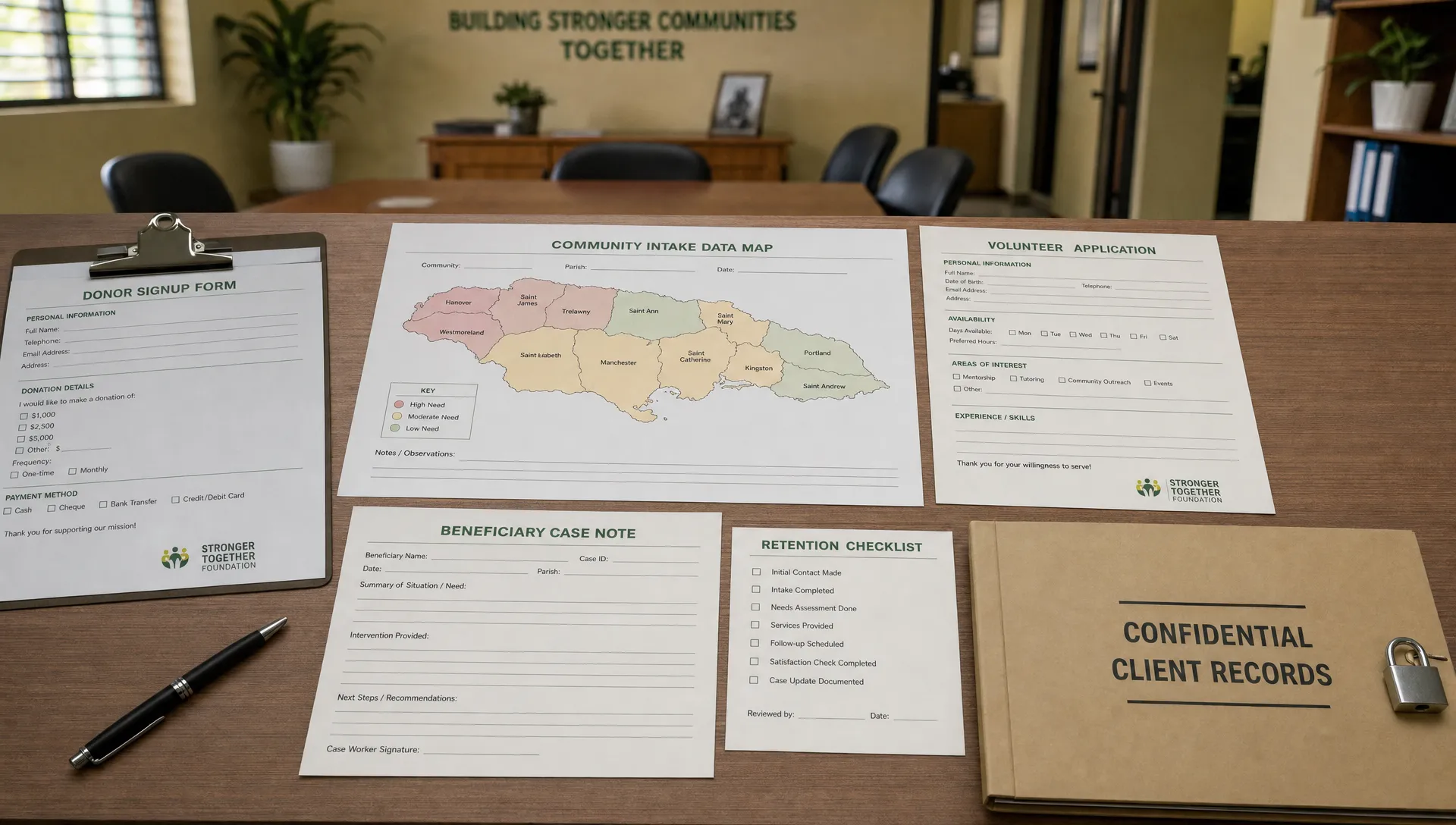
Nonprofits often collect more personal data than they realise. Donor lists, volunteer forms, beneficiary intake records, case notes, photographs, event registrations, health information, financial hardship details and WhatsApp groups can all fall within the scope of data protection obligations.
For Jamaican nonprofits, the Data Protection Act, 2020 is not just a corporate issue. It applies to organisations that collect, use, store or share personal data in the course of their activities. A charity with a small staff, a church outreach programme, an advocacy group or a community-based organisation may all be handling information that deserves structured protection.
The good news is that data protection for nonprofits does not have to begin with a large budget or a thick policy manual. A practical starting point is to identify what personal data you hold, assign responsibility, reduce obvious risks and build repeatable habits across staff and volunteers.
Why nonprofits should take data protection seriously
Nonprofits are built on trust. Donors trust you with payment and contact details. Beneficiaries trust you with sensitive stories about health, family, housing, disability, violence, migration, employment or financial need. Volunteers trust you with identification, emergency contacts and background screening information.
A privacy failure can damage that trust quickly. A lost laptop, an exposed spreadsheet, a misdirected email or an over-shared WhatsApp message may affect people who are already vulnerable. It can also create regulatory, legal and reputational consequences for the organisation.
The Data Protection Act, 2020 expects organisations to handle personal data fairly, lawfully and securely. For nonprofits, that means having clear answers to basic questions: what do we collect, why do we need it, who can see it, who do we share it with and when do we delete it?
Start with ownership, not paperwork
Many nonprofits make the mistake of starting with a policy document before deciding who will actually own privacy decisions. A policy helps, but someone must coordinate implementation.
Your first step is to name a privacy lead. This person does not need to be a lawyer, but they should be organised, trusted and empowered to ask questions across programmes, fundraising, finance, HR and communications. In a small nonprofit, this may be the operations manager, executive director, administrator or board secretary.
The privacy lead should be responsible for keeping a simple data inventory, coordinating staff and volunteer awareness, logging incidents, maintaining key procedures and escalating higher-risk decisions to leadership or the board.
Board oversight also matters. Data protection is a governance issue, not only an IT issue. The board does not need to approve every form or spreadsheet, but it should understand the main privacy risks facing the nonprofit and make sure someone is accountable for reducing them.
Map the personal data you already collect
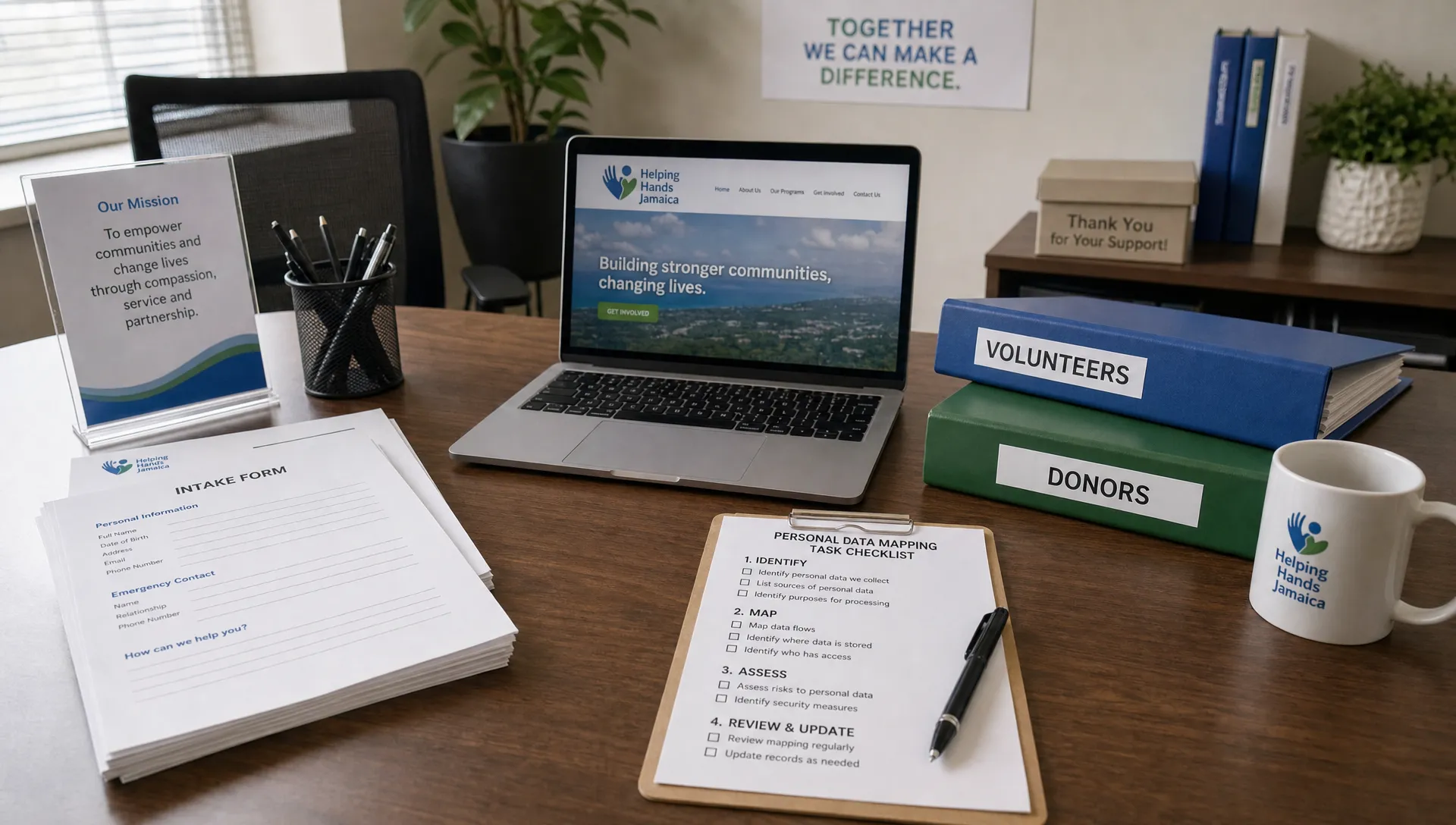
A data map is a clear record of how personal data moves through your organisation. It does not need to be complicated. For a nonprofit, the best place to start is usually one programme or process, such as beneficiary intake, donor management, volunteer recruitment or event registration.
For each process, capture the essentials: the type of personal data collected, the purpose, the source, the storage location, who has access, who it is shared with, how long it is kept and how it is deleted. If you need a deeper walkthrough, PLMC has a useful guide on starting a data mapping project without overcomplicating the process.
A simple nonprofit data map may reveal issues that are easy to fix. You may find duplicate spreadsheets, outdated beneficiary records, volunteers using personal email accounts, unrestricted cloud folders or old event registration data that no one needs anymore.
Area of nonprofit activity | Common personal data | Main privacy concern | Practical first step |
Beneficiary services | Names, contact details, case notes, health or family information | Exposure of sensitive or vulnerable-person data | Limit access to staff who directly support the programme |
Fundraising | Donor names, payment references, giving history, preferences | Unclear consent for marketing or retention | Review forms and update donor communication choices |
Volunteers | IDs, references, emergency contacts, screening information | Excessive collection or insecure storage | Keep only necessary documents in a restricted folder |
Events and outreach | Registration lists, photos, dietary needs, attendance records | Sharing images or lists without proper notice | Add a privacy notice to registration forms |
Communications | Email lists, WhatsApp groups, social media messages | Over-sharing and poor recipient management | Use blind copy or approved mailing tools for group emails |
The purpose of mapping is not to create perfect documentation in week one. It is to make privacy risks visible enough that you can take sensible action.
Check whether you really need each item of data
Nonprofits often collect information because a form was copied from another organisation or because a donor platform, grant template or intake form had extra fields. Under good data protection practice, you should only collect what you need for a clear purpose.
If your programme does not need a date of birth, do not collect it. If a donor receipt only requires a name, email address and amount donated, avoid asking for unrelated demographic details unless there is a valid reason. If a case file includes sensitive information, make sure it is genuinely necessary for providing support.
This is especially important when working with children, survivors of abuse, people with disabilities, people seeking healthcare, migrants or low-income households. Their information may be sensitive, and even details that are not legally classified as sensitive can still cause harm if disclosed.
Put basic privacy notices in place
A privacy notice explains how your organisation uses personal data. It should be written in plain language and placed where people give you information, such as application forms, donor pages, event registration forms, volunteer forms and beneficiary intake documents.
A useful privacy notice tells people who is collecting the data, why it is being collected, how it will be used, who it may be shared with, how long it may be kept, how it is protected and how they can contact the organisation with questions or requests.
For nonprofits, avoid vague statements such as “we may use your information for organisational purposes.” Say what you mean. For example, “We use your contact details to confirm your appointment, provide programme updates and maintain a record of services delivered.”
You should also review consent language. Consent should not be buried or assumed where people may feel pressured to receive services. In some cases, another lawful basis may be more appropriate, but the key point is that the organisation must understand and document why it is processing the data.
Secure the everyday tools your team already uses
Many nonprofit data breaches do not involve sophisticated cyberattacks. They involve ordinary tools used without enough control. Shared email inboxes, Google Drive folders, Excel files, personal laptops, messaging apps and paper files can all create risk.
Start with low-cost controls that reduce common mistakes:
Require strong passwords and multi-factor authentication for email, cloud storage and donor systems.
Restrict shared folders so only people who need the information can access it.
Remove access promptly when staff, interns or volunteers leave.
Avoid sending sensitive documents through personal email or informal messaging channels.
Lock paper files in a cabinet or restricted room.
Keep devices updated and use antivirus or endpoint protection where available.
Back up essential records in a secure location.
These steps are simple, but they are governance controls as much as IT controls. Someone must check that they are happening.
Create a small set of workable policies
Nonprofits do not need a policy library that no one reads. They need a small set of practical rules that match how the organisation actually works.
Start with a privacy policy for the public, an internal data protection policy for staff and volunteers, a retention schedule, an access control procedure and an incident response procedure. If your organisation handles large volumes of sensitive information, children’s data or donor payment information, you may need more detailed procedures.
The most useful policies answer real questions: Can volunteers download beneficiary lists? Who approves access to donor records? How long do we keep unsuccessful volunteer applications? What happens if a phone containing programme data is lost? PLMC’s guide on what data protection policies should include is a good next step once your basic data map is underway.
Be careful with partners, funders and referrals
Nonprofits rarely work alone. You may share personal data with funders, government agencies, auditors, payment processors, cloud software providers, community partners, consultants, medical professionals or lawyers. Each sharing arrangement should have a clear purpose and appropriate safeguards.
Before sharing data, ask whether the recipient truly needs personal data or whether anonymised or aggregated information would work. A funder may need statistics about programme outcomes, but not always a named list of beneficiaries. A partner may need referral details, but not the full case file.
Some nonprofits also make referrals to professional services outside Jamaica. If a beneficiary injured while travelling asks the organisation to send records to a US law firm, treat that as a data sharing decision, not an administrative task. Before transmitting documents to a personal injury law firm in Tampa, confirm what data is needed, how it will be protected, whether the beneficiary has authorised the transfer and how long the receiving organisation will keep the information.
Cross-border transfers require particular care. If personal data leaves Jamaica, your nonprofit should assess the legal basis, the safeguards in place and whether the individual has been properly informed.
Train staff and volunteers in real situations
A short, practical training session can prevent many privacy problems. Focus less on legal definitions and more on the situations people face during outreach, service delivery, fundraising and administration.
For example, staff should know how to verify a caller before discussing a beneficiary’s case, when not to post event photos, how to use blind copy for group emails, what to do if a donor asks to stop receiving messages and how to report a lost device or misdirected email.
Volunteers need training too. They may be temporary, but they often interact directly with beneficiaries and community members. If they collect forms, take photos, manage registration desks or use WhatsApp groups, they should understand the privacy expectations before they start. For practical ideas, see PLMC’s article on data protection awareness training that actually sticks.
Prepare for incidents before one happens
Every nonprofit should have a simple incident response process. A privacy incident could be a lost file, stolen laptop, email sent to the wrong person, unauthorised access to a shared folder, public posting of personal information or accidental disclosure during a meeting.
Your procedure should explain how to report the incident, who investigates, how the risk is assessed, what immediate containment steps are needed, when leadership or the board should be informed and whether affected individuals or regulators must be notified.
Do not create a culture where people hide mistakes. Staff and volunteers should know that quick reporting helps protect the people you serve. A delayed report can turn a minor issue into a serious one.
A practical first-month starting plan
You can make meaningful progress in 30 days without trying to solve everything at once.
Timeframe | Focus | Outcome |
Week 1 | Name a privacy lead and choose one high-risk process | Clear ownership and a realistic scope |
Week 2 | Map the data for that process | Visibility over collection, storage, sharing and retention |
Week 3 | Fix quick security and access issues | Reduced risk from everyday tools and files |
Week 4 | Update notices and train the relevant team | Better transparency and more consistent behaviour |
After the first month, repeat the same approach for the next process. Beneficiary services usually come first because they often involve the most sensitive information. Fundraising, volunteer management, HR and communications can follow.
Frequently Asked Questions
Does the Data Protection Act, 2020 apply to small nonprofits in Jamaica? Yes, if the nonprofit collects or uses personal data, it should assess its obligations under the Act. Size does not remove privacy responsibilities, especially when the organisation handles beneficiary, donor, volunteer or employee information.
What is the first thing a nonprofit should do for data protection compliance? Start by assigning a privacy lead and mapping one important process, such as beneficiary intake or donor management. This gives you a clear picture of what data you collect, where it goes and where the main risks are.
Do nonprofits need consent for every use of personal data? Not always. Consent is one lawful basis, but it may not be the right basis in every situation. The organisation should identify and document the appropriate basis for each purpose and make sure individuals receive clear privacy information.
How long should a nonprofit keep beneficiary records? There is no single retention period that fits every nonprofit. Retention should be based on the purpose of the record, legal or funding requirements, safeguarding needs and the risk of keeping information longer than necessary.
Should volunteers receive data privacy training? Yes. Volunteers may collect forms, speak with beneficiaries, manage event lists, take photos or access shared files. Short, practical training helps them understand what information is confidential and how to report concerns.
Build privacy into your mission
Data protection for nonprofits is not about slowing down service delivery. It is about protecting the people who trust your organisation. Start with the personal data you already hold, make one person accountable, fix obvious weaknesses and train your team around real-life scenarios.
If your nonprofit needs help understanding its obligations under Jamaica’s Data Protection Act, 2020, Privacy & Legal Management Consultants Ltd. can support practical implementation, training, risk assessment and compliance planning tailored to your organisation’s needs.