

Cyber Insurance Questions Jamaican Businesses Should Ask
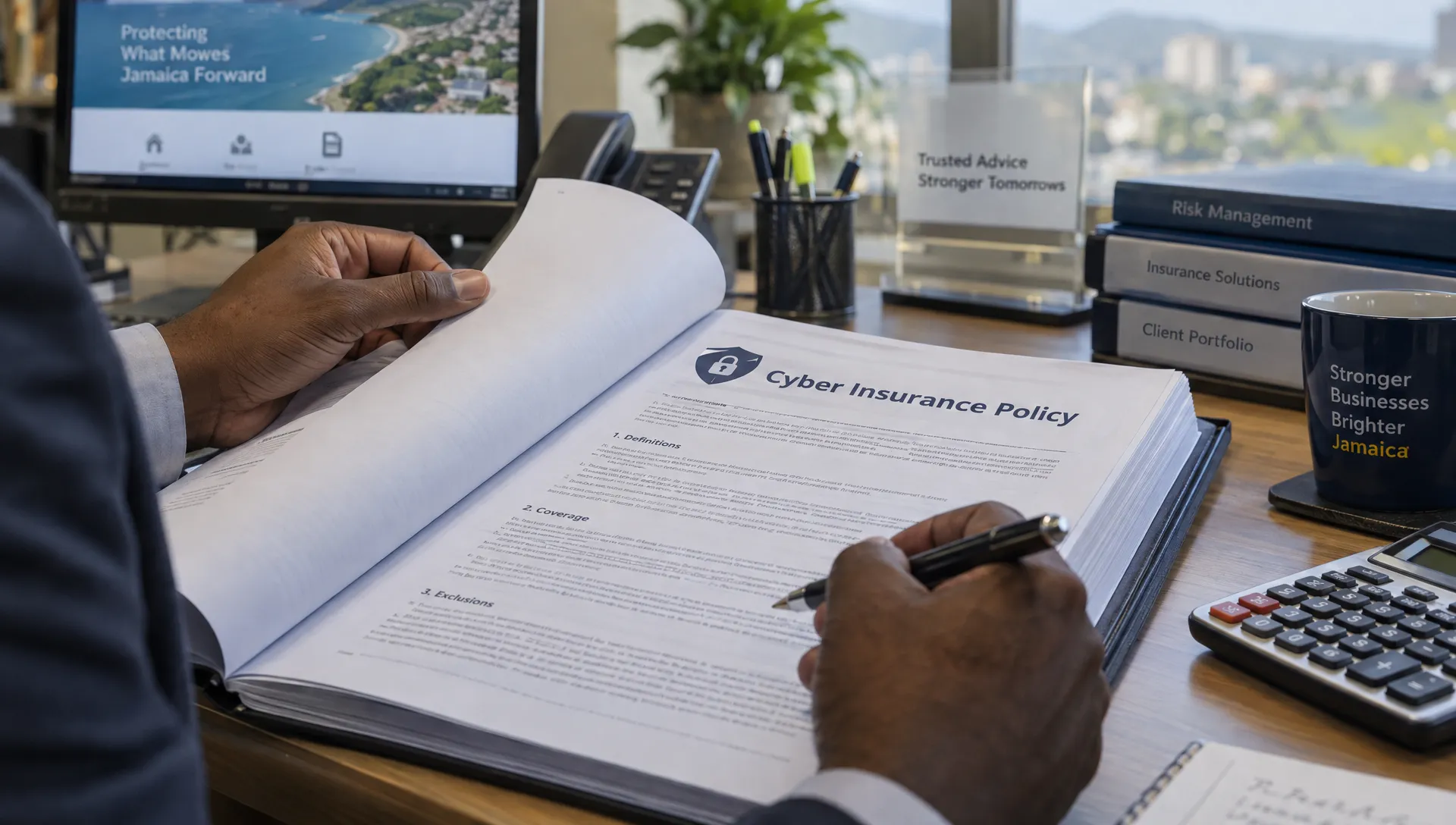
Cyber insurance can help a Jamaican business manage the financial consequences of a cyber incident, but the policy name tells you little about what will actually be paid. A ransomware attack, an employee sending money to a fraudster and a customer claiming compensation for exposed personal data may fall under different sections, limits or exclusions.
Before accepting a quote, involve the people responsible for finance, IT, legal matters and data protection. Use the questions below to test the proposed cover against your operations, contracts and incident response arrangements. Request answers that refer to the policy wording, schedule and endorsements, rather than relying on a marketing summary.
Cyber insurance questions to ask before accepting a quote
The aim is not simply to find the lowest premium. It is to establish which losses the insurer would consider, what conditions apply and how much financial risk remains with your business. Availability and terms vary between insurers, so treat each question as something to verify, not a promise of standard cover.
1. Which losses does the policy actually cover?
Start by separating costs your organisation incurs directly from claims made against it. These are often described as first-party and third-party cover respectively.
Ask the broker to identify the relevant policy section for each exposure:
Potential loss | Question to put to the broker |
Investigation and response | Are forensic investigation, legal advice and incident coordination covered? |
Data and system recovery | Does cover include restoring data, rebuilding systems or both? |
Business interruption | Which lost income and additional operating expenses qualify? |
Privacy liability | Are defence costs and covered compensation claims included? |
Regulatory proceedings | Which investigations and defence expenses are covered? |
Fraudulent payments | Is social engineering fraud included, endorsed separately or excluded? |
A policy may cover investigating an incident without covering every resulting loss. For example, the cost of replacing obsolete equipment or improving security beyond its previous condition may be treated differently from restoration. Obtain a clear distinction between recovery costs and upgrades.
2. Are the right businesses, activities and countries covered?
Check the named insured carefully. A policy purchased by a parent company does not necessarily cover every subsidiary, trading entity or newly acquired business. Confirm how employees, temporary staff and relevant outsourced activities are treated.
For Jamaican organisations serving overseas customers, territorial cover and jurisdiction clauses deserve separate attention. Where an incident occurs is not necessarily where a customer brings a claim.
Explain your actual activities, including payment processing, outsourced services and the types of personal data you handle. If a client contract requires particular insurance, ask whether the proposed policy meets that requirement. A contractual promise to compensate a client may be broader than the liability the insurer accepts.
A certificate of insurance is not a substitute for reviewing the scope of cover.
3. What security statements are we being asked to make?
Cyber insurance applications commonly ask about controls such as multi-factor authentication, backups, patching and privileged access. The precise wording matters: having multi-factor authentication for email is not the same as having it for all remote access and administrator accounts.
Have the responsible technical staff verify each answer against evidence. Record any exceptions, unsupported systems and incomplete deployments. An external IT provider's general assurance should not replace a check of the question being answered.
PLMC's discussion of cyber security controls that reduce real data protection risk provides useful context for that internal review.
Ask how inaccurate statements, changes in controls or failure to maintain a stated safeguard could affect cover. The consequences depend on the wording and applicable law; do not assume every control question is merely informational. If a gap exists, disclose it and obtain written clarification before cover begins.
4. How much cover would remain after sublimits and response costs?
The headline limit is only the starting point. Establish whether it applies per claim, per incident or across all claims during the policy period. Then identify any smaller limits for particular losses.
For example, a hypothetical J$20 million policy could contain a much lower limit for fraudulent payment losses. That headline figure would not establish how much a payment scam could recover. This is an illustration of policy structure, not an indication of available Jamaican market terms.
Ask whether legal defence, forensic work and other response expenses reduce the main limit. Confirm the deductible or retention, how often it applies and whether separate sections can attract separate amounts.
Use cyber insurance limits that reflect a credible disruption scenario: several days without core systems, specialist investigation, customer communications and a possible liability claim. Do not base the decision solely on annual revenue.
5. When does business interruption cover start and stop?
A business can lose income without losing personal data. Establish whether interruption cover requires a malicious attack or can also respond to an accidental system failure.
Request a worked example showing how any waiting period affects recovery. Does loss during that period remain uninsured? When does the restoration period begin, and what ends it? Can the policy respond while systems operate at reduced capacity rather than being completely unavailable?
Discuss the evidence needed to calculate the loss. Revenue records, saved expenses, payroll information and the cost of temporary arrangements may all matter, depending on the wording.
For Jamaican businesses, also explore power and telecommunications dependencies. A cyber policy should not be assumed to cover an outage caused by a hurricane, physical damage or a utility failure. Ask how those causes interact with cyber cover and other insurance policies.
6. What happens when a cloud provider or outsourced supplier fails?
Your own systems may be functioning while a booking platform, payment processor or cloud service becomes unavailable. Ask whether dependent business interruption cover addresses that exposure.
Check which providers qualify, whether they must be named and whether cover extends beyond a direct supplier. A failure at your supplier's subcontractor may be treated differently from a failure at the supplier itself. Also establish whether a malicious incident and an accidental outage receive the same treatment.
Review this alongside your supplier agreements. A service credit is not the same as compensation for lost income, and a supplier's liability cap may leave a substantial gap. PLMC's guide to privacy risks in outsourced services explains related dependencies worth considering during that review.
7. Who do we contact during an incident, and what requires approval?
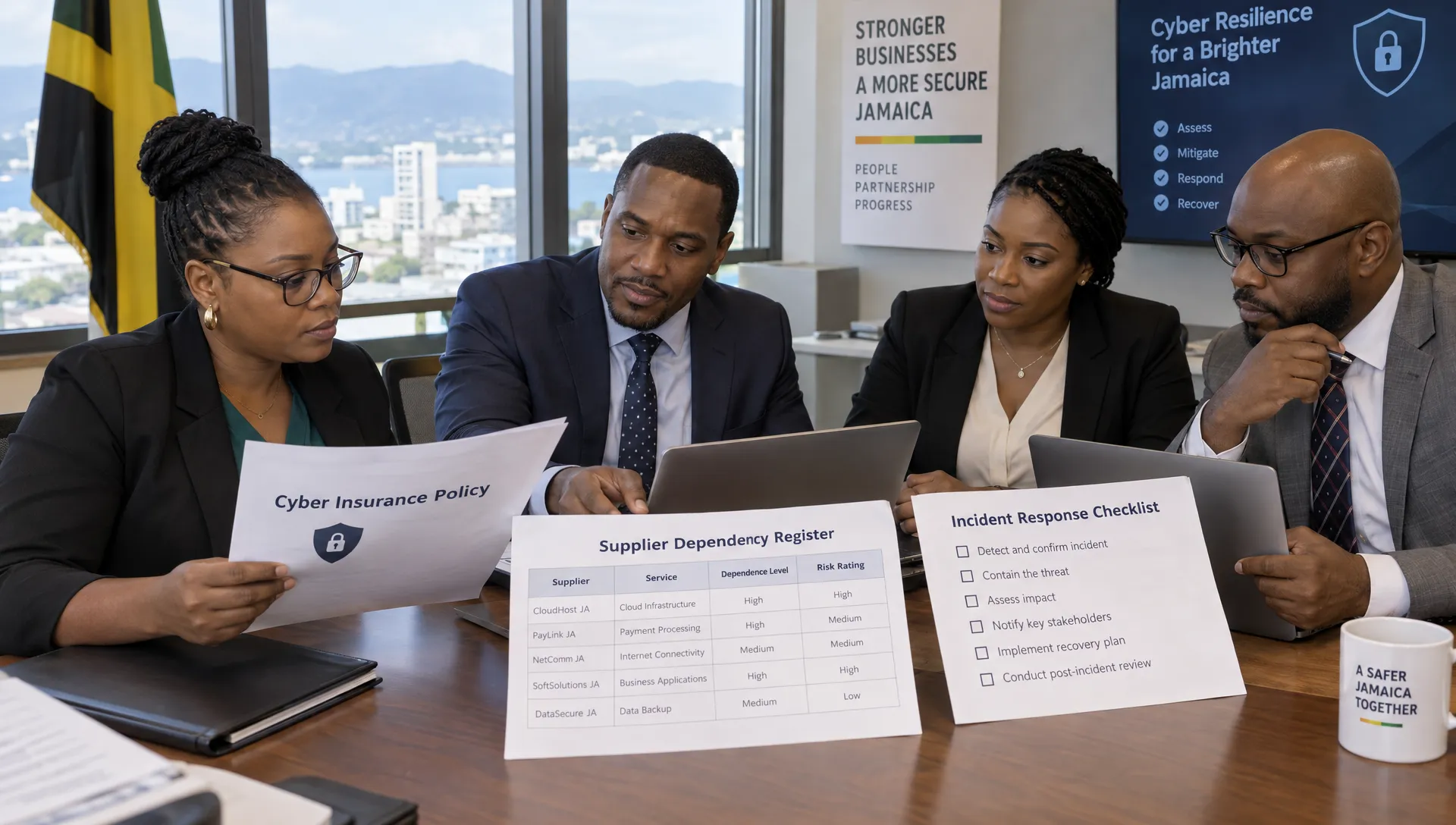
Obtain the claims contact details and out-of-hours response process before an incident occurs. Find out whether the policy gives access to an incident response panel and whether you must use its lawyers, investigators or recovery providers.
Ask which costs require advance consent and whether emergency expenses incurred before contact can be considered. If you already retain advisers, establish whether they can be approved in advance. Clarify who has authority within your business to notify the insurer and instruct assistance.
There may be separate requirements for reporting an incident, a potential claim and an actual third-party claim. Check the policy's notification provisions, retroactive date and any rules affecting incidents discovered near expiry or after a change of insurer.
Insurer notification and regulatory notification are separate processes. Your response plan must manage both. PLMC's guide to ransomware response beyond IT recovery addresses the privacy work that can run alongside technical recovery.
8. How does the policy address Jamaican data protection obligations?
Cyber insurance does not replace compliance with Jamaica's Data Protection Act, 2020. Your organisation remains responsible for its legal obligations, including assessing an incident and taking any required notification or remedial steps.
Ask whether the policy can fund specialist legal advice on Jamaican requirements, notification expenses where applicable and assistance with regulatory investigations. Use the Office of the Information Commissioner's guidance and qualified advice to determine the applicable obligations rather than treating the insurer's claims process as legal guidance.
Separate regulatory defence costs, compensation, fines and penalties in the discussion. They are not interchangeable, and some amounts may be excluded or legally uninsurable. A reference to regulatory cover is not a guarantee that a particular sanction will be paid.
If overseas laws may apply to your operations, check the policy's response to those proceedings as well. Serving an overseas customer should prompt a legal scope assessment, not an automatic assumption about which foreign privacy laws apply.
9. Are ransomware demands and payment scams treated differently?
They should be assessed separately. Ransomware can create investigation, restoration, interruption and extortion-related costs. A fraudulent instruction that persuades an employee to transfer money presents a different insurance question.
Ask whether social engineering fraud, invoice redirection and unauthorised electronic transfers fall under the cyber policy, a crime policy or a separate endorsement. Check for verification conditions and lower limits that could affect a claim.
For extortion-related cover, establish the consent requirements and access to legal and specialist support. Insurance is not permission to pay a ransom. A proposed payment requires legal assessment, including any applicable sanctions restrictions, and payment does not guarantee recovery or deletion of stolen data.
If cyber and crime policies overlap, ask how the insurers would coordinate. Do not assume one will automatically fill a gap left by the other.
10. Which exclusions could remove the cover we need most?
Ask the broker to explain exclusions through scenarios relevant to your business rather than simply listing their headings.
Possible areas to examine include known incidents, contractual liability, infrastructure failure, war or cyber operations, widespread events and failures to meet specified security requirements. Their effect depends on the actual wording, definitions and endorsements.
For each major concern, ask: “If this happened to our business, which clause would respond and which clause might restrict payment?” Record the answer and the clause reference.
Be cautious about broad verbal reassurance. If a proposed endorsement changes an exclusion, obtain the final document and check that it forms part of the issued policy. Cyber insurance should be evaluated as a complete contract, not as a collection of favourable summaries.
How to compare quotes before making a decision
Give competing brokers or insurers the same business information and incident scenarios. Otherwise, a cheaper premium may reflect narrower cover rather than better value.
Prepare a short comparison that records:
The insured entities, activities and applicable territories.
Main limits, sublimits, deductibles and waiting periods.
Security declarations, ongoing conditions and disclosed exceptions.
Response arrangements, approval requirements and notification provisions.
Material exclusions and losses the business would retain.
Have finance test the uninsured costs, IT verify the security statements and the person responsible for privacy review the incident arrangements. Refer unclear legal provisions to qualified counsel.
At renewal, check what has changed in both the business and the proposed wording. New services, acquisitions, different suppliers or larger customer contracts can alter the risk. Keep the submitted application, disclosures and supporting evidence with the final policy documents.
Frequently asked questions
Does cyber insurance make a business compliant with Jamaica's Data Protection Act? No. Insurance may help fund covered response costs or liabilities, but it does not establish compliance or transfer the organisation's statutory responsibilities to the insurer.
Will ordinary business insurance cover a cyber incident? Do not assume so. Property, liability and crime policies may contain relevant provisions or exclusions. Ask for a written explanation of how your existing policies respond and where gaps remain.
Can a small Jamaican business benefit from cyber insurance? Potentially. The decision depends on its reliance on technology, data holdings, contractual commitments and ability to absorb losses. Compare suitable cover with the costs the business would still have to fund itself.
Prepare your business before approaching the insurer
A useful next step is to assemble your data inventory, supplier register, security evidence and incident response plan before requesting terms. These records support more accurate disclosures and a better-informed coverage discussion.
For help assessing privacy and compliance readiness, contact PLMC for a free consultation. Use that preparation alongside advice from your insurance broker and legal advisers when selecting a policy.