

Audit Committee vs Risk Committee Responsibilities Explained
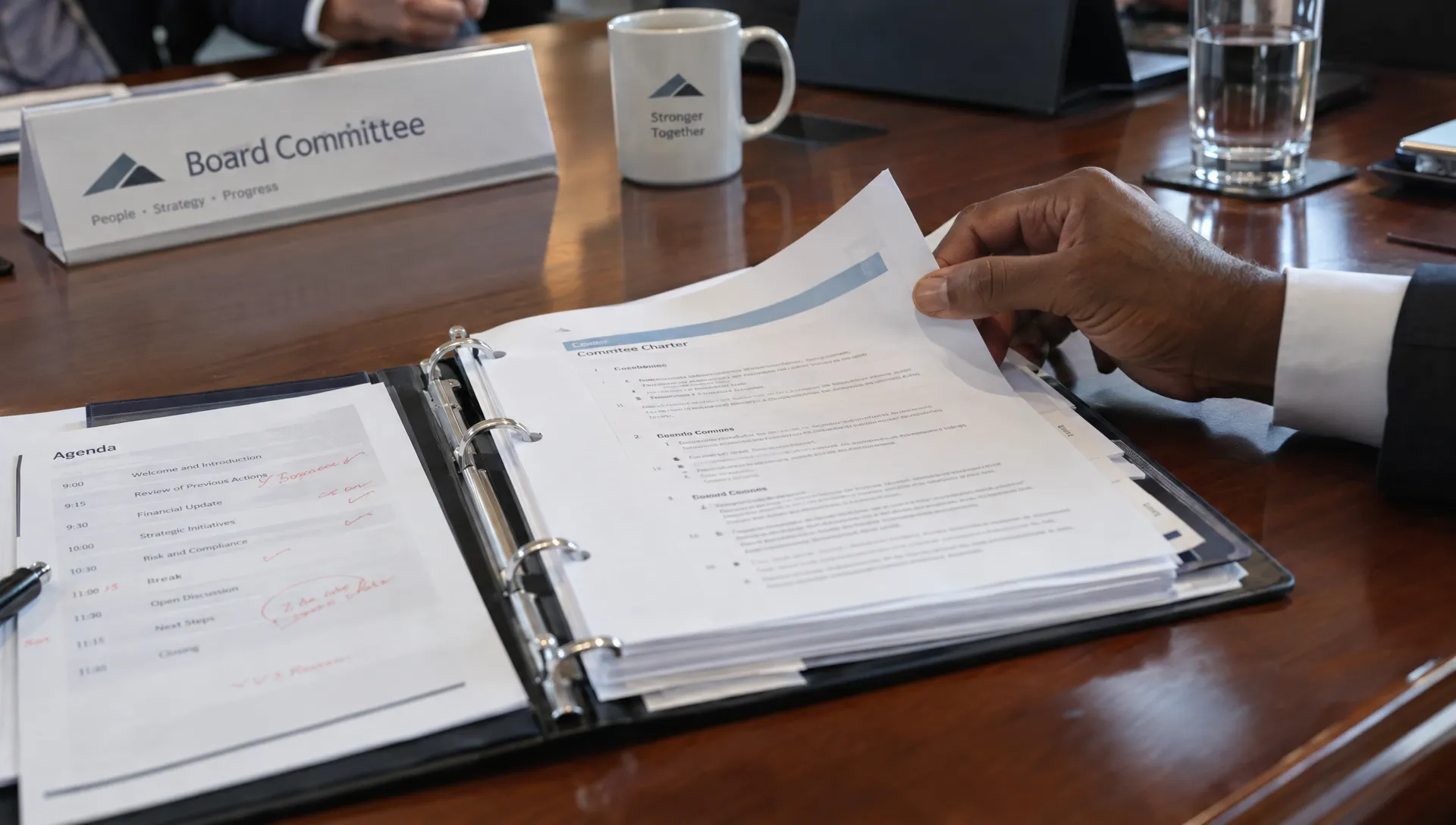
Audit committee vs risk committee responsibilities can become blurred when both groups review internal controls, compliance failures and emerging threats. The distinction is not that one committee handles financial risks while the other handles everything else. It is the different oversight question each committee brings to the board.
The audit committee focuses on reporting integrity, controls and independent assurance. The risk committee focuses on risk appetite, exposures and management’s response to risk. Both support the board, but neither takes over management’s responsibility for running the organisation.
For Jamaican organisations, clarifying this division is particularly useful when data protection, cybersecurity and anti-money laundering issues cut across several functions.
Audit committee vs risk committee responsibilities at a glance
The following is a practical governance model, not a statement that every Jamaican organisation must establish both committees. Actual responsibilities depend on applicable legislation, regulatory requirements and the board-approved committee charters.
Area | Audit committee’s typical focus | Risk committee’s typical focus |
Financial reporting | Integrity of financial statements, significant judgements and relevant disclosures | Financial risk exposures, such as liquidity or credit risk, where within its mandate |
Risk appetite | Assurance over how limits and controls are monitored | Reviewing proposed appetite and limits, then recommending them to the board |
Internal controls | Whether controls are appropriately designed and operating effectively, supported by assurance | Whether the control response adequately addresses material exposures |
Internal audit | Oversight of independence, scope, resources, findings and follow-up | Input on significant risks that should inform assurance coverage |
External audit | Auditor independence, audit findings and recommendations on appointment, subject to applicable requirements | Relevant risk implications arising from audit findings |
Compliance | Assurance over compliance controls and remediation | Exposure to regulatory breaches and the adequacy of management’s response |
Emerging risks | Whether assurance coverage keeps pace with change | How new threats affect strategy, objectives and risk appetite |
Both committees need to look ahead. An audit committee should not be confined to historical financial results, and a risk committee should not ignore evidence that existing controls are failing.
What does the audit committee oversee?
The audit committee helps the board assess whether it can rely on the organisation’s reporting, control environment and assurance arrangements. It challenges management’s explanations and evaluates evidence rather than performing management’s work itself.
Financial reporting and external audit
Typical responsibilities include reviewing significant accounting judgements, financial statements and concerns raised by the external auditor. The committee also considers auditor independence and the implications of unresolved audit findings.
For example, a material legal claim may raise questions about provisions or financial disclosures. The audit committee considers whether management has appropriately assessed those reporting implications, drawing on finance, legal advice and the external auditor as necessary.
Its precise authority over auditor appointment or remuneration must follow the applicable legal and governance arrangements. A committee recommendation does not replace any required board or shareholder decision.
Internal controls and independent assurance
The committee usually oversees internal audit’s independence, access, resources and risk-based plan. It reviews significant findings and challenges overdue remediation, particularly where management repeatedly extends completion dates.
The Institute of Internal Auditors’ Three Lines Model distinguishes governing body oversight, management responsibilities and independent assurance from internal audit. That distinction matters: the audit committee oversees assurance; it does not become the control owner or perform the audit.
A useful question is: “What evidence supports management’s statement that this issue has been resolved?” Closing an action in a tracking system is not necessarily evidence that the underlying control now works.
What does the risk committee oversee?
The risk committee helps the board understand the risks attached to strategy, operations and significant decisions. It challenges whether management has identified material exposures and whether the proposed response is proportionate.
Its remit commonly includes reviewing the risk management framework, monitoring major exposures and examining breaches of approved limits. Depending on the organisation, this may cover operational, financial, technology, compliance, strategic and reputational risks.
Risk appetite is central to this work. It describes the types and amount of risk the organisation is prepared to accept in pursuing its objectives. The committee may review management’s proposals and recommend them to the full board, which retains responsibility for approval under the organisation’s governance arrangements.
Boards developing this discipline can use a risk appetite statement that supports practical decisions rather than relying on broad commitments such as “low tolerance for risk”.
The committee should also test assumptions behind major changes. Before outsourcing a sensitive process, for instance, it should examine supplier dependence, service disruption, data exposure and exit arrangements. Management still selects and operates the controls; the committee challenges whether the remaining exposure is acceptable.
Where the two committees overlap
Overlap is not automatically a governance failure. A serious incident may legitimately require both committees’ attention. The problem arises when they repeat the same discussion without distinct purposes, or each assumes the other has dealt with it.
Data protection and cybersecurity
For organisations operating under Jamaica’s Data Protection Act, 2020, privacy risks can affect operations, legal compliance, customer trust and financial reporting. The Office of the Information Commissioner is the relevant Jamaican regulatory reference point for data protection guidance and requirements.
The risk committee might challenge whether a new customer platform creates unacceptable personal-data exposure. The audit committee might examine whether access controls, retention rules and incident procedures have been independently tested and whether identified weaknesses remain unresolved.
Both discussions are valid, but they answer different questions. A practical data protection risk assessment can inform management’s response and risk oversight, while independent assurance tests the reliability of the controls supporting that response.
Neither committee replaces the organisation’s accountability as a data controller or the operational duties assigned to privacy, legal and security personnel.
Anti-money laundering and other compliance risks
Where anti-money laundering obligations apply, the risk committee may oversee exposure arising from customer profiles, products, jurisdictions and transaction activity. It should challenge whether management’s controls match those exposures.
The audit committee may review independent testing of customer due diligence, monitoring controls and remediation of compliance weaknesses. It should distinguish between a policy being approved and that policy being implemented effectively.
Board oversight must not delay statutory reporting by responsible officers. Committee reporting arrangements should also protect confidential information and respect any applicable restrictions on disclosure.
A practical example: a supplier exposes customer data
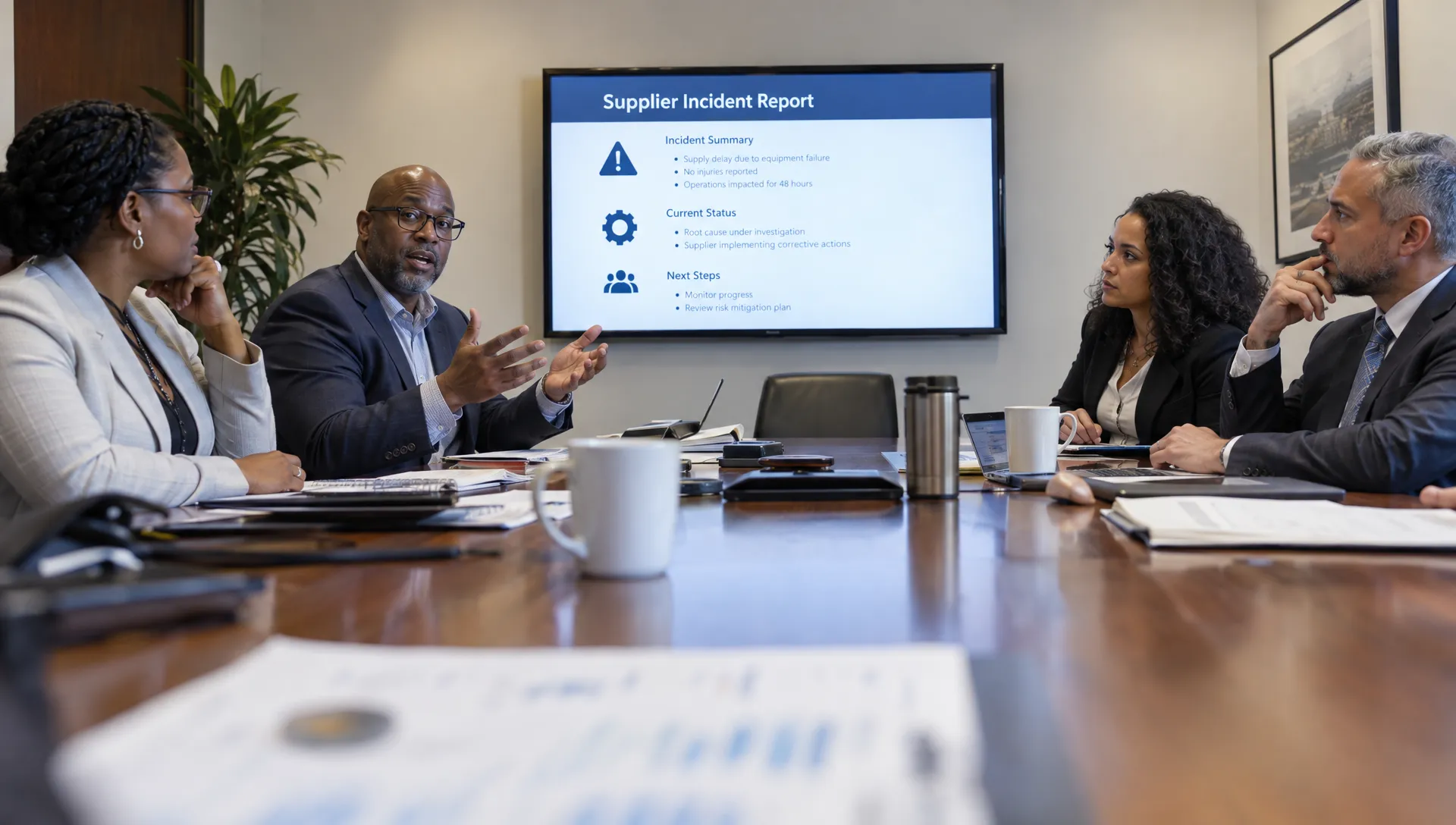
Consider a hypothetical Jamaican business whose outsourced service provider exposes customer records. The event raises operational, legal and assurance questions at the same time.
Management’s role: The incident team contains the exposure, establishes the facts, assesses applicable notification obligations and implements corrective action. Responsible personnel make urgent decisions through the organisation’s approved incident procedures rather than waiting for a committee meeting.
The risk committee’s role: It examines the exposure created by the supplier relationship. Was the supplier dependency understood? Did the incident reveal that the organisation was operating outside approved appetite? Should management change the service arrangement or strengthen contingency plans?
The audit committee’s role: It examines the assurance implications. Were supplier controls tested? Had earlier findings identified weaknesses? Is there reliable evidence that remediation works? It also considers any relevant financial reporting consequences with management and the external auditor.
The full board’s role: It addresses decisions reserved to it and challenges the overall response. Delegating detailed scrutiny to committees does not remove the board’s accountability.
The committees can receive a common factual incident report, with separate sections identifying the decisions and challenges required from each. That is more efficient than commissioning competing versions of the same facts.
Should an organisation have separate committees?
Separate audit and risk committees can be useful when the scale, complexity or regulatory environment creates substantial demands on board oversight. A dedicated risk committee provides more time for forward-looking challenge without squeezing financial reporting and assurance discussions off the audit agenda.
A combined audit and risk committee may be appropriate for some organisations, subject to applicable requirements. However, combining the names does not reduce the work. The committee still needs sufficient expertise, information and meeting time to address both mandates.
A useful assessment is whether members can scrutinise financial reporting, hear independently from assurance providers and meaningfully challenge major risk decisions without routinely deferring important items.
Warning signs include repeated agenda overruns, shallow discussion of emerging risks and internal audit findings that remain unresolved because other business dominates the meeting. Those patterns justify reviewing the structure, membership or allocation of responsibilities.
Even with separate committees, some shared membership or occasional joint sessions may improve coordination. These arrangements should support clear accountability rather than create an informal third decision-making body.
How to prevent gaps and duplicated oversight
Committee charters should describe more than a list of topics. They should explain each committee’s purpose, authority, information needs and relationship with the board and other committees.
For cross-cutting matters, document four practical rules:
Lead oversight: Identify which committee leads consideration of a particular issue and what the other committee needs to receive.
Decision authority: Distinguish management decisions, committee recommendations and matters reserved for the full board.
Escalation triggers: Specify when significant incidents, limit breaches or overdue high-risk actions require attention outside the normal meeting cycle.
Assurance and closure: Identify who validates remediation and what evidence is needed before a significant finding is closed.
The lead committee should not become the owner of the underlying risk. A business executive remains accountable for managing that exposure, supported and challenged by relevant risk, compliance or privacy functions.
A governance model with clear roles and reporting lines helps connect committee oversight to operational accountability. For data protection, this means making clear who implements controls, who advises on compliance and who provides assurance.
Consistent information also matters. If both committees receive a high-risk action tracker, it should show the same accountable executive, due date and status. Any difference in interpretation should be visible, not hidden in separate reporting packs.
Frequently asked questions
Is the risk committee responsible for managing risk? No. Management identifies, assesses and manages risk through day-to-day decisions and controls. The risk committee oversees and challenges that work on behalf of the board, within its delegated mandate.
Does the audit committee oversee only financial risks? No. Its assurance and internal control remit may extend to operational, technology, compliance and other risks. The exact scope should be set out in its charter and aligned with applicable requirements.
Who should oversee data protection compliance? Management must assign operational accountability and appropriate privacy responsibilities. At board level, the risk committee may oversee exposure and treatment, while the audit committee reviews assurance over controls. A combined committee or the full board may perform these functions under a clearly documented structure.
Are both committees mandatory in Jamaica? There is no single answer for every organisation. Requirements depend on the organisation’s legal form, sector, listing status and applicable regulatory framework. Confirm those requirements before adopting a combined structure or changing an existing committee’s mandate.
Clarify the mandate before changing the structure
Effective committee oversight depends on distinct questions, reliable evidence and clear escalation, not simply adding another committee to the organisational chart.
If your board needs to align corporate governance, risk oversight and data protection responsibilities, Privacy & Legal Management Consultants Ltd. offers corporate governance services, GRC integration and free consultations. Use an initial discussion to identify where committee mandates overlap, where oversight is missing and which responsibilities need clearer documentation.