

Whistleblowing Programmes: Protecting Reporter Information
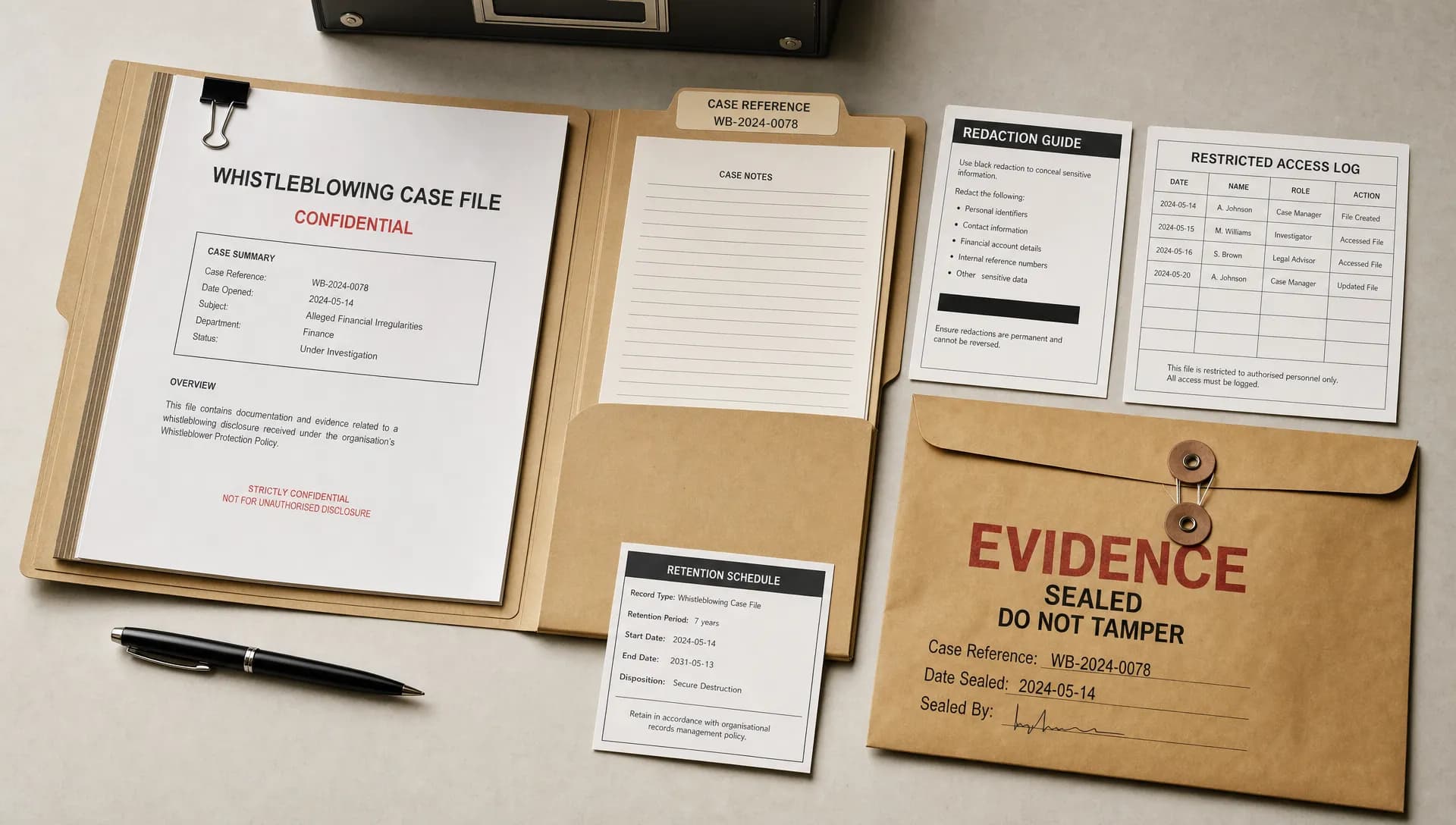
Whistleblowing only works when people trust the system enough to use it. If employees, contractors or business partners believe their identity will be exposed, they may stay silent about fraud, harassment, conflicts of interest, cyber incidents, procurement abuse or data protection failures.
For Jamaican organisations, that trust is not only a cultural issue. It is also a governance, risk and compliance issue. A whistleblowing programme will often collect highly sensitive personal information about the reporter, the accused person, witnesses and affected customers. If the organisation handles that information casually, the programme can create the very privacy and legal risk it was meant to reduce.
Protecting reporter information requires more than telling staff that reports are “confidential.” It requires careful design of reporting channels, access controls, investigation processes, vendor arrangements, board reporting and retention rules.
Why reporter information needs special protection
A reporter’s identity can be exposed in obvious ways, such as a name in an email, but it can also be revealed through context. A report may mention a meeting attended by only three people, a transaction reviewed by one analyst or a department where only one contractor had access to a file. Even when a hotline allows anonymous reporting, technical metadata, voice recordings, writing style and follow up questions may narrow the field.
That creates several risks.
First, the reporter may face retaliation, exclusion or informal pressure. Second, the accused person may challenge the fairness of the investigation if evidence is handled poorly. Third, the organisation may breach data protection obligations if personal information is collected unnecessarily, shared too widely or kept indefinitely. Finally, the programme may lose credibility, causing future concerns to remain hidden until they become regulatory, financial or reputational damage.
Jamaica’s Data Protection Act, 2020 requires organisations to take privacy seriously when collecting and using personal data. The Office of the Information Commissioner provides guidance and oversight for data protection in Jamaica, and organisations should align whistleblowing processes with the Act’s standards for fair handling, security, retention and accountability. Jamaica’s Protected Disclosures Act, 2011 is also relevant because it supports the reporting of improper conduct and protection of persons who make qualifying disclosures.
A sound whistleblowing programme sits at the intersection of privacy, corporate governance, employment practice, cyber security and compliance. That is why the programme should be designed before a crisis, not improvised after a serious allegation lands in a shared inbox.
Anonymous, confidential and identified reporting are not the same
Many policy documents use “anonymous” and “confidential” as if they mean the same thing. They do not.
Anonymous reporting means the organisation does not know who made the report, at least in principle. This can help people speak up, but it can also make follow up more difficult if the report lacks detail. Anonymous channels also require technical care because web forms, call records and email headers may still capture identifying information.
Confidential reporting means the reporter’s identity is known to a limited group and protected from unnecessary disclosure. This is often more practical for investigations because the investigator can clarify facts, request evidence and provide updates. It also requires stricter internal controls because the organisation now holds identifiable reporter information.
Identified reporting means the reporter’s details are part of the case record and may be used more openly within the process. This may be appropriate in some matters, but it should never be the default simply because it is administratively easier.
The best approach is to offer clear options and explain their limits. No organisation should promise absolute confidentiality. There may be circumstances where information must be disclosed to regulators, law enforcement, a court or a person who needs enough detail to respond fairly to an allegation. The promise should be precise: the organisation will restrict reporter information to those with a genuine need to know, protect it with appropriate controls and disclose it only when legally or operationally necessary.
What counts as reporter information?
Reporter information is broader than a name. A privacy focused programme treats direct identifiers, indirect identifiers and contextual clues as part of the protection model.
Type of reporter information | Examples | Protection concern |
Direct identifiers | Name, phone number, email address, employee number | Reveals identity immediately if shared |
Technical metadata | IP address, device identifiers, email headers, call logs | May identify a supposedly anonymous reporter |
Contextual clues | Small team, unique role, date of meeting, transaction handled | Can identify the reporter through deduction |
Communication records | Follow up messages, voice recordings, interview notes | May reveal tone, writing style or personal details |
Case management data | Access logs, task assignments, investigation notes | Can expose who reported if too many users have access |
This wider definition matters because most identity leaks are not caused by one dramatic disclosure. They often happen through small process failures: an email forwarded to the wrong manager, a case title that names the reporter, a calendar invite that reveals an interview or a board pack with too much detail.
Organisations that already have confidentiality rules should extend them to whistleblowing records. For example, the same discipline used for restricted contracts, employee files and customer complaints should apply to reports of misconduct. If your team needs a practical refresher, PLMC’s guidance on confidentiality data handling rules is a useful companion to this topic.
Build privacy into the reporting channel
A whistleblowing programme can fail at the point of intake. If the reporting channel collects too much information, routes reports to the wrong people or leaves records in unsecured mailboxes, later safeguards will not fully fix the problem.
Start by mapping every reporting route. This may include a hotline, web form, dedicated email address, direct report to a compliance officer, HR escalation, internal audit, legal department, union channel or external service provider. Each route should have an owner, a security standard and a documented process for triage.
A dedicated reporting tool or hotline can help, but technology is not a substitute for governance. If a simple email inbox is used, avoid shared access without role controls. Use multi factor authentication, limit forwarding, maintain access logs and restrict mailbox permissions to trained handlers. If a web form is used, assess whether IP addresses, device data or analytics cookies are being collected. If they are not needed, turn them off or minimise them.
The reporting form should ask for enough information to assess the concern, not every possible detail. Free text boxes are useful, but they can lead reporters to include unnecessary personal data about themselves and others. Prompts should encourage facts, dates, documents and names of relevant witnesses without pressuring the reporter to disclose sensitive information that is not needed.
A short privacy notice should sit beside the reporting channel. It should explain what information is collected, why it is collected, who may access it, when it may be shared, how long it may be kept and how the reporter can ask questions. For a Jamaican organisation, this notice should align with the Data Protection Act, 2020 and the organisation’s wider privacy framework.
Limit access using a need-to-know model
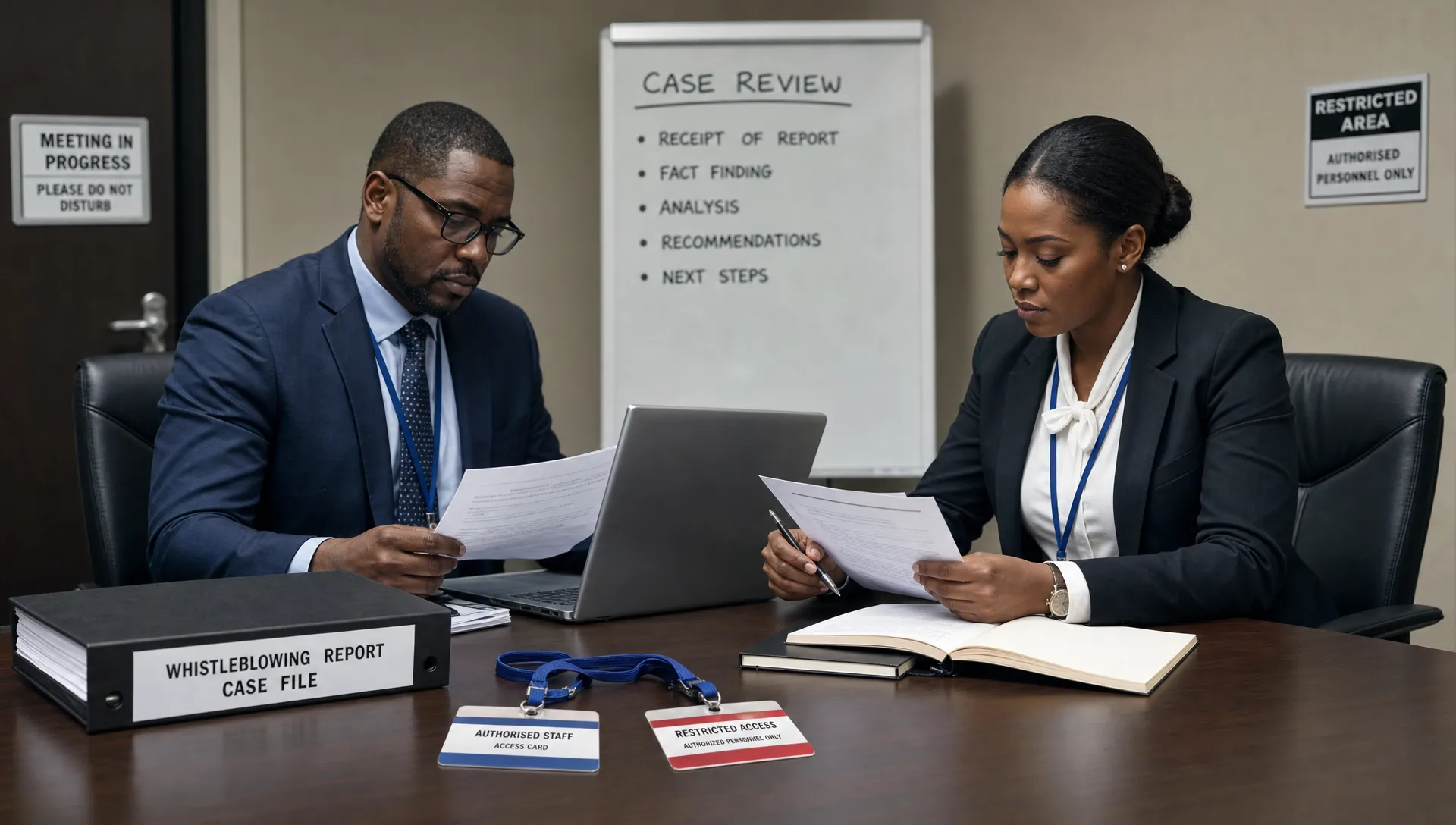
The most effective confidentiality control is simple: fewer people should see reporter information. Access should be based on role, case type and conflict checks, not seniority or curiosity.
A good case management model separates the people who receive reports, the people who investigate them and the people who receive governance updates. In a small organisation, one person may hold multiple roles, but the principle remains the same. Access should be deliberate and documented.
Role | Typical access | Key safeguard |
Intake officer | Initial report and reporter contact details | Trained to triage and restrict onward sharing |
Investigator | Case facts needed to investigate | Receives redacted reporter details where possible |
Legal or compliance lead | Sensitive allegations and legal risk | Applies privilege and disclosure controls where appropriate |
HR representative | Employment related action where required | Sees only the information needed for their role |
Board or committee | Trends, severe matters and oversight information | Receives anonymised or aggregated reporting unless identity is essential |
Access controls should be reviewed regularly, especially when staff change roles or leave the organisation. Case files should not remain accessible to former investigators, temporary project teams or general HR users. If the programme uses a vendor platform, the organisation should also understand which vendor personnel can access records and under what circumstances.
Board oversight is still necessary, but it should not become a channel for identity exposure. Boards and committees usually need themes, volumes, ageing, severity, remediation status and significant risks. They rarely need the reporter’s name. PLMC’s article on governance data protection board reporting KPIs offers a practical model for reporting privacy and compliance information without overloading directors with unnecessary personal data.
Redact before sharing case details
Investigations require facts, but facts do not always require names. Before sharing a report with a manager, HR business partner, internal auditor or external adviser, review whether reporter information can be removed or generalised.
For example, “an employee in the finance department reported that...” may be enough in some cases. In others, even that phrase may identify the person because only one employee could have known the fact. Redaction should therefore consider both direct identifiers and context.
Interview planning also matters. A careless question can expose a reporter. If an investigator says, “We understand you spoke with Marsha after the tender meeting,” the witness may infer exactly who raised the concern. Instead, questions should focus on events, documents and decisions rather than the source of the allegation.
Case titles should also be neutral. A file named “Complaint by A. Brown against Procurement Manager” creates avoidable risk. A better format is a case number with a broad category, such as “WB-2026-014 Procurement concern.” This small discipline helps protect confidentiality in file lists, email subject lines and audit logs.
Handle data subject requests with care
Whistleblowing files often contain personal information about several people. A person accused of misconduct may later request access to information about them. A reporter may also ask what information is held about their disclosure. These requests can be sensitive because responding too broadly may reveal another person’s identity or compromise an investigation.
The organisation should have a documented process for reviewing such requests. The process should involve privacy, legal and the case owner where appropriate. It should assess the requester’s rights, the rights and freedoms of others, legal restrictions, confidentiality commitments and the status of the investigation.
Do not allow frontline staff to respond casually to these requests. A well designed procedure is safer for everyone involved. If your organisation is updating its privacy documents, the principles in data protection policies and procedures that hold up can help ensure the written process matches operational reality.
Set retention rules before the first report arrives
Whistleblowing records should not be kept forever by default. Long retention increases the chance that sensitive information will be exposed, misused or taken out of context years later. At the same time, deleting records too quickly can undermine investigations, regulatory cooperation, employment decisions and legal defence.
A practical retention schedule should distinguish between categories of cases. Unsubstantiated low risk matters may not need the same retention period as substantiated fraud, anti-money laundering concerns, cyber security incidents or serious governance failures. Retention should also pause where litigation, regulatory inquiries or law enforcement matters are active.
When a case is closed, the organisation should decide what must remain in the final record. Draft notes, duplicate files and unnecessary reporter contact details should be reviewed. If the reporter’s identity no longer needs to be visible to future users, it may be possible to segregate, redact or pseudonymise it while preserving the integrity of the case outcome.
Manage vendors and cross-border access
Many organisations use external hotline providers, investigation firms, legal advisers, forensic specialists or cloud platforms. These arrangements can improve independence and capacity, but they also introduce data protection risk.
Before using a vendor, ask where whistleblowing data will be stored, who can access it, whether support teams in other countries can view records and what security measures apply. The contract should address confidentiality, breach notification, retention, deletion, audit rights, sub-processors and return of data when the service ends.
This is especially important for Jamaican organisations that use overseas platforms or group company systems. Cross-border handling of personal data should be assessed under the Data Protection Act, 2020 and documented as part of the organisation’s compliance programme.
The international standard ISO 37002:2021 provides guidance on whistleblowing management systems and is built around principles such as trust, impartiality and protection. It is not a substitute for Jamaican legal advice, but it can help organisations benchmark their programme design against recognised good practice.
Train the people who receive and investigate reports
Most confidentiality failures are human, not technical. A manager who receives a disclosure may forward it to the accused person for “comments.” An investigator may store notes on a personal drive. A committee member may discuss a case in a public setting. These mistakes can undo strong policies.
Training should be role specific. General staff need to know how to recognise a report and where to send it. Managers need to know that they should not investigate sensitive allegations informally unless authorised. Intake officers and investigators need deeper training on privacy, evidence handling, trauma aware interviewing, conflicts of interest, cyber security and anti-retaliation principles.
Short refreshers work better than one annual lecture. Use realistic scenarios, such as a procurement officer reporting bid manipulation, a teller reporting suspicious AML control failures or an IT employee reporting unauthorised access to customer records. The goal is to make the correct behaviour easy under pressure.
Monitor whether reporter protection is working
A programme can look good on paper and still fail in practice. Governance teams should monitor whether reporter information is being protected throughout the case lifecycle.
Useful indicators include the number of people with access to each case, time taken to restrict misrouted reports, overdue access reviews, vendor access exceptions, complaints about confidentiality, retaliation concerns and the percentage of board reports using aggregated or anonymised data. These indicators should be reviewed by an appropriate governance forum without exposing reporter identities unnecessarily.
Periodic testing also helps. For example, internal audit or compliance can sample closed files to check whether reporter details were redacted before wider sharing, whether access was removed on time and whether retention decisions were recorded. Findings should lead to process improvement, not blame.
A practical protection checklist
Use this checklist to test whether your whistleblowing programme protects reporter information in practice.
Control area | Question to ask |
Intake | Do reporting channels avoid collecting unnecessary identifiers and metadata? |
Notice | Does the reporter receive a clear explanation of confidentiality and its limits? |
Access | Is reporter information restricted to trained personnel with a genuine need to know? |
Investigation | Are case details redacted or generalised before being shared? |
Governance | Are board and committee reports aggregated unless identity is essential? |
Retention | Are whistleblowing files deleted, archived or redacted according to documented rules? |
Vendors | Do contracts protect confidentiality, security, retention and cross-border handling? |
Training | Do managers know what to do if they receive a protected disclosure? |
The checklist is not a complete legal assessment, but it will reveal common weaknesses quickly. The largest risks usually appear where whistleblowing is treated only as an HR process or only as a fraud control, rather than as a privacy sensitive governance process.
Frequently Asked Questions
What is reporter information in a whistleblowing programme? Reporter information includes anything that can identify the person making the report. This may include their name, contact details, employee number, IP address, voice, writing style, role, location or contextual clues that point to them.
Can a whistleblowing report be truly anonymous? It can be anonymous if the organisation does not collect identifying information and cannot reasonably identify the reporter. In practice, anonymity can be weakened by metadata, small team context, call records or follow up communications, so systems must be designed carefully.
Should the accused person receive the reporter’s name? Not automatically. The accused person may need enough information to respond fairly to allegations, but that does not always require the reporter’s identity. Each case should be assessed carefully with privacy, legal and fairness considerations in mind.
How long should whistleblowing records be kept? Retention depends on the type of allegation, investigation outcome, legal requirements and potential proceedings. Organisations should set documented retention rules and avoid keeping reporter information indefinitely without a clear reason.
How does the Data Protection Act, 2020 affect whistleblowing programmes in Jamaica? The Act applies because whistleblowing files usually contain personal data about reporters, accused persons, witnesses and others. Organisations should apply privacy principles such as fair handling, security, limited access, retention control and accountability.
Strengthen your whistleblowing programme with privacy by design
A trusted whistleblowing programme protects the people who speak up and the integrity of the investigation. That requires more than a policy statement. It requires practical controls for intake, access, redaction, retention, vendor management, training and board oversight.
Privacy & Legal Management Consultants Ltd. supports Jamaican organisations with data protection implementation, corporate governance, anti-money laundering compliance, cyber security services, GRC integration, training and risk assessment. If your organisation is building or reviewing a whistleblowing programme, contact PLMC for guidance tailored to your compliance environment.