

Suspicious Transaction Reporting in Jamaica Without Tipping Off
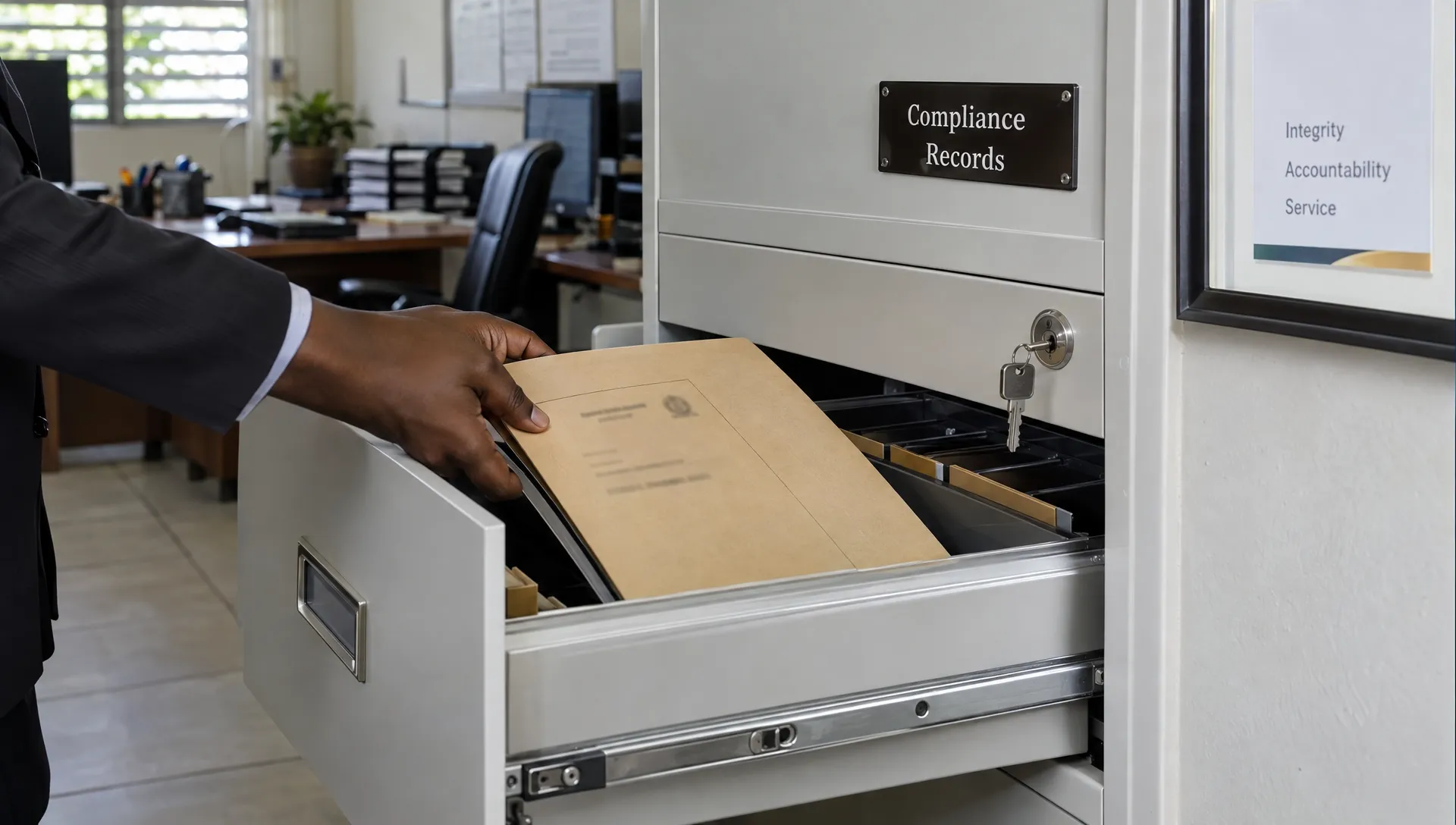
Suspicious transaction reporting in Jamaica requires two things at once: prompt action when the reporting threshold is met and careful control over who learns about it. A well-intended customer update, a shared case note or a request for management approval can expose a confidential report or alert someone to an investigation.
The practical challenge is to keep ordinary business processes moving without revealing restricted information. Staff need to know how to escalate concerns, what to record and when to stop answering questions themselves. They also need to understand that suspicion is not proof of criminal conduct.
This guide sets out an operational approach. Decisions on a particular transaction should follow the legislation, applicable sector guidance and legal advice where needed.
What suspicious transaction reporting in Jamaica requires
Jamaica’s Proceeds of Crime Act and associated money laundering prevention regulations establish key anti-money laundering obligations. The duties applying to an organisation depend on its activities and legal status, including whether it falls within the regulated sector.
A suspicious transaction report, commonly called an STR, communicates information that meets the applicable legal reporting test. It is not simply a report of every unusual payment, nor does the organisation need to prove the underlying offence before reporting. Equally, an amount below a routine cash-reporting threshold is not automatically free from suspicion.
Consult the Financial Investigations Division (FID) for official reporting information and current submission arrangements for Jamaica’s designated authority. Your procedure should identify the applicable statutory deadline, authorised submitter and backup arrangements. Internal approval processes must not cause a legally required report to be late.
An internal escalation is not a substitute for an external disclosure required by law. Separate terrorist-financing reporting obligations may also apply, so the procedure should distinguish the relevant reporting routes rather than treating every concern as identical.
How tipping off can happen
Tipping off is not limited to telling a customer, “We filed an STR.” Disclosures about a report or investigation can create criminal liability where the statutory conditions are met, including the relevant knowledge or suspicion and potential prejudice to an investigation.
The precise offence and any exceptions must be assessed under the applicable legislation. Not every due diligence question or customer conversation is prohibited. However, even a disclosure that does not meet the criminal test can compromise confidentiality or disrupt an investigation.
Common operational risks include:
Recording “STR filed” in customer relationship notes visible to sales or service teams.
Copying a report into a broad management email or informal messaging group.
Telling a customer that FID is reviewing their activity.
Asking a third party questions that reveal a confidential suspicion or reporting decision.
The risk can arise internally as well as externally. A colleague’s seniority does not automatically create a need to see an STR. Separate access to ordinary customer information from access to reporting decisions, report contents and authority correspondence.
A controlled workflow from concern to report
Capture facts without making accusations
Frontline staff should record what they observed, when it happened and why it differed from the expected activity. Useful details include transaction dates, amounts, payment references, parties involved and the customer’s explanation in their own words.
Distinguish observations from conclusions. “The customer requested repayment to an unrelated account” is a fact. “The customer is laundering money” is an allegation that the available evidence may not support.
Preserve relevant records through approved systems. Do not copy identity documents to a personal phone, forward account statements to a private email address or alter original transaction records to add commentary.
Escalate through a restricted channel
Direct the concern to the nominated officer, often described as the money laundering reporting officer, or the authorised alternate. Staff should know how to reach that person when the usual manager is absent or involved in the concern.
Use a restricted reporting channel, not an ordinary customer-service queue. Keep the internal report separate from customer-visible notes and routine service correspondence.
A workable procedure explains who receives the concern, how receipt is recorded and how urgent cases are handled. Escalation should not depend on a relationship manager agreeing that a profitable customer presents a risk.
Assess the legal threshold and report promptly
The nominated officer should assess the information against the applicable legal test, documenting the reasoning and any relevant gaps. Additional enquiries should be proportionate and must not delay a report that is already required.
Where ownership is unclear, appropriate beneficial ownership checks may help establish who controls the customer. Any further contact should be considered for both its evidential value and its risk of revealing the concern.
For suspicious transaction reporting in Jamaica, the assessment record should connect the facts to the suspicion. A transaction chronology, the expected activity, the unexplained departure and relevant supporting records are more useful than a conclusion such as “suspicious customer”.
Follow the official reporting requirements, preserve submission evidence and control any subsequent correspondence. If the decision is not to report, document the rationale and circumstances that would trigger reassessment.
Make a separate decision about the transaction
Filing an STR does not, by itself, answer whether a transaction should proceed. Nor should staff assume that making a report creates authority to freeze funds, close an account or release a payment.
The authorised decision-maker must assess any applicable legal restriction, court order, sanctions requirement or competent-authority direction. Seek legal advice where the organisation’s authority or obligations are unclear.
Record the operational decision separately from the reporting decision, with access appropriate to each. Frontline staff should receive only the instructions needed to carry out their role, together with approved customer communications.
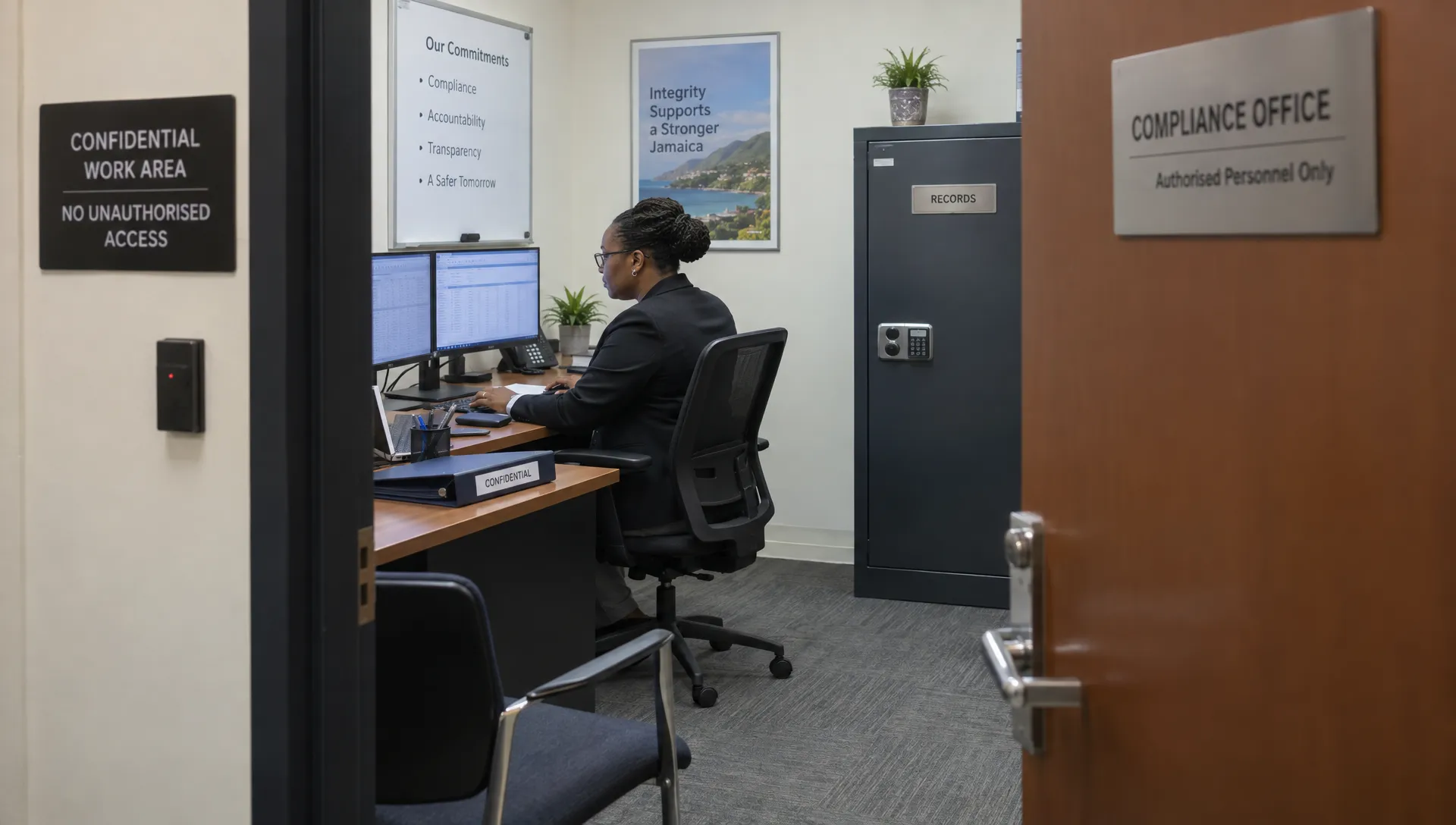
Communicate truthfully without revealing the report
Customer-facing language should be accurate, authorised and limited to what the customer needs to know. A standard response is useful only when it genuinely describes the circumstances. Staff must not invent a technical failure or claim that a regulator has imposed a restriction when that is untrue.
Customer situation | Appropriate approach | What to avoid |
The customer requests a transaction update | Explain the actual service status and any information legitimately required, using approved wording. | Revealing that an STR exists or describing confidential authority contact. |
Further due diligence documents are needed | Request specific documents for an identified, legitimate requirement. | Asking the customer to produce an explanation that will “make the transaction look acceptable”. |
The customer directly asks whether a report was filed | Refer the question to the authorised compliance contact for a controlled response. | An improvised confirmation, a false denial or a promise that no report will be made. |
The customer demands a completion date | Give only a timeframe the organisation can support and is authorised to communicate. | Promising release of funds before the relevant decision has been made. |
A direct question about reporting deserves particular care. There is no universal script that is safe in every context. The response must account for the applicable disclosure restrictions and the surrounding facts.
Reporting decisions must never become bargaining tools. Do not suggest that a customer can prevent a report by withdrawing a transaction, providing more business or agreeing to close an account.
Protect the report and the personal data behind it
Restrict access and preserve an audit trail
Store internal disclosures, STRs, submission records and related correspondence in a controlled environment. Apply role-based access where available and periodically check who can see, export or search the material.
Restrictions should cover more than the main case file. Email attachments, shared drives, downloaded documents, printed copies and support-system notes can all create unintended access. Retain records for the period required by applicable AML rules and any relevant preservation obligation, rather than deleting them under an ordinary customer-file schedule.
Management reporting should provide oversight without routinely reproducing identifiable reports. Aggregate volumes, timeliness and control failures may meet governance needs without circulating confidential case details.
Apply data protection rules alongside reporting duties
Jamaica’s Data Protection Act 2020 does not make a legally required AML disclosure dependent on customer consent. The organisation should identify and document the applicable lawful basis, disclose information required or relevant to the reporting duty and maintain appropriate security.
The relationship between AML obligations and data privacy rules also matters when handling access requests. Staff should not automatically include an STR in a response, but neither should they assume that every AML-related record is exempt from disclosure.
Refer such requests to the privacy lead, nominated officer and legal adviser as appropriate. Assess the specific information and any applicable exemption or restriction before responding. Avoid explanations that themselves reveal protected reporting information.
What to do if someone may have tipped off the customer
Treat a suspected disclosure as a compliance incident. Notify the nominated officer and relevant legal or privacy personnel promptly, restrict further access where appropriate and preserve the original message, call record or audit log.
Do not delete the evidence or send an improvised correction to the customer. A second message can disclose more than the first.
Assess what was revealed, who received it and whether it could prejudice an investigation. Determine whether contact with FID or another competent authority is required or appropriate. Separately assess whether the event creates a personal data breach notification obligation; that assessment should follow the applicable legal test, not an assumption that every confidentiality incident is automatically reportable.
After containment, correct the underlying weakness. This might involve changing access permissions, separating case records or retraining staff on a specific communication failure.
Frequently asked questions
Must a business prove money laundering before filing an STR? No. The applicable legal reporting test concerns knowledge, suspicion or other specified grounds, not proof of a criminal conviction. Record the facts and reasoning supporting the decision rather than presenting an unproven allegation as established fact.
Can staff continue normal customer due diligence? Ordinary, legitimate due diligence is not automatically prohibited. However, additional questions connected to a confidential concern should be assessed for tipping-off risk. Staff should follow the nominated officer’s instructions rather than conducting their own investigation.
Can a report be shared with the board or an overseas group company? Do not assume either recipient is automatically entitled to it. Assess the purpose, legal authority, confidentiality restrictions and any cross-border data protection requirements. Governance oversight does not always require access to an identifiable STR.
Should a transaction always be stopped once suspicion arises? Not automatically. The organisation needs a separate, authorised assessment of the legal and operational requirements. Reporting, delaying, refusing and freezing are different actions with potentially different legal grounds.
Strengthen your reporting controls before the next concern
Effective suspicious transaction reporting in Jamaica depends on staff being able to act promptly without exposing restricted information. Test the entire process, including absence cover, customer enquiries and accidental disclosure, rather than checking only whether an STR form exists.
PLMC provides anti-money laundering compliance, data protection and training services. Request a free consultation with PLMC to discuss your organisation’s escalation procedures, confidentiality controls and staff-training needs.