

Privacy Risks in International Payroll Systems
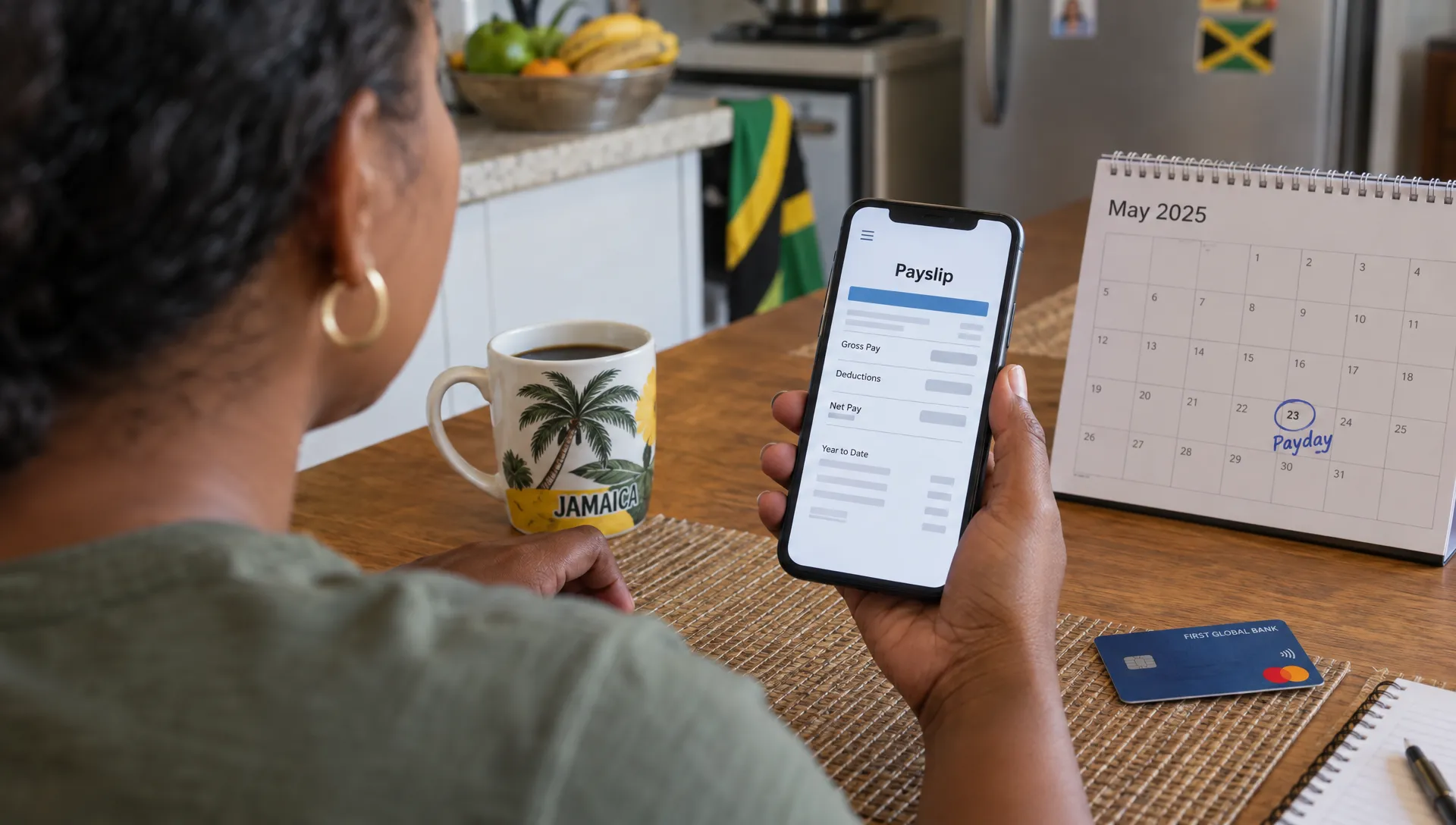
Privacy risks in international payroll systems arise whenever employee information moves between an employer, payroll provider, overseas support team and payment partner. For Jamaican organisations, the exposure extends beyond salary figures: payroll records can include bank details, taxpayer registration numbers (TRNs), home addresses and deductions that reveal sensitive personal circumstances.
Outsourcing payroll does not remove the employer’s responsibility for that information. The practical challenge is to keep employees paid accurately and on time while controlling who can access their records, where those records travel and how long copies remain available.
Why payroll needs its own privacy assessment
Payroll is a recurring, deadline-driven process. Every pay cycle can generate new exports, exception reports, bank files and payslips. Even a well-secured central platform may sit alongside spreadsheets, email attachments and locally saved copies that receive much less protection.
The consequences also differ from those of an ordinary administrative data leak. Disclosure can expose an employee’s finances or health-related deductions. An unauthorised bank-detail change can divert wages. An incorrect record can affect statutory reporting or leave someone unable to meet essential expenses.
Assess the entire pay cycle, not just the payroll application. Include the source HR system, timekeeping inputs, approval process, payment file, employee portal and arrangements for correcting errors. PLMC’s guide to assessing privacy risk in HR workflows provides a useful starting point for that wider review.
Apply Jamaican requirements before relying on overseas assurances
Jamaica’s Data Protection Act, 2020 establishes standards covering the processing of personal data, including security, retention and international transfers. The Office of the Information Commissioner is Jamaica’s supervisory authority for data protection.
For payroll, identify the lawful condition supporting each processing purpose. Calculating wages and meeting statutory obligations are different from using employee records for optional benchmarking or product development. Sensitive personal data, such as information revealing health conditions or trade-union membership, requires additional consideration under the Act.
The eighth data protection standard addresses transfers outside Jamaica. Assess whether the destination provides adequate protection or whether a relevant statutory exception applies. A vendor’s claim that it is “globally compliant”, or the presence of a confidentiality clause, does not establish that a transfer is permissible.
Overseas law may also matter, but its application depends on the circumstances. European citizenship or European hosting alone does not automatically make a Jamaican employer subject to the GDPR. PLMC explains the relevant triggers in its article on when overseas data laws apply to Jamaican companies.
Where privacy risks in international payroll systems arise
1. The hosting location hides the full access footprint
A provider may identify one country as the location of its production database while allowing support staff, implementation teams or subcontractors elsewhere to access employee records. Backups and disaster-recovery copies can create further exposure.
Ask for a country-by-country account of storage, access and onward disclosure. Include remote troubleshooting, temporary migration environments and downloaded support attachments. Assess these activities under the applicable transfer rules rather than assuming that remote viewing has no legal significance.
The answer should distinguish current arrangements from possible future changes. Establish how the provider will notify you before introducing a new location or subcontractor, and what options you have if that change creates an unacceptable risk.
2. Payroll extracts reveal more than the recipient needs
A payroll file often combines information needed by several different recipients. A bank may need payment instructions, while a payroll administrator needs calculation inputs. Neither necessarily needs every field held in the employee’s HR record.
Review each outgoing file against its purpose. Remove unnecessary addresses, identification documents, free-text comments and supporting medical records. Where a deduction must be calculated, consider whether a restricted code is sufficient instead of a description explaining the employee’s circumstances.
Bank account details and salary figures are high-impact information even where they are not classified as sensitive personal data under a particular law. Protect them accordingly, without confusing their practical sensitivity with their statutory classification.
3. Integrations and urgent changes bypass approval controls
Payroll connects to systems that were not necessarily designed as one security environment. A timekeeping tool, HR database or payment interface may give an integration account broader access than the payroll team itself has.
Use access permissions tied to specific tasks. A user who can enter overtime should not automatically be able to change bank details, export the entire workforce file or release payments. Integration credentials also need restricted permissions, secure storage and an accountable owner.
Treat bank-detail changes as both a privacy and payment-fraud risk. Verify changes through a trusted channel, separate entry from approval and retain an audit trail. An email appearing to come from an employee is not sufficient evidence on its own.
4. Provider roles and secondary uses remain unclear
A payroll provider may process information on the employer’s instructions for wage calculations but have separate legal responsibilities for another service. An employer-of-record arrangement can involve different responsibilities again. Labels in a sales proposal do not settle these questions.
Document the parties’ roles for each activity, including tax submissions, benefits administration, payment processing and support. The contract should address instructions, confidentiality, subcontractors, incident assistance and the handling of employee requests.
Also check whether the provider proposes to reuse payroll data for analytics, benchmarking or AI development. Removing names does not necessarily make a dataset anonymous, especially where a small department or unusual salary makes an individual identifiable. Secondary uses require their own assessment and appropriate restrictions.
5. Payslips and exception reports reach the wrong people
Delivery errors can expose information even when the underlying platform is secure. Examples include a payslip attached to the wrong email, a shared mailbox accessible to former staff or a manager receiving a report containing the salaries of employees outside their team.
Check recipient permissions before distribution and use authenticated employee access where appropriate. If email delivery is necessary, assess the attachment protection, recipient validation and risks associated with shared or personal accounts.
Exception reports deserve particular attention. A report created to explain a failed payment may contain bank details, deductions and internal comments. Limit its audience and content, and avoid turning a troubleshooting document into a permanent departmental record.
6. Copies survive corrections, departures and supplier changes
Correcting the live payroll database does not necessarily correct a downloaded spreadsheet, a support ticket or an archived payment file. Likewise, ending a supplier relationship does not guarantee that every copy has been removed.
Set retention periods by record category and applicable legal requirements, rather than using one duration for all payroll material. Statutory records, temporary calculation files and troubleshooting attachments may justify different treatment.
Contracts should explain how data is returned or deleted, what happens to backups and how completion is evidenced. Where deletion from backups is delayed, establish how those copies remain protected and how expired data will be handled if a backup is restored.

Turn the assessment into a pay-cycle control plan
The most useful review connects each risk to an owner and evidence that the safeguard works. A questionnaire response is a starting point, not proof that a control operates during a busy payroll run.
Use a compact control register such as this:
Payroll activity | Privacy or security concern | Evidence to request or retain |
Overseas support access | Staff access from undisclosed countries | Access-location inventory and relevant access logs |
HR-to-payroll export | Unnecessary personal information transferred | Approved field list and a checked sample export |
Bank-detail update | Unauthorised change or wage diversion | Verification record and separate approval |
Payslip distribution | Disclosure to the wrong recipient | Recipient checks and portal permission review |
Supplier exit | Uncontrolled residual copies | Return or deletion records and documented backup treatment |
Before releasing payroll
Confirm that access changes have been completed, bank-detail amendments have been verified and unusual payment exceptions have an identified owner. Inspect the actual transfer file rather than relying only on the documented specification.
Test software changes with synthetic information wherever possible. Copying live payroll into a test environment can create another dataset with weaker permissions, longer retention and wider developer access.
After the pay run
Reconcile payment results, remove temporary files according to the retention schedule and check unresolved support tickets for unnecessary personal information. Record errors and near misses so that recurring problems lead to process changes.
These checks make privacy risks in international payroll systems visible during normal operations, rather than only during an annual compliance review. They also help distinguish a one-off mistake from a control failure affecting the whole workforce.
Prepare for incidents and cross-border disputes
A payroll incident can involve confidentiality, accuracy or availability. A leaked salary report requires a different response from altered bank details or an outage immediately before payday. The response plan should cover secure communication with employees and a controlled alternative payment process, not just technical recovery.
The supplier contract should specify prompt incident notification, evidence preservation and cooperation with the employer’s legal assessment. Do not allow a vendor’s internal definition of a “material incident” to determine whether your organisation receives information needed to meet its own obligations.
Contractual disputes may require advice in the supplier’s jurisdiction. For example, where a disagreement with a Dutch payroll supplier concerns contractual liability, an Eindhoven law firm handling civil disputes may be a relevant contact for the Dutch-law issues. That advice is separate from assessing the Jamaican data protection duties governing the employee records involved.
Frequently asked questions
Does using an overseas payroll provider transfer responsibility away from the employer? No. Where the employer is the data controller, engaging a processor does not remove its responsibilities. Each party’s role should be assessed for the particular service rather than assumed from the contract’s title.
Is employee consent enough to send payroll information abroad? Do not rely on blanket consent. Assess the lawful processing conditions, the international transfer requirements and any additional conditions for sensitive personal data. Consent does not replace security, transparency or data-minimisation obligations.
Must every payroll record be deleted when an employee leaves? No. Applicable legal requirements and justified purposes may require some records to be retained. Remove access promptly, distinguish required records from unnecessary copies and apply a documented retention schedule.
Does every international payroll system require a data protection impact assessment? The applicable law and processing risks determine whether a formal assessment is required. Even where it is not mandatory, a documented privacy risk assessment helps identify overseas access, sensitive deductions and weaknesses in the payment process.
Review your payroll arrangements with PLMC
Privacy & Legal Management Consultants Ltd. supports Jamaican organisations with data protection implementation, risk assessment, training and governance, risk and compliance integration.
Bring your payroll data-flow map, supplier agreement and sample export fields to a free consultation with PLMC. These materials provide a practical starting point for identifying gaps and deciding which safeguards need attention before the next pay cycle.