

Privacy Policy Privacy: What Google and Users Expect Now
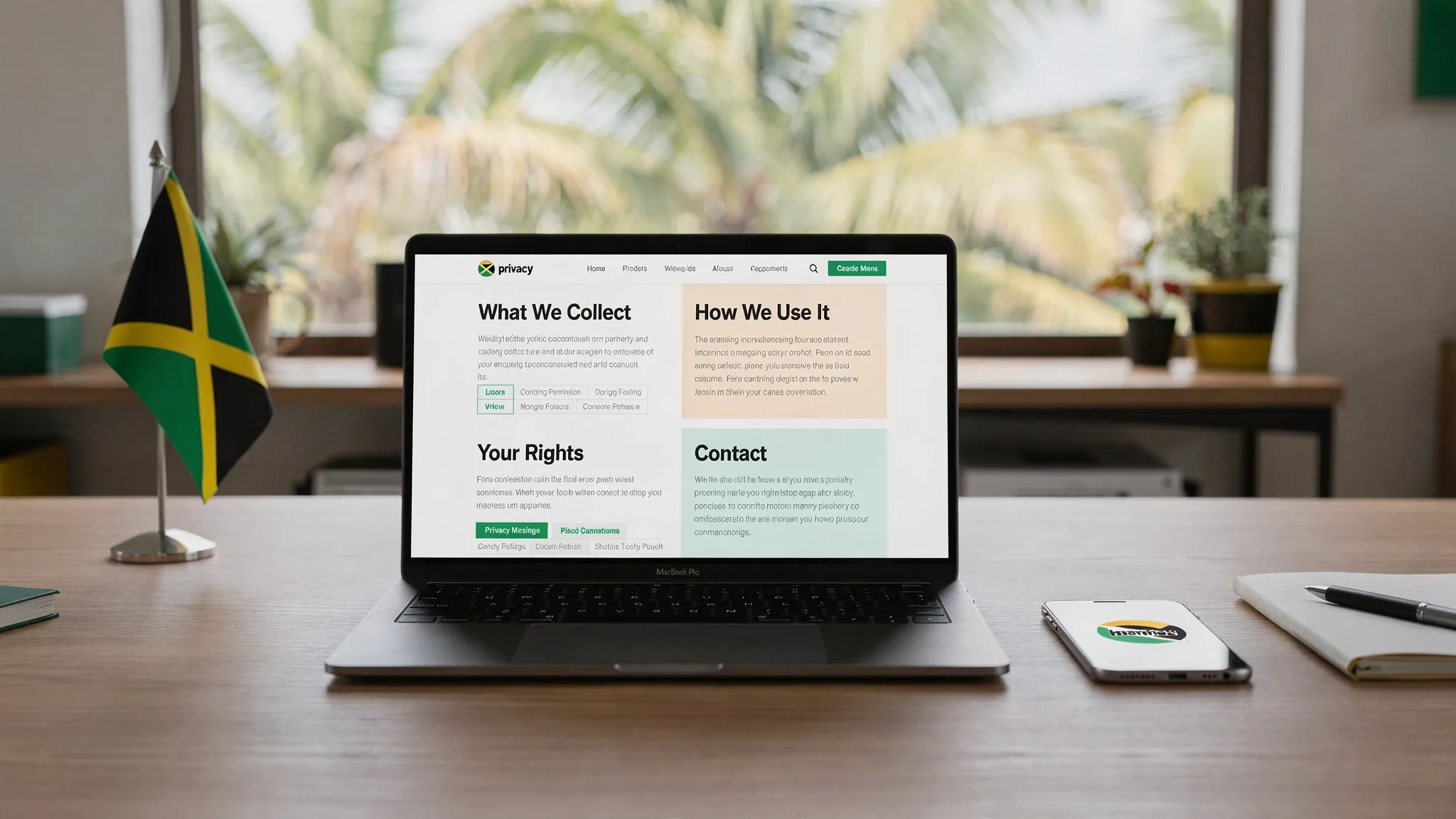
A privacy policy used to be a footer formality. In 2026, it is a trust document, a compliance artefact, and (in many cases) a prerequisite for running ads, publishing apps, and onboarding privacy conscious customers.
If you are searching for “privacy policy privacy” guidance, the intent is usually practical: what should the policy say, how should it be presented, and what will Google and real users consider acceptable today?
This article breaks down what modern expectations look like, with a Jamaica-first lens (including the Data Protection Act, 2020), without turning your privacy policy into a copy-and-paste legal wall.
Why privacy policies are under more scrutiny now
Three shifts have raised the bar:
First, users have learned to look. Data breaches, phishing, and aggressive tracking have made people more cautious about forms, checkout pages, newsletters, and “free” tools.
Second, platform enforcement has increased. Many organisations only feel the pain when Google Ads asks for a compliant disclosure, when an app store review flags user data handling, or when partners and vendors add privacy clauses to contracts.
Third, privacy laws have operational teeth. In Jamaica, the Data Protection Act, 2020 requires transparency and accountability when you process personal data. Your privacy policy is not your entire compliance programme, but it is one of the most visible proof points.
What Google expects now (practical, not theoretical)
Google does not publish a single “SEO ranking checklist” for privacy policies, and you should be wary of anyone claiming a privacy policy alone will boost rankings. What Google does do is enforce privacy requirements across products (Ads, Play, analytics integrations), and it expects transparency when data is collected or shared.
Here are the expectations that most often affect Jamaican businesses using Google’s ecosystem.
1) Easy to find, accessible, and readable
At minimum, your privacy policy should be:
Linked in the website footer.
Reachable without login.
Written in clear language (not only legalese).
Mobile-friendly.
If users cannot find it at the moment they are asked for data (contact form, newsletter signup, account creation, checkout), trust drops quickly.
2) Accurate disclosure of analytics, advertising, and third parties
If you use common tools like Google Analytics, Meta Pixel, chat widgets, embedded maps, or email marketing platforms, users increasingly expect you to say so.
Google’s advertising policies and product policies generally require that you disclose data collection and use, including when cookies or identifiers are used for advertising. For reference, see Google’s advertising policies and Google’s general Privacy and Terms.
The key risk is not using tools. The risk is saying you do not collect or share data while your site actually runs third-party tags.
3) A clear approach to cookies and similar technologies
If your site uses cookies (or similar local storage, pixels, device identifiers), users expect:
A simple explanation of what is used and why.
How they can control it (browser settings, consent banner preferences, opt-outs where applicable).
Whether disabling cookies affects site functionality.
If you run marketing tags, align your cookie messaging with your actual implementation. A policy that promises “we do not track” while running behavioural advertising tags is a common gap.
4) A real contact pathway for privacy requests
Google and users both expect accountability. Your policy should identify how someone can reach you about privacy, and what kinds of requests you accept.
Even if your organisation is not large, you should not rely on “contact us” with no specifics. Provide at least one monitored email address or contact method for privacy queries.
5) If you have an app, the bar is higher
For apps, Google Play has specific requirements around data collection, sharing, security practices, and disclosures. If your organisation has a mobile app, review the current Google Play User Data policy and ensure the privacy policy matches what the app actually does.
What users expect now (the “trust test”)
Most users do not read privacy policies word for word. They scan for answers to a few high-impact questions:
“What data are you collecting about me?”
Be specific. “Personal information” is too vague on its own. Translate into categories like:
Contact details (name, email, phone)
Account information (login details, preferences)
Transaction details (billing information, delivery details)
Device and usage data (IP address, pages visited, timestamps)
“Why are you collecting it?”
State the purpose in plain language. Users want to see a purpose they recognise, such as:
Responding to enquiries
Providing services
Processing payments
Improving site performance
Preventing fraud and securing accounts
“Who do you share it with?”
Users accept that you may rely on service providers, but they want clarity. Naming categories helps: payment processors, email service providers, cloud hosting, analytics providers, customer support tools.
“How do I control this?”
User expectation has moved from “we comply with the law” to “show me the controls.” Include:
How to unsubscribe from marketing
How to withdraw consent where consent is used
How to request access, correction, or deletion (where applicable)
“Is this current?”
A privacy policy with no effective date, or one last updated many years ago, signals neglect. Add an “Effective date” and update it when you make meaningful changes.
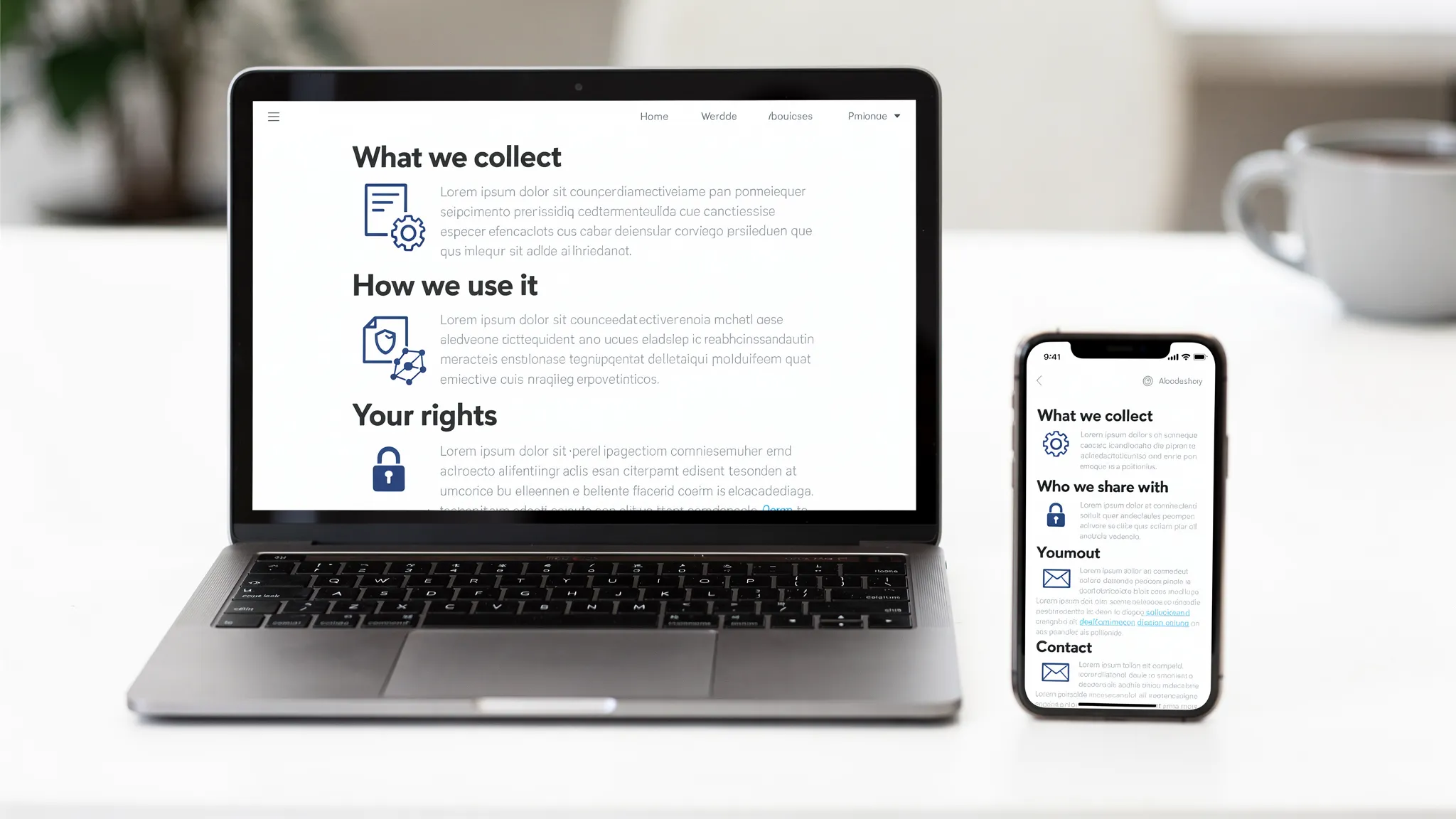
What Jamaican law expects your privacy policy to reflect
Your privacy policy is not the Data Protection Act in paragraph form, but it should align with the Act’s transparency and accountability goals.
At a practical level, Jamaican organisations should ensure their privacy policy reflects:
Transparency: what you collect, why, and how it is used.
Fairness and purpose limitation: using data for the purposes you state.
Data minimisation: collecting what you need, not what is convenient.
Retention: how long you keep data (or the criteria you use to decide).
Security: a realistic description of safeguards (without oversharing sensitive security details).
Individual rights: how people can make requests, and how you will respond.
Cross-border processing: if you use cloud services or vendors outside Jamaica, explain that transfers may occur and how you manage them.
If you want a deeper read on Jamaica’s privacy principles and rights, PLMC has a dedicated guide: Data Privacy in Jamaica: Key Principles and Rights.
The overlap: Google vs users vs compliance (where policies fail)
Many privacy policies fail because they optimise for only one audience (lawyers, platforms, or customers) instead of covering the overlap.
Area | What users want | What Google/platforms commonly enforce | What compliance needs (Jamaica-focused) |
Transparency | Plain language answers | Clear disclosures for data collection and ad-related use | Notice that supports lawful, fair processing |
Cookies and tracking | Real control, not vague promises | Disclosure of cookie/identifier use (especially for ads) | Consistency between what you do and what you say |
Third parties | Who gets my data? | Clear statements about sharing for service delivery and advertising | Vendor oversight and accountability |
Security | “Are you protecting me?” | Not usually detailed, but expects responsible handling | Appropriate technical and organisational measures |
Rights and requests | A working contact route | Accountability signals | Mechanism to handle access, correction, objection, deletion requests (as applicable) |
A modern privacy policy outline that works (and why)
You can structure your privacy policy so it is both readable and defensible. Here is an outline that tends to satisfy user expectations while staying aligned to common platform and compliance needs.
Section | What to include (keep it specific) | Common mistake to avoid |
1. Who you are | Legal entity name, website scope, contact method | Using a generic template name |
2. What data you collect | Categories of personal data, including online identifiers | Saying “we collect information” with no detail |
3. How you collect it | Direct from users, automatically (cookies), from third parties | Hiding tracking under vague language |
4. Why you use it | Purposes tied to services and operations | Listing broad purposes like “business purposes” |
5. Legal basis or justification | High-level explanation of the grounds you rely on (where relevant) | Copying GDPR-only wording that does not match your context |
6. Sharing and disclosures | Service providers, professional advisers, legal requirements | Saying “we never share” while using vendors |
7. Cookies and tracking | Types, purposes, controls, consent approach | No mention of pixels, tags, or analytics |
8. Retention | Periods or criteria | “We keep it as long as necessary” with no criteria |
9. Security | Reasonable safeguards at a high level | Overpromising “100% secure” |
10. Your rights and how to contact you | Request types, how to submit, identity verification approach | No clear inbox or process |
11. International transfers | Whether data may be processed abroad via cloud/vendors | Ignoring where systems are hosted |
12. Updates | Effective date, how changes are communicated | Updating practices but not the policy |
If your organisation processes sensitive categories of data, handles children’s data, or runs high-risk processing, you will likely need additional sections and stronger governance around notices.
Common privacy policy mistakes we see (and how to fix them)
Generic templates that do not match the site
If your policy says you do not use cookies, but your site runs analytics, it is not only a trust problem. It can become a compliance problem and a partner due diligence red flag.
Fix: do a quick tag and vendor scan (analytics, advertising, forms, CRM, scheduling tools) and align the policy to reality.
No operational owner
A privacy policy needs maintenance. Without an internal owner, changes to your website happen quietly (new forms, new integrations), and the policy becomes outdated.
Fix: assign an accountable owner (role-based, not person-based), and require privacy review as part of web changes.
Overpromising on security or privacy
Statements like “we guarantee security” or “we never share data” are risky.
Fix: describe security in reasonable terms (access controls, encryption where appropriate, vendor oversight), and describe sharing accurately.
Hiding contact details
Users expect an obvious privacy contact. Regulators and business partners expect it too.
Fix: add a dedicated privacy contact method and ensure it is monitored.
How to keep your privacy policy current in 2026
Treat your privacy policy like a living control, not a static webpage.
A practical maintenance approach:
Review the policy at least annually, and whenever you add a new tool that collects personal data.
Maintain a simple register of third-party services used on the website (analytics, forms, email marketing, chat, payments).
Keep your cookie banner, tag configuration, and privacy policy aligned (they should not contradict each other).
Test your rights request pathway (send a mock request internally, confirm you can locate data and respond).
If you need a broader privacy programme view (beyond the policy document), PLMC’s checklist can help teams assess readiness: Privacy and Data Protection: A Practical Checklist.
Frequently Asked Questions
Is a privacy policy legally required for Jamaican websites? Many Jamaican organisations will need a privacy policy (or equivalent notice) if they collect and process personal data. It is also commonly required by platforms and business partners.
Does Google require a privacy policy? For many Google services, especially advertising and app distribution contexts, a clear privacy policy and accurate disclosures are expected. Requirements vary by product, so check the relevant Google policy pages.
What should I disclose about Google Analytics and pixels? Disclose that you collect usage/device data via cookies or similar technologies, explain the purposes (analytics, performance, marketing where relevant), and provide user controls (consent settings, opt-outs where applicable).
Can I copy a privacy policy template from another company? You can use templates as a starting point, but copying without aligning to your actual tools, data flows, and retention practices often creates misleading statements.
How often should a privacy policy be updated? Update it whenever your data practices change in a meaningful way (new tools, new sharing, new purposes), and review it at least annually.
What is the fastest way to improve trust with users? Make the policy easy to find, add a plain-language summary of key points, and provide a clear privacy contact and controls for cookies and marketing.
Need a privacy policy that satisfies users and supports compliance?
Privacy & Legal Management Consultants Ltd. (PLMC) supports Jamaican organisations with data protection implementation, privacy awareness training, risk assessments, and governance-aligned compliance programmes.
If you want help reviewing your current privacy policy against your real website tracking and vendor setup, or aligning your notices with the Data Protection Act, visit Privacy & Legal Management Consultants Ltd. to request a consultation.