

Penetration Testing vs Vulnerability Scanning for SMEs
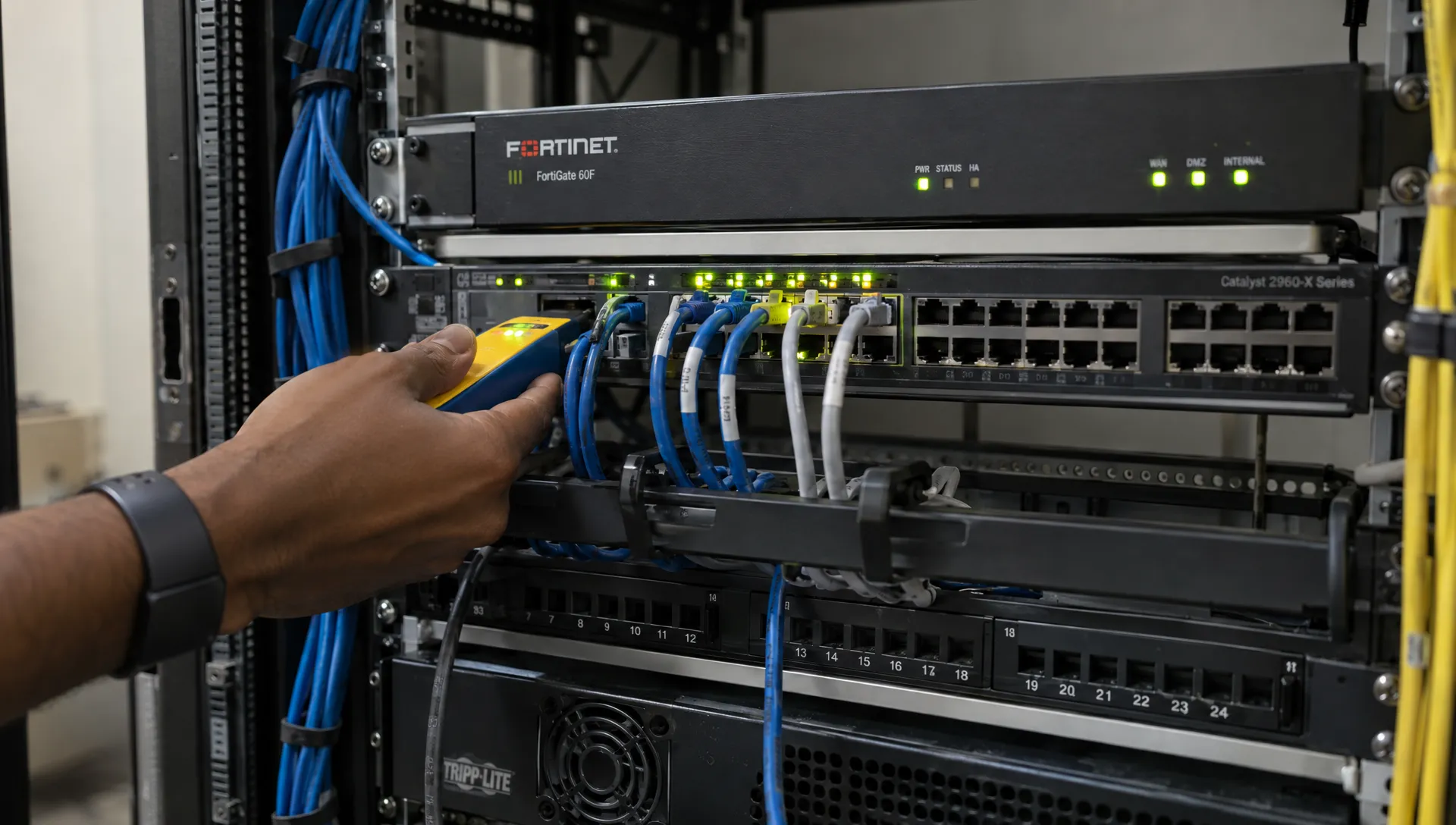
A small business does not need to buy every security assessment on offer. It needs evidence that its most important systems and customer information are protected. Understanding penetration testing vs vulnerability scanning helps Jamaican SMEs choose the right assessment, avoid paying for a scan labelled as a penetration test and budget for fixing the findings.
The distinction is straightforward: vulnerability scanning identifies potential weaknesses across an agreed scope, while penetration testing investigates whether selected weaknesses can be exploited and what that could mean for the business. Both support data protection, but neither provides a guarantee against a breach.
How the two assessments differ
A vulnerability scan uses automated tools to check systems, applications or configurations for known weaknesses. Depending on the tool and access provided, it may identify outdated software, exposed services, missing security updates or insecure settings.
A penetration test is an authorised security assessment in which testers use tools and manual investigation to attempt controlled exploitation. It can establish whether an attacker could bypass an access control, combine weaknesses or reach sensitive information.
Question | Vulnerability scanning | Penetration testing |
Main purpose | Identify potential vulnerabilities across the agreed scope | Investigate exploitable weaknesses and their impact |
Typical approach | Largely automated checks, sometimes with analyst validation | Manual investigation supported by automated tools |
Coverage | Often broad and repeatable | More focused, with depth limited by scope and available time |
Typical output | Findings with detected severity and supporting evidence | Validated findings, attack paths and remediation advice |
Common limitation | May flag false positives or miss business-logic weaknesses | Cannot examine every possible attack path within a fixed engagement |
Budget pattern | Usually lower cost per routine assessment | Usually higher cost per scoped engagement |
The NIST Technical Guide to Information Security Testing and Assessment treats these as distinct techniques within a wider assessment programme. A sensible security plan uses each where it answers a useful question.
What a vulnerability scan can and cannot tell you
Scanning is useful when an SME needs a repeatable way to identify technical weaknesses. For example, a business may need to check its internet-facing systems for exposed services or establish whether office computers are missing security updates.
The access given to the scanner matters. Unauthenticated scanning examines what is visible without signing in. Authenticated scanning uses approved credentials to inspect a system more deeply, often revealing software or configuration issues that an external check cannot see. These approaches answer different questions rather than replacing one another.
Coverage also depends on the product. A network scanner, web application scanner and cloud configuration assessment do not necessarily inspect the same things. Confirm which assets and checks are included before comparing quotations.
A clean scan does not establish that a system is secure. Automated tools may miss problems such as a customer viewing another customer's records through a flawed application workflow. Findings also need review: a detected software version or configuration does not always prove that exploitation is possible.
When a penetration test is worth the investment
Penetration testing becomes valuable when the business needs to understand the consequences of a weakness, not simply whether a tool can detect it.
Consider a Jamaican accounting firm with a client document portal. A scan might identify an outdated software component. A properly scoped penetration test could also investigate whether one client account can access another client's documents, whether staff privileges are excessive or whether several weaknesses can be combined to reach confidential records.
For web applications, the OWASP Web Security Testing Guide provides a useful basis for discussing coverage, including authentication, authorisation and session management. A proposal should explain which relevant areas will actually be tested.
Penetration testing is especially useful before launching a sensitive customer-facing application, after a major architectural change or where a customer contract requires it. However, a test is still a time-bound assessment. Its findings apply to the scope, access and conditions available during the engagement, not to every system the organisation operates.
Penetration testing vs vulnerability scanning: what should your SME buy first?
Start with the question your business needs answered and the security work already completed.
If you have limited visibility of your systems, begin with an asset inventory and targeted scanning. Identify what is internet-facing, where personal data is stored and who maintains each system. Scanning an incomplete asset list can leave the most important service unexamined.
If you already know about serious, straightforward weaknesses, fix them before paying for deeper testing. Missing critical updates, unnecessary remote access and abandoned user accounts should not remain unresolved while the business purchases another report. Scanning can help confirm that the corrections worked.
If you operate a sensitive portal or need assurance about access controls, a penetration test may deserve earlier priority. Routine scanning alone is unlikely to answer whether customers can cross account boundaries or whether a particular workflow can be abused.
For budgeting, distinguish recurring checks from deeper assessments. An illustrative approach is to scan important systems regularly and after relevant changes, then commission penetration testing according to exposure, business impact and contractual commitments. Some organisations choose an annual test, but that is not a universal rule or a substitute for testing significant changes.
Where priorities are unclear, a data protection risk assessment can help connect technical testing to the personal data and business processes most at risk.
Agree a safe and useful testing scope
The scope determines both the value and the safety of an assessment. A quotation that says only “test the company network” leaves too much unresolved.
Before work starts, agree on:
Assets and boundaries: Specify domains, IP addresses, applications, cloud accounts and any excluded systems.
Access and permissions: Confirm written authorisation from the appropriate system owners and any permissions required under hosting or cloud-provider terms.
Testing conditions: Define approved dates, source addresses, emergency contacts and circumstances that require testing to stop.
Permitted techniques: State whether exploitation, social engineering, denial-of-service testing or access to production records is allowed. Do not assume these are included.
Evidence handling: Agree how findings, credentials and any captured information will be encrypted, shared, retained and deleted.
Deliverables and retesting: Specify the report contents, findings discussion and arrangements for verifying fixes.
Use test accounts and synthetic records wherever practical. Where access to real personal data is unavoidable, require the minimum evidence needed to demonstrate the issue. A tester should not download an entire customer database merely to prove that access was possible.
Cloud and outsourced services need particular care. Paying for a service does not automatically authorise you to test the supplier's infrastructure. Use a vendor privacy assessment to establish responsibilities, available assurance and approval requirements before commissioning work.
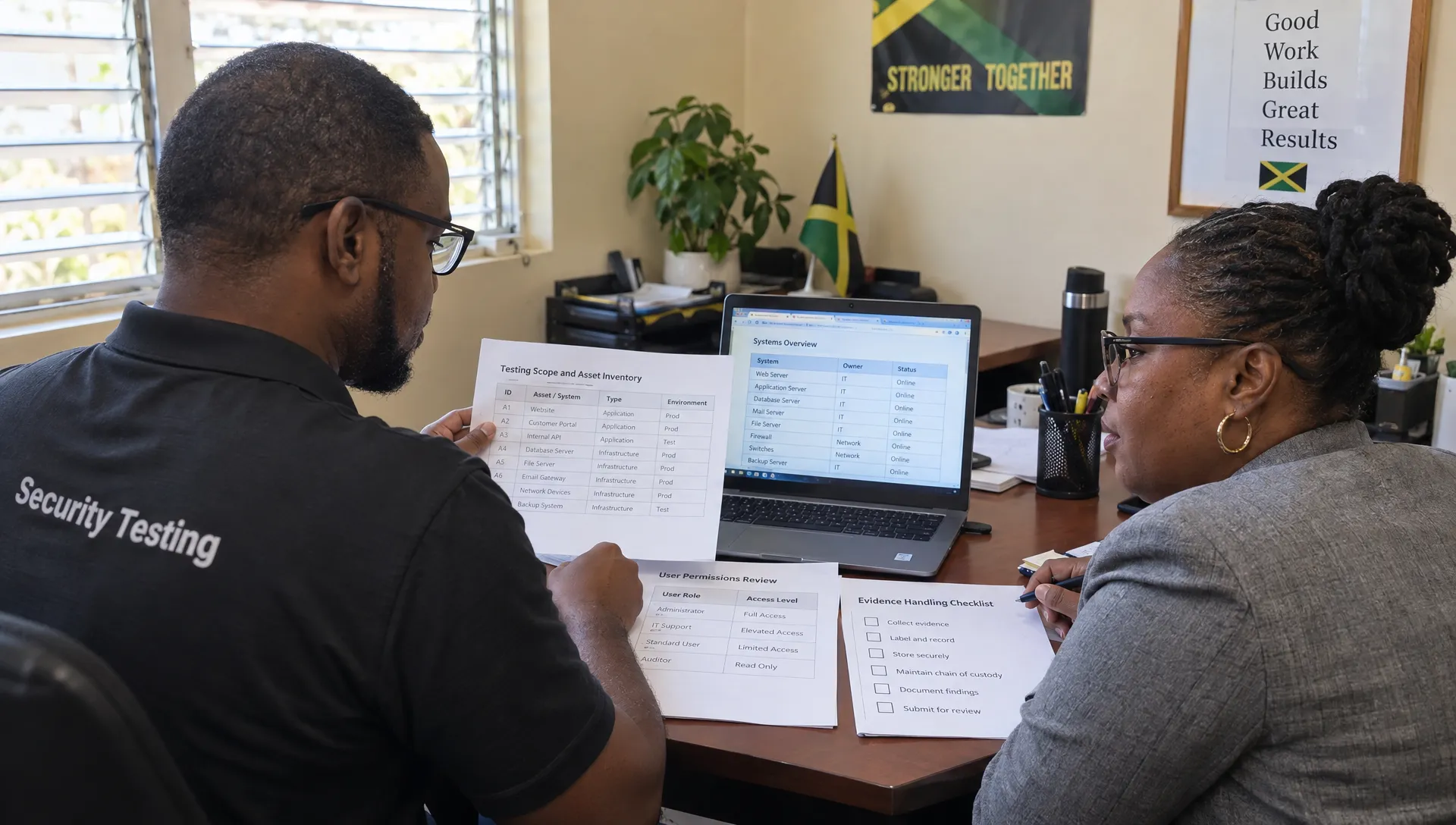
Turn findings into verified fixes
The useful output of an assessment is not the number of vulnerabilities found. It is a clear set of actions that reduces risk.
Assign each accepted finding an owner, a target date and an explanation of its business impact. A technical severity score can help with triage, but it should not be the only factor. Consider whether the affected system is exposed to the internet, whether exploitation is practical and whether the weakness could affect payroll, customer records or essential services.
For example, an access-control flaw exposing customer documents may need attention before a higher-scoring issue on a tightly restricted test system. The context changes the priority.
Remediation may involve patching software, changing configuration, removing an exposed service or correcting application code. Where an immediate fix is not possible, document temporary safeguards, the remaining risk and who has approved the decision. Avoid leaving findings marked “accepted” indefinitely without review.
Finally, verify the result. A repeat scan may confirm that a missing update has been installed. A manually discovered authorisation flaw generally needs a targeted retest of the original attack path. Keep enough evidence to show what changed without retaining unnecessary sensitive information.
How testing supports Jamaica's Data Protection Act 2020
Security testing can help Jamaican organisations assess whether their technical safeguards are working. This matters where systems process employee details, customer identification documents, financial information or other personal data.
Under Jamaica's Data Protection Act 2020, security sits within a broader set of data protection responsibilities. The Office of the Information Commissioner is the relevant Jamaican regulator for official guidance. A vulnerability report or penetration-test certificate is not, by itself, proof of compliance.
Testing does not replace lawful processing, appropriate retention, staff awareness, privacy notices or procedures for handling individuals' rights. Nor does a successful test establish that every supplier or business process is compliant.
Keep a proportionate evidence trail: why the assessment was commissioned, what it covered, what was found, which decisions management made and how fixes were verified. For a small business, a well-maintained action register can be more useful than an impressive report that nobody follows up.
Questions to ask before accepting a quotation
Compare proposed work rather than service names. A low-priced “penetration test” may consist mainly of automated scanning, while another proposal may include manual testing of several user roles and a remediation workshop.
Ask the provider:
What manual work is included? Request a clear distinction between automated discovery, validation and attempts to exploit weaknesses.
What will the report demonstrate? Expect affected assets, supporting evidence, business impact, limitations and practical remediation guidance.
Who will perform the assessment? Ask about relevant experience with your technology and how the work will be supervised or reviewed.
What happens after delivery? Confirm whether a findings meeting and retest are included, how long retesting remains available and what additional work costs.
Request a redacted sample report if available. It should help your IT provider reproduce and fix a problem without unnecessarily exposing another client's information. Qualifications can support your assessment of a provider, but they do not replace a clear scope and useful deliverables.
Frequently asked questions
Can vulnerability scanning replace penetration testing? Not where the objective is to investigate attack paths, business-logic flaws or the impact of exploiting a weakness. Scanning is valuable for repeatable detection, but it does not provide the same depth of investigation.
How often should an SME run these assessments? Set the frequency according to system exposure, sensitivity of information, rate of change and contractual requirements. Use recurring scans for ongoing visibility and consider penetration testing after significant changes or when deeper assurance is needed.
Can testing disrupt normal business? Yes. Scanning can overload fragile systems and exploitation attempts can cause unintended effects. Agree safe settings, monitoring, stop conditions and recovery arrangements before either assessment begins.
Is a penetration test the same as a security audit? No. A penetration test investigates technical weaknesses within an agreed scope. A security audit may assess policies, controls and evidence against specified criteria. Check the required deliverable before purchasing either service.
Should we test systems managed by an outsourced IT provider? Clarify ownership and responsibilities first. Your contract should help establish who authorises testing, who receives the findings and who is responsible for remediation. Obtain any additional permissions required for shared or third-party infrastructure.
Choose an assessment that leads to action
For most SMEs, the decision is not one assessment forever instead of the other. It is choosing the right combination, then funding remediation and verification.
PLMC provides cybersecurity, risk assessment and data protection support for organisations in Jamaica. Request a free consultation with PLMC to discuss how security assessments can fit your wider governance, risk and compliance priorities.