

How to Run a Privacy Seminar for Your Business Association
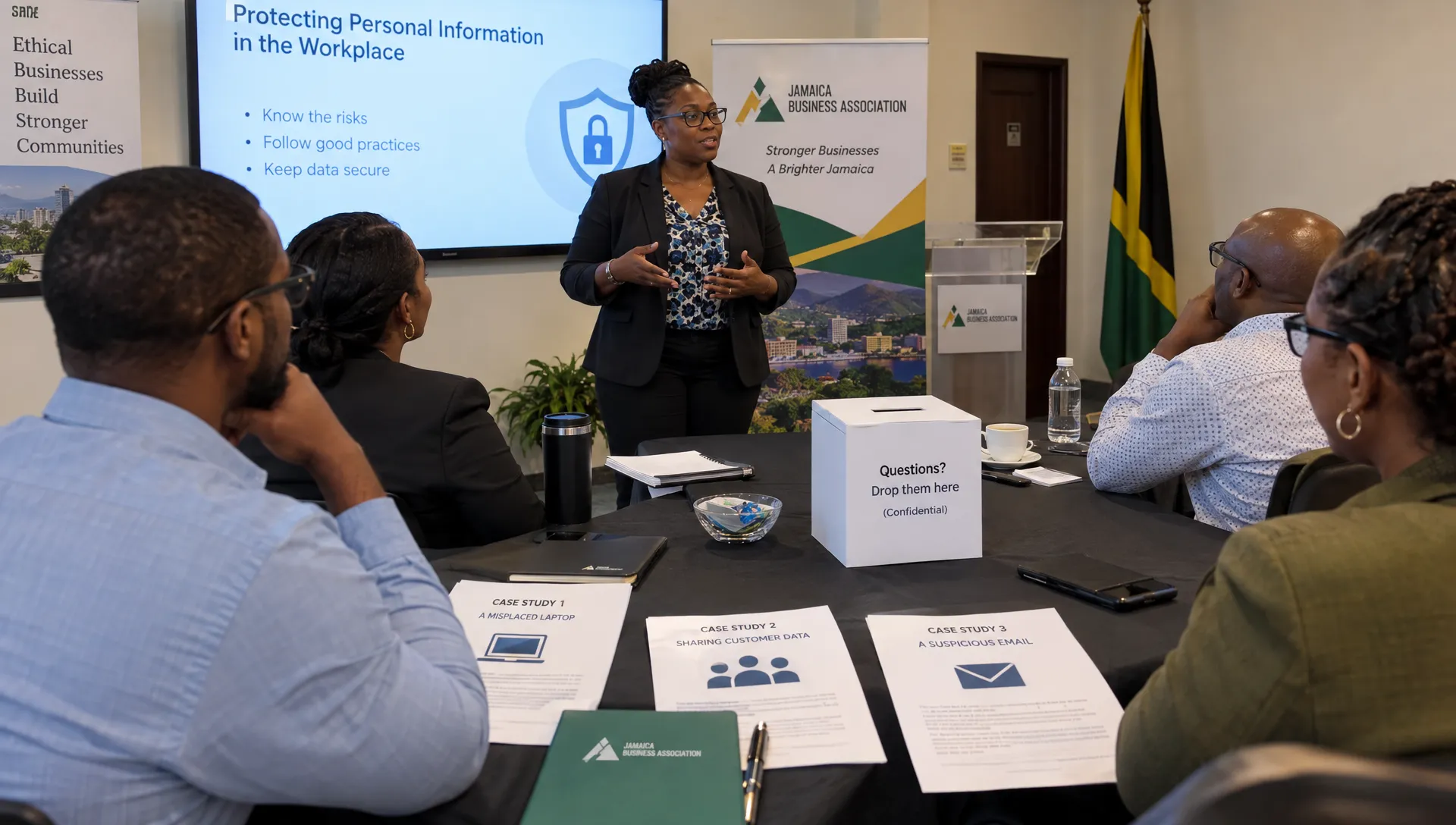
A well-run privacy seminar gives a business association’s members something they can use the next working day: a clearer understanding of their responsibilities, answers to common questions and a manageable next step. For Jamaican associations, the challenge is bringing together businesses with different resources and data protection risks without delivering a presentation that is too general to help anyone.
Treat the event as a member service, not just a speaking engagement. Plan the learning outcomes, select the right facilitator and handle registration information with the same care you want members to apply in their businesses.
Agree on outcomes before booking a speaker
Start with three outcomes that suit your membership. Participants might leave able to recognise personal data in everyday business records, identify questions their organisation needs to resolve under Jamaica’s Data Protection Act and assign responsibility for one improvement.
Avoid promising that attendance will make a business compliant. A seminar can explain obligations and help members prioritise work, but it cannot replace an organisation-specific assessment or implementation programme.
Ask members about their concerns through a short survey. Offer broad choices such as customer records, employee information, marketing communications or supplier access. Do not invite them to upload actual records or describe identifiable incidents.
Decide whether the event is primarily educational or implementation-focused. If members need to produce operational documents during the session, a deliverable-led data protection workshop may be a better format than a general presentation with questions.
Who should lead your privacy seminar?
Choose a facilitator who can connect Jamaican data protection requirements to ordinary business decisions. Legal knowledge matters, but so does the ability to explain a customer database, a payroll spreadsheet or an outsourced service without burying the audience in terminology.
Before confirming the engagement, ask for a proposed outline, relevant training experience and an explanation of how questions outside the session’s scope will be handled. A speaker should distinguish general education from advice that requires further facts.
Use the Office of the Information Commissioner’s official website as a reference point for Jamaican regulatory guidance. Ask the presenter to check current requirements before preparing materials, especially where registration, reporting or procedural obligations are discussed.
Brief the speaker on the membership mix. A room containing retailers, professional firms and community organisations will need shared examples rather than a presentation built around one sector.
Also agree on commercial boundaries. Sponsors and speakers should not turn the educational session into an extended sales pitch. Any optional consultation or service offer should be clearly separated from the teaching programme.
Plan the format, responsibilities and budget
For a mixed membership, a 90-minute privacy seminar is a workable starting point. It allows a focused presentation, one practical activity and moderated questions. This is a planning recommendation, not a prescribed training duration.
Choose the format according to access needs. An in-person event supports discussion and networking. An online session reduces travel, but needs someone to manage admission, questions and technical problems. Hybrid delivery adds complexity, so confirm that remote attendees can hear the speaker and participate before advertising it.
Divide responsibility between an association coordinator, the facilitator and a moderator. The coordinator manages invitations and logistics. The facilitator owns the content. The moderator keeps time, filters questions and prevents discussions from exposing confidential information. One person can hold more than one role, but the responsibilities should still be explicit.
Build the budget around actual quotations for the speaker, venue, equipment, platform, accessibility arrangements and materials. Include staff preparation time and a contingency rather than treating ticket revenue as the only financial consideration.
A useful planning sequence is to confirm outcomes and the facilitator first, open registration once the programme is settled and test delivery arrangements before the event. Publish the audience, learning outcomes, duration and participation requirements in the invitation so members know what they are signing up for.
Build a focused 90-minute agenda
The privacy seminar agenda should move from shared understanding to practical decisions. Keep the legal overview short enough to leave room for application.
Time | Session | Intended result |
0–10 minutes | Welcome, scope and a short anonymous poll | Establish the audience’s concerns and participation rules |
10–25 minutes | Jamaican data protection responsibilities | Explain key concepts and where further advice may be needed |
25–40 minutes | Privacy notice review | Recognise what a notice should explain to readers |
40–60 minutes | Fictional business scenario | Apply the concepts to a familiar situation |
60–80 minutes | Moderated questions | Address common concerns without discussing identifiable cases |
80–90 minutes | Individual action planning and evaluation | Choose a next step and provide feedback |
Keep the presentation centred on a few decisions: what information a business holds, why it uses it, who receives it and how it protects and retains it. Make clear that consent is not a universal answer to every processing activity.
Separate privacy from cyber security without treating them as unrelated. Strong access controls help protect information, but they do not resolve questions about collecting unnecessary data or using it for an unexpected purpose.
Use examples without exposing member information
A practical exercise makes a privacy seminar more useful than a lecture alone. Use fictional records and scenarios rather than asking members to bring customer files, employee documents or screenshots from live systems.
For example, describe an association member that collects customer details for order fulfilment, passes delivery information to a courier and later wants to send promotional messages. Ask participants to identify the different purposes, the parties involved and the questions that need answering before the information is reused.
For the notice-review activity, a publicly available example such as Space Dinosaurs’ privacy policy lets participants examine how a website describes information collection, use, sharing, retention and privacy requests. Use it to practise reading a notice critically, not as a template or an endorsement of compliance with Jamaican law.
Set ground rules before questions begin. Participants should omit names, account numbers and details that could identify customers or employees. The moderator should redirect case-specific questions into general principles or suggest a separate discussion with an appropriate adviser.
An anonymous question form can make participation easier, provided it does not require unnecessary identifying information.
Protect attendee information throughout the event
The association’s own handling of information should support the lessons being taught. Registration is often the first place where avoidable privacy problems arise.
Collect only what the event needs
Typically, organisers need enough information to manage attendance and send event communications. Depending on the format, that may include a name, business name and email address. Assess whether each additional field is necessary rather than copying an old registration form.
Explain the purposes of collection, relevant recipients and how long information will be kept in an accessible registration notice. Handle accessibility or dietary requests discreetly because they may reveal sensitive information. Avoid displaying them on shared attendance sheets.
Set boundaries for sponsors, photographs and recordings
Do not assume sponsorship gives a company permission to receive the attendee list. Establish an appropriate basis for any sharing, explain it clearly and provide a separate, genuinely optional choice where you rely on consent.
Likewise, do not quietly add registrants to unrelated newsletters. Keep operational event communications distinct from ongoing marketing and assess the basis for each use.
If you plan to photograph or record the privacy seminar, tell attendees in advance, assess the relevant privacy requirements and arrange suitable participation options. Recording the presentation without audience discussion can reduce unnecessary capture of personal information.
Check suppliers and access
Review how the registration platform, venue and any delivery provider handle attendee information. Restrict access to those who need it, avoid distributing open spreadsheets and document what should be retained or deleted after the event.
Turn attendance into practical follow-up
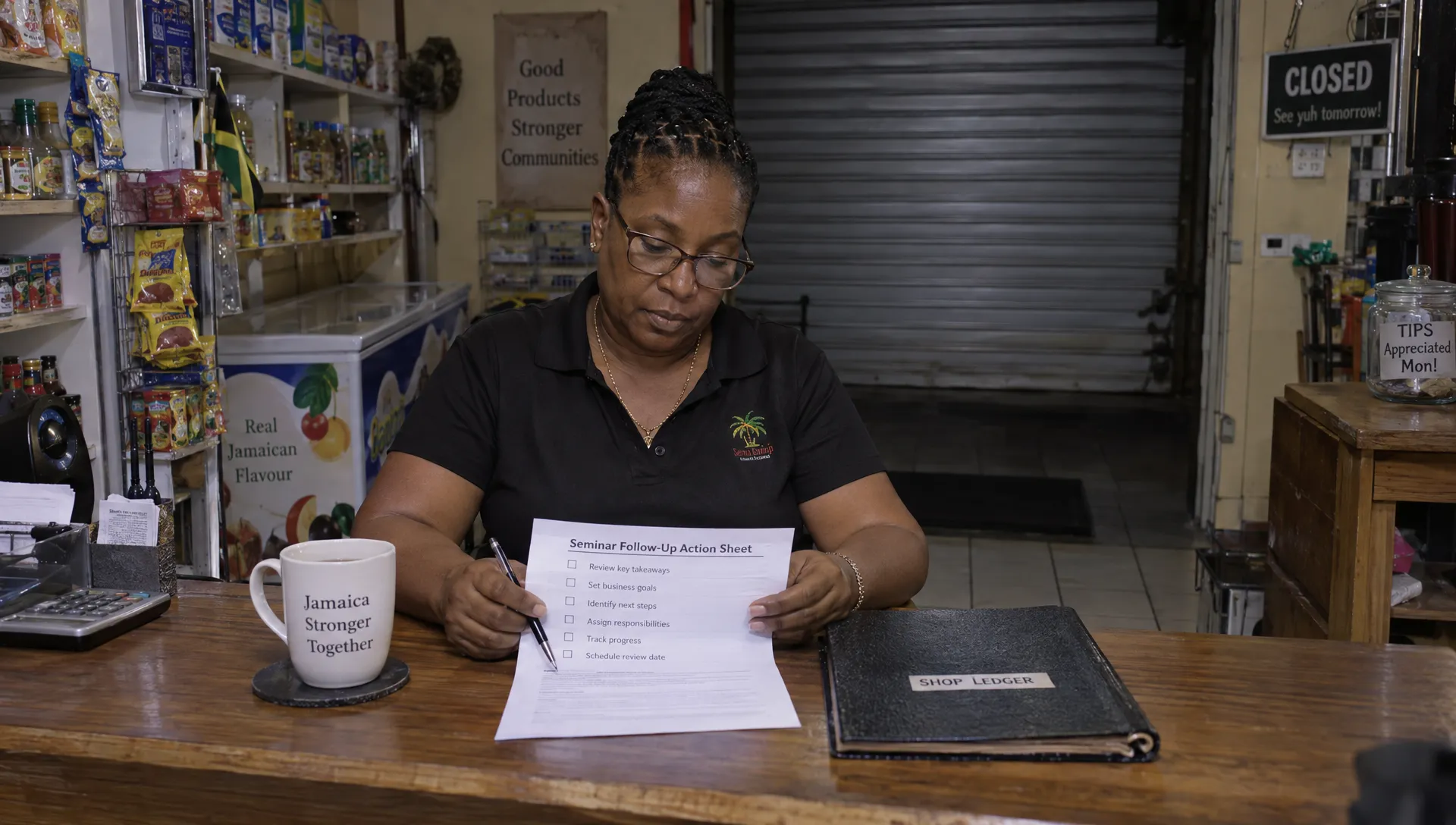
Give each participant a short action sheet before the session ends. Ask them to identify one issue, a responsible person, a target date and evidence that would show the action is complete. Keep this proportionate to the business rather than handing everyone the same lengthy compliance checklist.
A small retailer might review who can access its customer spreadsheet. A professional firm might clarify how former client records are retained. The association itself might improve its event registration notice.
Send a follow-up message with the presentation, approved resources and answers to common questions. Do not circulate raw audience questions if they contain identifying details. Any certificate should describe participation accurately rather than imply regulatory approval or confirmed compliance.
Evaluate more than satisfaction. Useful measures include attendance against registrations, participation in the exercise and the proportion of responding businesses that report completing their chosen action. Collect these as aggregate results where individual identification is unnecessary.
A privacy seminar has greater value when it starts a continuing conversation rather than ending with the final slide. The association can reinforce selected lessons through small, repeatable data protection awareness activities in member communications, without repeatedly collecting detailed information about members’ internal practices.
Frequently asked questions
How much legal detail should the session include? Explain the obligations members need to recognise and the decisions they should investigate further. Avoid trying to cover every provision of the Data Protection Act. Provide reliable reference materials and distinguish general guidance from organisation-specific advice.
Should members bring their own policies or customer records? Do not ask them to bring live personal data. Fictional scenarios are safer for group discussion. If document review is offered separately, agree on scope, confidentiality and secure handling before receiving materials.
Can a privacy seminar cover every member’s compliance needs? No. Businesses differ in their activities, information holdings and risks. Use the event to establish shared understanding and identify priorities, then direct members towards further assessment or support where needed.
Should the association record the session? Record only where there is a clear purpose and suitable arrangements for notice, access, retention and participation. A presentation-only recording may be more appropriate than capturing audience questions and informal discussion.
Is a certificate proof of compliance? No. A certificate may evidence attendance or completion of a defined learning activity. It does not establish that the participant’s organisation has met its legal obligations.
Discuss your association’s training needs
Before commissioning a privacy seminar, prepare a short brief covering your membership, the most common concerns, the intended outcomes and the preferred format. That gives a prospective facilitator enough context to recommend an appropriate scope.
Privacy & Legal Management Consultants Ltd. provides data protection implementation, training and governance, risk and compliance support for organisations in Jamaica. Contact PLMC to discuss your association’s training needs through a free consultation and explore how an educational event could support members’ wider data protection work.