

How to Protect Your Data Protection Officer’s Independence

Protecting your data protection officer’s independence means giving them the freedom to identify problems, challenge decisions and report concerns without having their advice controlled by the people they oversee. A DPO who needs a project sponsor’s permission to raise a privacy risk cannot provide credible oversight.
For Jamaican organisations, this is a corporate governance issue as much as a privacy issue. Reporting lines, job responsibilities, budgets and performance reviews can either support independent judgement or quietly undermine it. The practical goal is not to place the DPO above management. It is to ensure management receives honest advice and remains accountable for its decisions.
Define independence within your data protection framework
An independent DPO needs room to reach their own conclusions about compliance, communicate those conclusions accurately and escalate unresolved concerns. They also need access to the information and people necessary to do the work.
Jamaica’s Data Protection Act, 2020 is the local legal starting point. Check the appointment, qualification and duty requirements applicable to your organisation against the Act and current guidance from the Office of the Information Commissioner. A job title alone does not establish an effective compliance function.
For organisations also subject to the GDPR, Article 38 explicitly addresses DPO resources, freedom from instructions about their tasks, protection against dismissal or penalties for performing those tasks, direct reporting to the highest management level and conflicts of interest. These provide useful governance benchmarks, but GDPR is not Jamaican law and does not automatically apply to every Jamaican business.
Independence does not transfer accountability. Management remains responsible for the organisation’s compliance. The DPO advises and monitors within their role; operational teams remain responsible for implementing lawful processes and controls.
Give the DPO an unfiltered route to senior management
A reporting line is only useful if it works when the DPO disagrees with a powerful colleague.
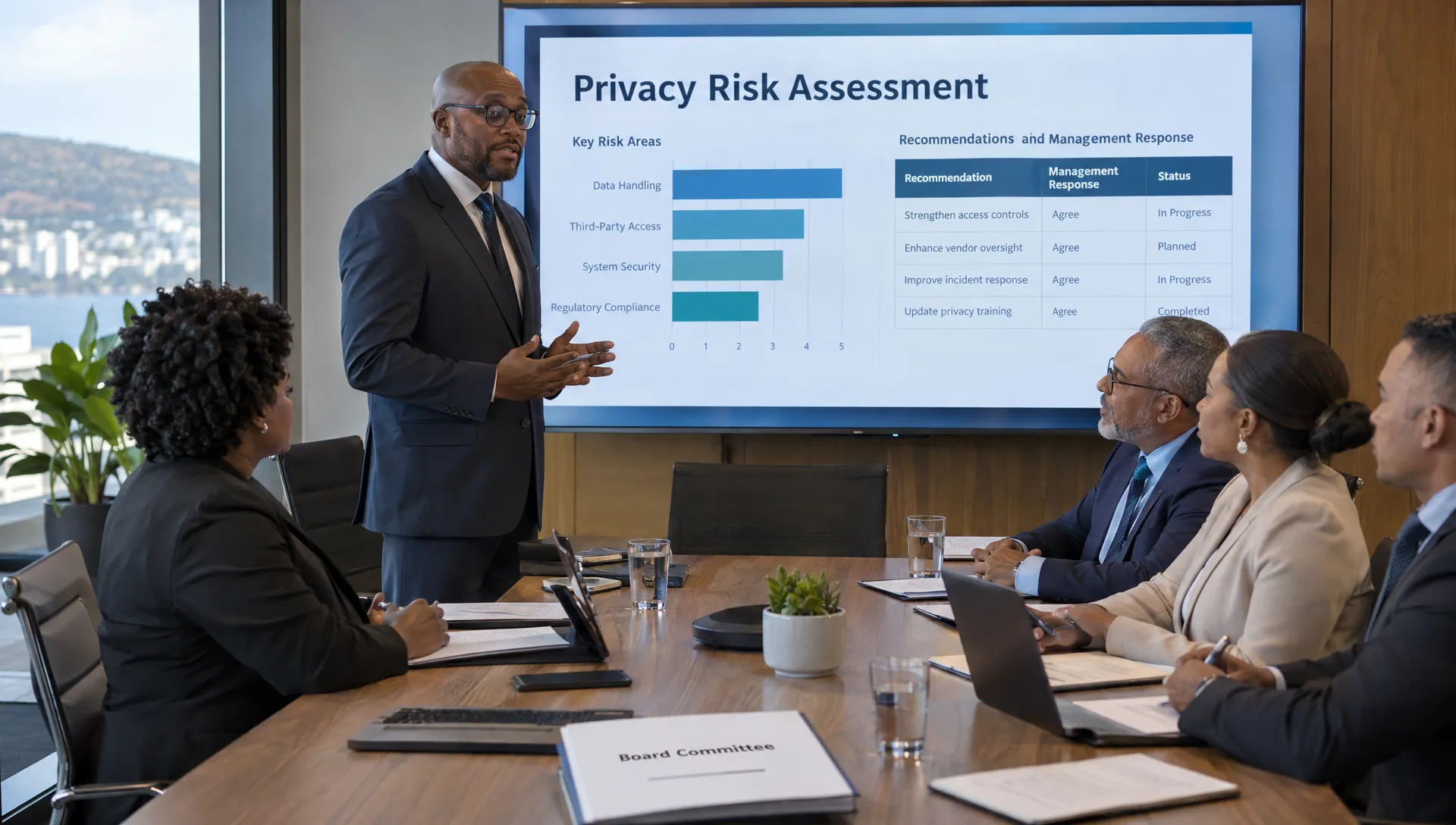
Establish a route to the board, an appropriate board committee or the most senior accountable executive. In a smaller organisation without a board, identify the person with authority to address unresolved compliance concerns. The DPO should not have to obtain approval from the manager whose decisions are being questioned before using that route.
Document the distinction between administrative reporting and functional reporting. Someone may approve leave, coordinate office arrangements or process expenses without controlling the DPO’s findings. Functional reporting concerns the substance of the role: compliance assessments, significant risks and recommendations.
A workable reporting arrangement should specify when routine reports are expected, which issues require urgent escalation and who receives the DPO’s original assessment. Management can attach a response, but should not rewrite the assessment to remove inconvenient conclusions.
Board access does not mean circulating unnecessary personal information. Present the risk, affected process and required decision, using identifiable details only where necessary. Apply appropriate safeguards for board papers containing personal data when preparing supporting material.
Identify conflicts by examining actual decision-making power
Combining the DPO role with another job can create a conflict if that job determines why or how personal data is processed. The issue is not simply the title or seniority of the person. It is whether they would be reviewing decisions they made themselves.
Use a responsibilities-based assessment rather than assuming every combined role is acceptable or prohibited.
Additional responsibility | Potential independence problem | Practical response |
Selecting employee monitoring systems | The DPO may have to assess processing they chose | Assign the operational decision elsewhere and obtain independent privacy scrutiny |
Setting customer profiling objectives | Commercial ownership may influence the assessment | Separate campaign ownership from DPO oversight |
Determining access rules or retention periods | The person may be checking their own control decisions | Clarify operational ownership and arrange independent review where necessary |
Delivering privacy awareness sessions | Training alone does not necessarily create a conflict | Check whether other responsibilities involve deciding processing purposes or means |
Managing privacy-related procurement | Supplier selection incentives may affect advice | Separate commercial approval from the DPO’s assessment |
Review the complete job description, delegated authority and actual working practices. A written role may look independent while informal expectations tell a different story.
Keep a conflict assessment on file and revisit it when responsibilities change. Where a conflict cannot be adequately resolved, reassign the conflicting duties or reconsider the appointment. Occasional recusal is not a reliable solution if it removes the DPO from a substantial part of their core work.
Protect candid advice without creating a blanket veto
Record disagreement and the accountable decision
The DPO should be able to challenge a proposal without being expected to make every business decision. Define who has operational authority, who provides privacy advice and who must address an unresolved compliance concern.
For example, a proposed employee attendance system may raise questions about necessity, access, retention and the handling of sensitive information. The DPO’s assessment should explain the concerns, relevant requirements and recommended changes. Management should record its response, the responsible owner and any actions required before implementation.
If management takes a different view, preserve both positions. A decision record should show what was advised, what was decided and the reasons. Recording “risk acceptance” does not make unlawful processing lawful. Suspected breaches of legal requirements need appropriate escalation and corrective action, not just a signature.
The DPO’s assessment should not be removed from the record simply because the project proceeds.
Make non-retaliation practical
A non-retaliation commitment should cover consequences such as exclusion from meetings, loss of access, adverse appraisal comments or budget cuts imposed because the DPO raised a legitimate concern.
Give the DPO a route to report suspected interference to someone outside the disputed reporting relationship. Where the complaint concerns senior leadership, the board or another suitable independent reviewer should be able to consider it.
Protection for properly performing DPO duties is not immunity from fair action over unrelated misconduct or genuine performance failings. Separate those issues carefully, document the reasons and obtain appropriate employment and legal advice before consequential action.
Provide resources that make independence usable
A DPO can be formally independent yet ineffective because they have no time, no access and no support.
Assess the workload against the organisation’s processing activities, sensitive information, locations, planned projects and outstanding compliance issues. A part-time arrangement should be justified by that workload, not simply by the available budget.
Provide access to relevant contracts, processing records, incident information and project discussions. Where technical or legal expertise is needed, establish how the DPO can obtain it. Restricting necessary information while expecting a reliable assessment creates a predictable gap in oversight.
Performance measures also matter. Assess the quality and timeliness of advice, monitoring coverage, escalation and follow-up. Do not reward the DPO for approving every project, avoiding uncomfortable findings or producing “zero complaints”. Those measures can encourage silence rather than effective data protection.
Management owns remediation. Distinguish delays in the DPO’s advice from delays caused by teams failing to implement recommendations.
Preserve independence in outsourced and supplier arrangements
Build safeguards into the outsourced DPO contract
Outsourcing can provide expertise, but it does not automatically remove conflicts or commercial pressure. Consider these safeguards alongside the wider choice between in-house and outsourced DPO services.
The engagement should identify the responsible DPO, their reporting access, expected availability and the process for urgent concerns. It should also define how conflicts are disclosed and handled, particularly where the same provider performs implementation work that may later require independent assessment.
Avoid fees or renewal criteria tied to favourable findings, project approvals or an absence of reported problems. Define scope and review arrangements transparently so that ordinary contract management does not become a way to suppress unwelcome advice.
Ask how the provider maintains continuity during absence and how sensitive information is protected. The organisation still needs an internal owner for implementing recommendations; appointing an external DPO does not outsource management accountability.
Keep commercial decisions separate from privacy scrutiny
Supplier relationships can test independence when delivery dates or commercial commitments are already fixed. Involve the DPO early enough for their advice to influence the proposed arrangement.
Consider a hypothetical Jamaican gym ordering branded uniforms from an MMA apparel manufacturer such as Arus Sportswear. Product specifications and quantities may be sufficient for the order. If the proposed workflow would also send member names or delivery details overseas, the business should assess the purpose, necessity, contractual safeguards and applicable transfer requirements before sharing them.
The DPO should be able to question that workflow without being assessed on whether the supplier deal goes through. Procurement owns the commercial decision; the DPO provides independent scrutiny of the proposed personal-data use.
Test the safeguards before a disagreement exposes weaknesses
A policy can promise independence while everyday practice undermines it. Review how the role operates, not just how it is described.
Use a short governance check:
Reporting access: Can the DPO raise a significant concern directly with the designated senior decision-maker?
Control over advice: Can someone require the DPO to change a conclusion or suppress a finding?
Conflicting duties: Does the DPO determine processing activities they are expected to assess?
Resources: Is there enough time, access and support for the documented workload?
Escalation: Are disagreements recorded, assigned and followed through?
Protection: Is there a credible route for reporting interference or retaliation?
Test these questions with a realistic scenario, such as a manager proposing a new customer database without sufficient information about access or retention. Trace whether the DPO receives the proposal early, can obtain the facts and can escalate concerns without the manager’s permission.
Record gaps with an owner and a completion date. Revisit the arrangements after restructuring, a significant change in processing or a change in the DPO’s other responsibilities. As a practical governance measure, an annual review can help identify gradual changes in workload or authority before they become entrenched.
Frequently asked questions
Does DPO independence mean the officer can stop every project? No. Independence protects the integrity of the DPO’s advice and oversight. Decision-making authority should be clearly defined, and management remains accountable for ensuring processing is lawful. Disagreement is not permission to ignore legal requirements.
Can a DPO hold another role in the organisation? Assess the applicable law and actual responsibilities. The central concern is whether the additional role creates a conflict, particularly by determining processing activities the DPO must assess. A title-only review is insufficient.
Is an outsourced DPO automatically independent? No. Other services, fee arrangements and pressure over contract renewal can affect independence. Check the provider’s conflicts, reporting rights and practical ability to raise concerns.
What should happen when management rejects the DPO’s advice? Preserve the advice, document management’s reasons and identify the accountable decision-maker. Escalate unresolved compliance concerns through the agreed route and implement required corrective action. A recorded decision cannot authorise unlawful processing.
How should a small Jamaican organisation approach independence? Use proportionate arrangements, but retain the essentials: clear responsibilities, direct access to the senior accountable person, sufficient resources and a documented conflict assessment. Check the legal requirements applicable to the organisation rather than assuming size creates an exemption.
Review your DPO governance arrangements
Start with the appointment terms, job description, reporting route and most recent privacy-risk decision. Together, these documents can reveal whether your DPO has genuine independence or only a promise of it.
For support reviewing those arrangements in the context of Jamaican data protection requirements, request a free consultation with Privacy & Legal Management Consultants Ltd.. Focus the discussion on conflicts, escalation and resources so that improvements address how the role actually works.