

How to Handle Data Subject Complaints Fairly and Fast
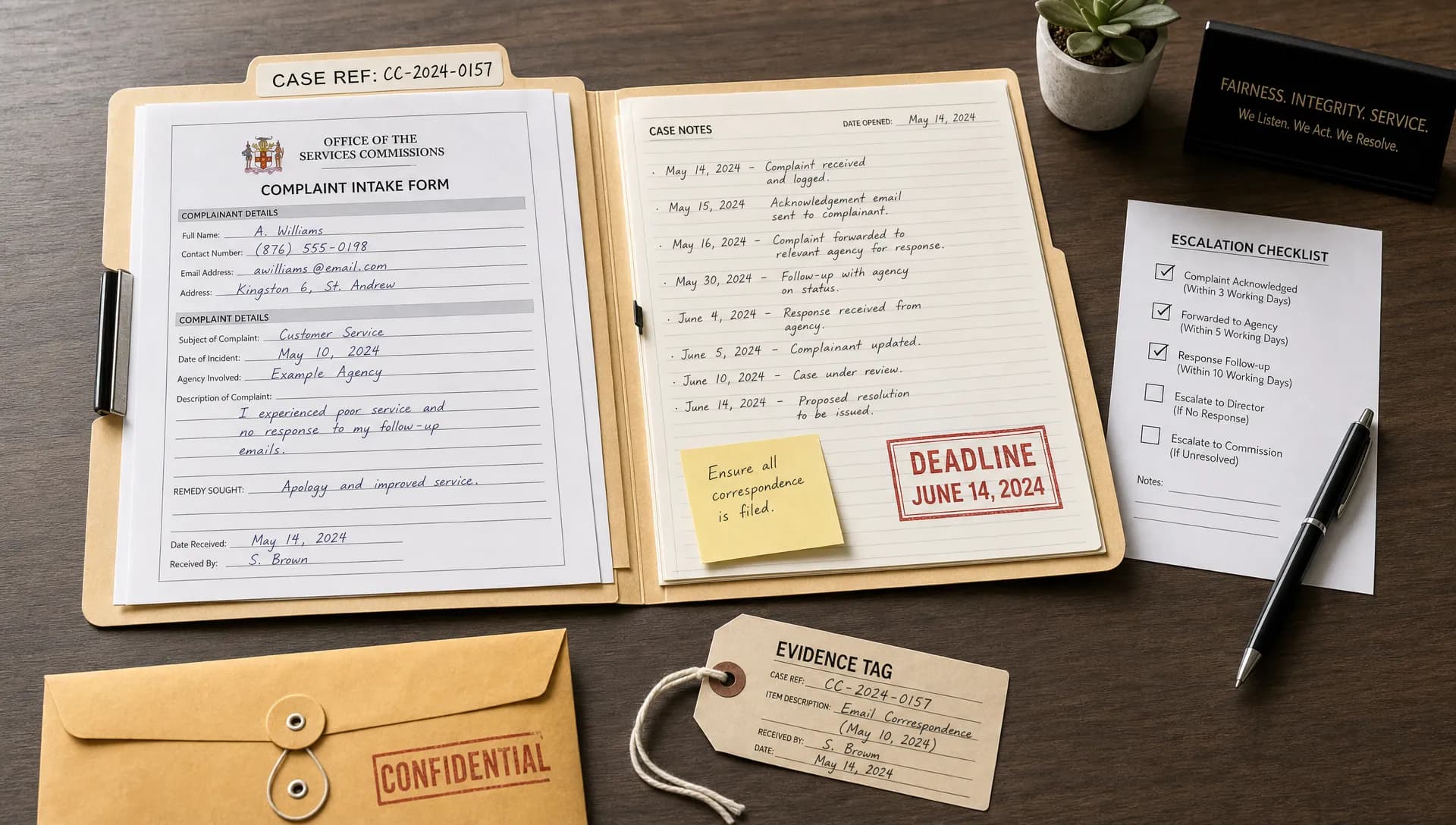
Data subject complaints rarely arrive at a convenient time. They may come through customer service, HR, social media, a branch manager, a shared inbox or a regulator. Some are simple misunderstandings. Others point to inaccurate records, excessive collection, poor consent practices, delayed access requests or even a possible data breach.
For Jamaican organisations, the way a complaint is handled can matter as much as the original issue. A slow, defensive or poorly documented response can turn a manageable privacy concern into a trust problem, a governance problem and a data protection compliance problem.
A fair and fast process does not mean rushing to admit fault. It means listening, preserving facts, applying the Data Protection Act, 2020 sensibly and giving the individual a clear answer within a controlled timeframe. The goal is to resolve valid complaints, explain justified decisions and learn from each case before the same issue repeats.
What counts as a data subject complaint?
A data subject complaint is any expression of dissatisfaction from an identifiable individual about how your organisation collects, uses, stores, shares, corrects or deletes their personal data. The individual may be a customer, patient, student, employee, contractor, supplier contact, website user or former client.
Common complaints include:
A customer says their data was shared with the wrong recipient.
An employee says their HR record is inaccurate or visible to too many people.
A client says they keep receiving marketing messages after opting out.
A patient says they were asked for information that was not needed.
A job applicant says they cannot get a copy of information used in a hiring decision.
A former customer says the organisation is keeping their data longer than necessary.
Not every complaint is a formal legal request, but some complaints include one. For example, a person may complain about inaccurate data and ask for correction at the same time. Another may complain about an unexplained decision and request access to the records behind it. Your process should identify these rights requests early so they are handled under the correct legal route.
Why fairness and speed both matter
Speed without fairness creates bad outcomes. A rushed response may miss evidence, overlook a valid right or give inconsistent explanations. Fairness without speed also fails. If a complaint sits in an inbox for weeks, the person may assume the organisation is ignoring them or hiding something.
Jamaica's Data Protection Act, 2020 gives individuals rights over their personal data and places accountability duties on data controllers. The Office of the Information Commissioner oversees the regime and provides guidance for organisations and individuals. That means complaint handling should not be treated as a public relations task only. It is part of governance, risk and compliance.
A good complaint process should achieve five things:
Make it easy for the individual to raise the concern.
Confirm what the complaint is really about.
Protect evidence before records change or disappear.
Give a reasoned response based on facts and applicable policy.
Feed lessons back into training, procedures and controls.
If your organisation already has data protection policies, test whether they explain who owns complaints, how cases are logged and when matters are escalated. If not, your complaint process should be built into data protection policies and procedures that hold up, not left as an informal habit.
Build one clear intake route, then train staff to recognise complaints
Many complaints are mishandled because the first employee does not recognise them. A data subject may not use legal words. They may say, I want my file, why did you send that to my employer, stop texting me or where did you get my information. Each statement could carry a data protection issue.
Create clear intake routes, such as a privacy email address, web form, customer service escalation path and HR contact for employee matters. Then make sure frontline teams know when to escalate. They do not need to answer legal questions on the spot. They need to capture the concern, avoid making promises and send it to the right owner quickly.
A practical internal target might be to acknowledge complaints within two working days and complete straightforward cases within 15 working days. Complex matters may need more time, especially if they involve archived records, third parties or technical logs. Even then, the individual should receive status updates and a realistic explanation.
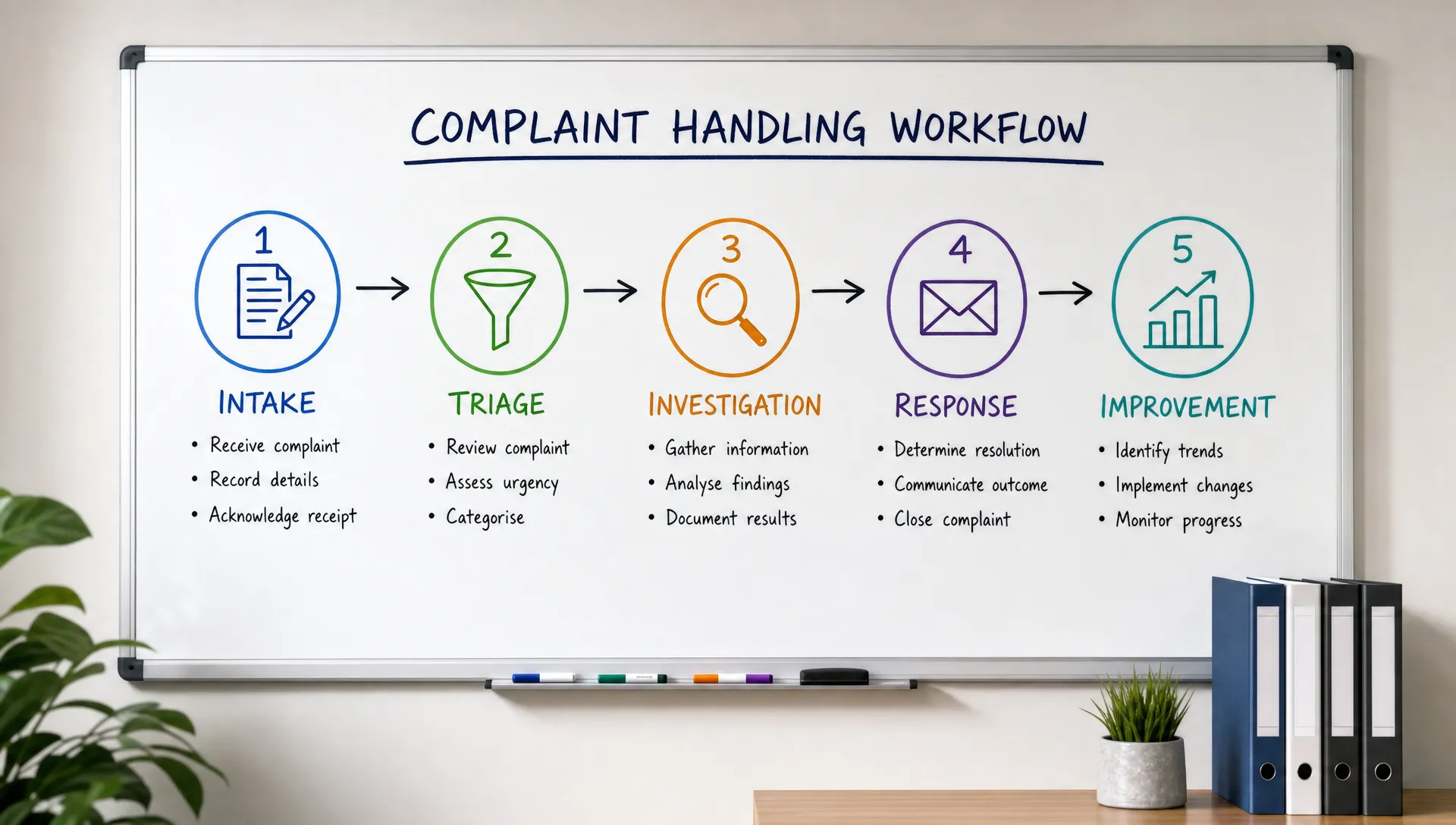
Log the complaint before investigating it
A complaint that is not logged is easy to lose and hard to defend. Every data subject complaint should receive a case reference and an owner. The log does not need to be complicated, but it must be consistent enough to show what happened, who made decisions and why.
Your complaint record should capture:
Date and channel received.
Name and contact details of the complainant.
Relationship to the organisation, such as customer, employee or applicant.
Summary of the issue in the complainant's own terms.
Personal data, systems and business units involved.
Deadlines, updates, outcome and remedial actions.
This record also helps identify patterns. Ten separate complaints about marketing opt-outs may reveal a systems problem. Several employee complaints about access to HR records may reveal a permissions problem. Complaint trends can be more valuable than isolated case notes because they show where governance controls are failing.
Triage the complaint by risk and urgency
After logging, triage the complaint. The first question is not whether the organisation is at fault. The first question is what could go wrong if the issue is not contained today.
Some complaints are low urgency, such as a request for clarification about a privacy notice. Others require immediate action. If the complaint suggests personal data was sent to the wrong person, accessed by an unauthorised employee or exposed in an online system, pause routine handling and activate your incident or breach assessment process.
If the issue involves an accidental disclosure, such as a message sent to the wrong recipient, use a containment mindset. Secure the data, ask the unintended recipient to delete or return it where appropriate, preserve evidence and assess risk. A complaint about this kind of event should be handled alongside your incident procedure, not instead of it. For a practical example, PLMC's guidance on handling a misaddressed email with personal data explains the type of containment thinking organisations should apply.
Complaint type | Main risk | Fast first action | Fair outcome to aim for |
Inaccurate record | Wrong decision based on bad data | Freeze reliance on the disputed data where possible | Correct, annotate or explain why the record is maintained |
Unwanted marketing | Continued contact after objection or opt-out | Suppress the contact from active campaigns | Confirm suppression and fix the source of the failure |
Excessive collection | Unnecessary personal data held | Review the purpose and form fields | Remove or justify the data elements collected |
Accidental disclosure | Harm from unauthorised access | Contain, preserve evidence and assess breach risk | Notify, remediate and reduce recurrence where required |
Delayed access request | Missed legal obligation or escalation | Identify whether a rights request is included | Provide a lawful response with reasons and next steps |
Verify identity without creating unnecessary friction
Before disclosing personal data or discussing sensitive details, verify that the complainant is the data subject or authorised to act for them. This protects the individual and the organisation. Verification should be proportionate. Asking for excessive identification can frustrate the person and create new privacy risk.
For low risk matters, existing customer authentication may be enough. For sensitive records, financial information, health data, child data or employee disciplinary records, stronger checks may be needed. If an agent, parent, attorney or representative is acting for the individual, confirm their authority before releasing information.
Do not use identity verification as a delay tactic. If you need more information, ask for it promptly and explain why it is needed. In the meantime, continue any internal steps that do not require disclosure to the complainant, such as preserving logs, locating records or assigning the case owner.
Investigate fairly, not defensively
A fair investigation starts with the complaint as stated, then tests it against evidence. The investigator should be independent enough to challenge the business unit involved. In a small organisation, full independence may not be possible, but the decision maker should not be the person whose conduct is being questioned.
The investigation should answer practical questions. What personal data is involved? Why was it collected? What lawful basis or authority supports the processing? Who accessed it? Was it shared with a processor or third party? What policy applied at the time? Were staff trained? Did the system behave as designed or did a manual workaround create the issue?
Avoid blaming the complainant for raising the concern. Even where the complaint is not upheld, the process should show that the organisation listened, checked the facts and gave a reason. A dismissive tone can cause an avoidable escalation.
Decide the remedy before drafting the response
The response should not be written until the organisation knows what it is prepared to do. If the complaint is valid, the remedy should match the harm and the control failure. If the complaint is not upheld, the organisation still needs to explain its reasoning in plain language.
Possible remedies include correcting inaccurate data, deleting data that is no longer needed, suppressing marketing contact, restricting access permissions, updating a privacy notice, retraining staff, apologising, improving a form or changing a workflow. In serious cases, the matter may need senior management, legal advice, cyber security support or regulator engagement.
Fairness also requires consistency. Similar complaints should lead to similar outcomes unless there is a clear difference in facts. A complaint register helps here because it lets the privacy lead compare current decisions with previous cases.
Write a response the data subject can understand
A good complaint response is clear, specific and respectful. It should not hide behind internal jargon or quote long legal provisions without explanation. It should state what was reviewed, what was found, what the organisation will do and what the individual can do if they remain dissatisfied.
The response should usually include these elements:
A short summary of the complaint.
The steps taken to investigate it.
The decision, including whether the complaint is upheld, partly upheld or not upheld.
Any action already taken or planned.
Any limits on what can be provided and the reason for those limits.
The internal escalation route or external complaint route, where appropriate.
If the complaint includes a formal data subject rights request, make sure the response also meets the applicable requirements for that right. For example, access, correction, objection or deletion issues may have different legal considerations. Check the current Act, regulations and guidance before finalising the response.
Close the case, then fix the root cause
A complaint is not finished when the response is sent. It is finished when the organisation has completed promised actions, documented the decision and considered whether the issue signals a wider weakness.
Root cause analysis does not need to be complex. Ask what allowed the issue to happen. Was the policy unclear? Did the form ask for too much data? Did staff use personal email? Was a vendor instruction missing? Did the system retain data longer than the retention schedule allowed? The answer should lead to a practical control improvement.
For example, if repeated complaints show that staff are unsure how to handle requests, update your training. PLMC has written separately about data privacy training topics employees need most, including practical recognition of personal data, sharing risks and escalation triggers. Complaint handling should be part of that training, especially for customer service, HR, finance, marketing and IT teams.
Use complaint metrics for governance reporting
Boards and senior managers do not need every detail of every complaint, but they do need enough information to govern risk. A quarterly privacy report can show whether complaint volumes are rising, whether response times are improving and which business units create repeat issues.
Useful metrics include complaint volume, average acknowledgement time, average closure time, percentage upheld, number involving sensitive personal data, number linked to incidents, repeat root causes and overdue remedial actions. These metrics help move privacy from theory into management practice.
The point is not to punish departments. The point is to see where controls are weak before a regulator, customer or employee forces the issue into the open.
Common mistakes that slow complaint handling
Most slow complaint processes fail for ordinary reasons. No one owns the inbox. Staff wait for perfect information before acknowledging the complaint. Legal, IT and the business unit work in silos. The organisation answers the emotional tone of the complaint instead of the substance. Records are stored across too many systems and no one knows which copy is authoritative.
Another common mistake is treating every complaint as a threat. Some are warnings from people who have spotted a genuine issue before it becomes larger. A respectful response can preserve trust, even if the original mistake was serious.
The opposite mistake is over-apologising before the facts are known. Acknowledge the concern, not unverified liability. Use language such as, We are reviewing the matter and will update you by a specific date. Once the facts are established, the response can be more definitive.
Frequently Asked Questions
How quickly should an organisation acknowledge a data subject complaint? A good internal target is within two working days, even if the full investigation will take longer. The acknowledgement should confirm receipt, explain the next step and identify any information needed from the complainant.
Is every complaint also a data subject access request? No. A complaint is an expression of dissatisfaction, while an access request asks for personal data or related information. Some complaints include an access request, so the intake process should identify and route both issues correctly.
Who should investigate a data subject complaint? The investigator should have enough privacy knowledge, authority and independence to review the facts fairly. In many organisations this may be the data protection officer, privacy lead, compliance officer or a trained manager supported by legal or IT where needed.
What if the complaint is not valid? The organisation should still respond respectfully. Explain what was reviewed, why the complaint is not upheld and what options the individual has if they disagree. A well reasoned refusal is stronger than a short dismissal.
Should complaints be reported to the regulator? Not every complaint requires regulator notification. If the complaint reveals a possible breach, serious rights issue or systemic failure, assess the matter under the Data Protection Act, 2020 and current OIC guidance. Seek legal or specialist advice where the risk is significant.
Strengthen your complaint handling process
A complaint process works only when staff know how to use it, managers support it and evidence is recorded from the start. For organisations in Jamaica, this is a practical part of data protection compliance, corporate governance and customer trust.
If you need help designing or improving your complaint handling process, Privacy & Legal Management Consultants Ltd. can support data protection implementation, GRC integration, training and risk assessment. To discuss your organisation's needs, contact PLMC for a free consultation.