

How to Assess Legitimate Interests Before Using Personal Data
A Jamaican organisation may have a valid business reason to use personal data without that reason being enough to justify the processing. Before relying on legitimate interests, assess why the use is necessary and whether its impact on individuals makes it unwarranted.
That assessment should happen before the proposed processing begins, not after a complaint arrives. This guide explains how to apply a practical three-part test, identify situations where the justification fails and document a decision your organisation can explain.
What legitimate interests means under Jamaican law
Jamaica’s Data Protection Act, 2020 provides several conditions that can support lawful processing of personal data. Legitimate interests is one of them. Broadly, it concerns processing necessary for legitimate interests pursued by the data controller or a third party to whom the data is disclosed, except where that processing is unwarranted because of prejudice to the individual’s rights, freedoms or legitimate interests.
Legitimate interests is a processing condition, not a blanket permission. It does not remove obligations concerning fairness, transparency, security, retention or individuals’ rights. Consult the Act and guidance from Jamaica’s Office of the Information Commissioner when establishing your compliance position.
Sensitive personal data needs additional consideration. Health information, for example, cannot be treated as ordinary personal data simply because the organisation has a strong business objective. Review the additional conditions for processing sensitive personal data in Jamaica before proceeding.
The three-part assessment below is a practical method for analysing the condition. Completing a form does not, by itself, make an otherwise unjustified activity lawful.
Define the processing before assessing it
Avoid assessing an entire department or broad objective such as “business improvement”. The assessment needs a specific activity with identifiable consequences.
For example, “using account login records to investigate suspected unauthorised access” is assessable. “Using customer data for security and other business purposes” is too vague.
Write a short scope statement identifying:
The proposed use: What the organisation will actually do with the information.
The people affected: Customers, employees, applicants, suppliers or other individuals.
The information involved: Exact data fields, their source and any sensitive content.
The processing arrangements: Who receives access, any disclosures and the proposed retention period.
Separate materially different activities. Investigating suspicious transactions and sending promotional messages may involve the same customer database, but they have different purposes, expectations and risks. They should not share one undifferentiated justification.
Apply the three-part legitimate interests assessment
1. Purpose: identify a specific, legitimate interest
Explain the outcome the organisation or relevant third party seeks to achieve. Potential interests include protecting systems against unauthorised access, preventing fraud or safeguarding premises. None automatically passes the full assessment.
A useful purpose statement explains the problem, the intended benefit and who benefits. For example:
We propose reviewing account access logs to identify suspected account takeovers and protect customers against unauthorised transactions.
Support that statement with evidence proportionate to the activity. Incident reports, documented vulnerabilities or a clear explanation of a foreseeable threat are more useful than a generic assertion that “security matters”.
Check whether another processing condition more directly fits the activity. If you say processing is legally required, identify the actual legal obligation rather than treating legitimate interests as a substitute for that analysis.
A commercial benefit can be relevant, but it is not conclusive. Increased revenue does not automatically justify an unexpected or intrusive use of personal information.
2. Necessity: test whether this use of data is needed
Ask whether the proposed processing genuinely contributes to the stated purpose and whether a reasonably effective, less intrusive option is available.
Necessity is not established merely because an approach is convenient or because the information is already in your database. Challenge the design: could aggregate information achieve the purpose? Could you use fewer fields, investigate only flagged events or retain identifiable records for less time?
Record realistic alternatives and why they would or would not work. An alternative that leaves a serious security threat unresolved may not be effective. An alternative that requires a modest workflow change may be entirely workable.
For instance, investigating suspicious logins may require timestamps, account identifiers and relevant technical records. It does not automatically require access to every employee email or continuous recording of keystrokes.
If you can achieve substantially the same outcome with less personal data, revise the proposal before moving to the balancing stage.
3. Balancing: assess the effect on individuals
Consider the processing from the affected person’s position. Would they reasonably expect this use, given how the information was collected and their relationship with your organisation?
A privacy notice helps explain processing, but putting an unexpected activity in a notice does not automatically make it fair. Examine the activity itself.
Assess the nature of the information, the scale of processing and the likely consequences. Relevant concerns include financial loss, embarrassment, discrimination, unwanted contact, loss of confidentiality and decisions based on inaccurate inferences. Consider whether children, employees or people dependent on your service face particular disadvantages.
Then identify safeguards that address those concerns. Restricted access may reduce unnecessary exposure. A shorter retention period may limit the consequences of a breach. Human review may reduce the risk of an incorrect alert leading directly to action against someone.
Evaluate the position after safeguards are applied. Do not simply list controls without explaining how they reduce the identified harm. If the remaining impact makes processing unwarranted, the activity fails this condition, regardless of its business value.
Worked examples: where the assessment can succeed or fail
Investigating suspicious account access
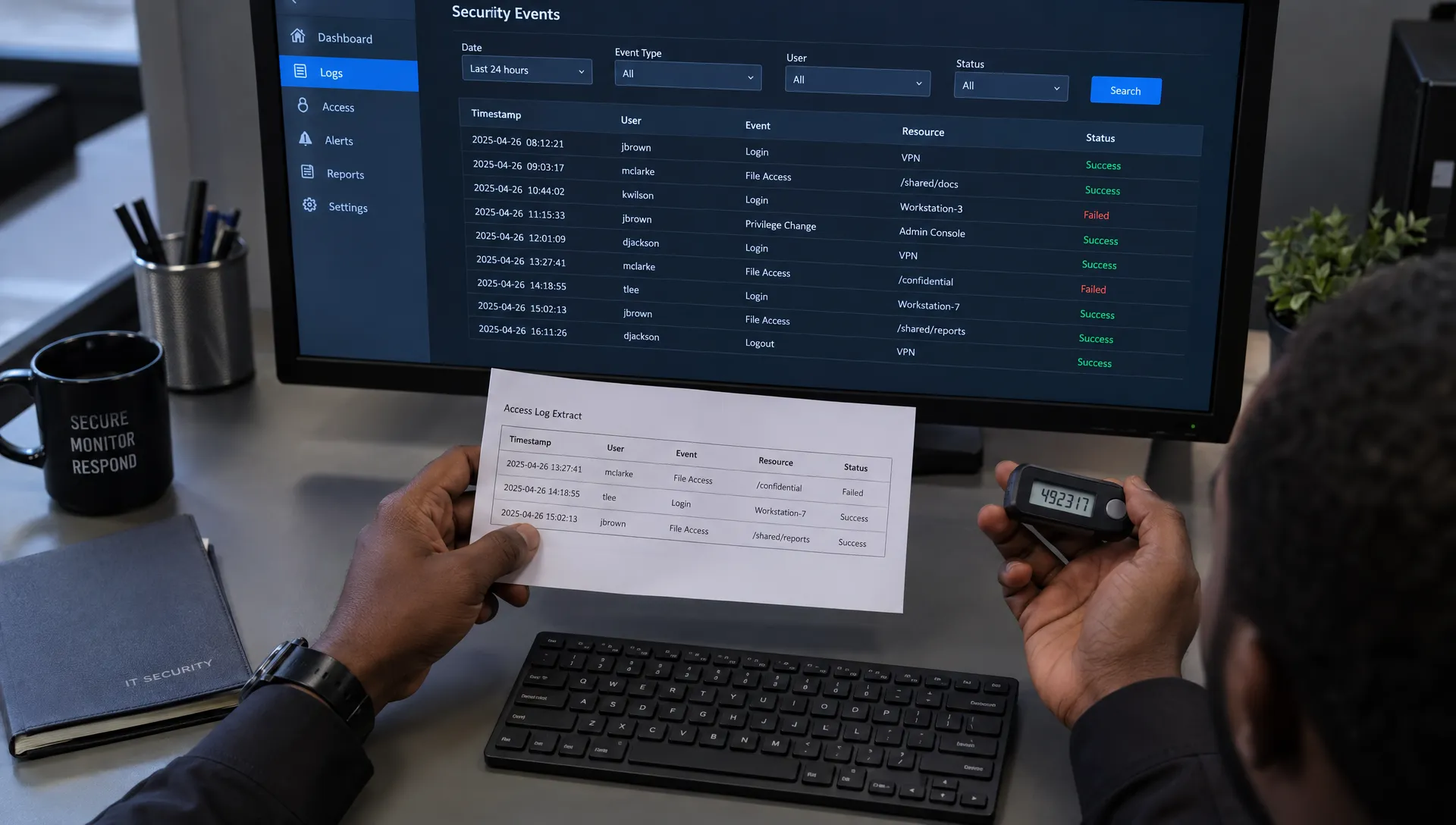
Consider a hypothetical Jamaican service provider proposing to review technical access logs when its systems flag unusual account activity.
The purpose is specific: investigating possible unauthorised access. Reviewing relevant account identifiers, timestamps and connection records may be necessary to establish what happened. People would generally have reason to expect proportionate measures to protect their accounts.
The assessment must still address false alerts and unnecessary exposure of account activity. The provider could restrict reviews to authorised security staff, limit the information examined, define retention periods and require investigation before taking adverse action.
That design may support reliance on legitimate interests, subject to the actual facts and other applicable requirements. Expanding it into continuous staff behaviour monitoring would change the analysis and require a fresh assessment.
Sharing customer details for unrelated advertising
Now consider a retailer proposing to give customer purchase histories and contact details to an unrelated advertiser.
The retailer may identify a commercial interest, but that alone does not establish necessity or a favourable balance. Customers may not expect the disclosure, less intrusive marketing options may exist and the recipient’s onward use may create additional risks.
A short opt-out statement does not resolve every concern. The retailer would need to reconsider the arrangement, examine applicable marketing and consent requirements and establish whether any lawful route genuinely supports the proposed activity. It should not proceed merely because the disclosure generates income.

Record the reasoning, not just the conclusion
A useful legitimate interests assessment should allow someone unfamiliar with the project to understand what was approved and why. Its length should reflect the complexity and potential impact of the processing.
Use a decision record such as this:
Assessment element | What to document |
Scope and owner | The activity, responsible team, affected individuals and assessment date |
Legitimate interest | The specific purpose, beneficiary and supporting evidence |
Necessity | Why the selected information is needed and which alternatives were considered |
Reasonable expectations | How the information was obtained and why people would or would not expect this use |
Potential harm | Likely consequences, affected groups and the seriousness of those consequences |
Safeguards | Each control, the risk it addresses and who will implement it |
Remaining impact | The risks that persist after safeguards and why the balance is or is not acceptable |
Decision and approval | Proceed, revise or do not proceed, with reasons and any conditions |
Review triggers | Changes or events requiring the decision to be reconsidered |
Attach or reference evidence rather than relying on unsupported conclusions. Relevant material might include a data-flow description, an access-control design, incident records or the privacy information individuals receive.
A numerical risk score can help organise discussion, but it should not replace the reasoning. Several low-risk features do not automatically outweigh one serious, unresolved harm.
Turn approval into operational controls
An assessment that approves processing subject to safeguards is not permission to launch without them. Confirm that each required control is operating before the activity begins.
The project owner should be able to demonstrate that access restrictions, retention settings and review procedures match the approved design. Privacy information should accurately explain the intended use, and relevant staff should know how to recognise and escalate objections or other rights requests.
Assign an accountable decision-maker and obtain input from the people who understand the system and its risks. Depending on the activity, that may include the data protection officer, legal adviser, information security team or an operational manager. An external adviser can assist, but responsibility remains with the organisation acting as controller.
Keep this assessment alongside any other required privacy documentation. It does not replace a data protection impact assessment. Understanding when a project needs a privacy impact assessment helps distinguish the processing-condition question from the wider assessment of privacy risks.
Reassess when the facts change
Do not treat the decision as permanent. Review it when the purpose changes, more information is collected, new recipients gain access or retention periods increase. Complaints, security incidents and evidence of unexpected harm can also undermine the original reasoning.
A new analytics function, for example, might turn a narrowly defined security review into behavioural profiling. Even if the underlying records remain unchanged, the new use needs its own justification.
Set a review date appropriate to the activity and record these event-based triggers. If the assessment no longer supports the processing, pause or redesign the affected use rather than leaving the original approval on file.
Frequently asked questions
Do we need consent as well as legitimate interests? Not necessarily for the same activity if another valid processing condition applies. However, additional conditions for sensitive personal data or separate consent requirements may still be relevant. Do not switch retrospectively to legitimate interests merely to defeat a refusal or withdrawal of consent.
Can we rely on legitimate interests for direct marketing? Not automatically. Assess the particular activity and separately check applicable marketing, consent and objection requirements. A favourable assessment does not override those rules or establish that a purchased contact list can lawfully be used.
Does publicly available information need an assessment? Public availability does not remove data protection obligations. Collecting information from public sources, combining it with other records or using it to profile someone can create consequences they would not reasonably expect.
Is the Jamaican assessment identical to a GDPR assessment? The purpose, necessity and balancing approach is useful across frameworks, but the applicable legal wording and obligations must be checked separately. A GDPR template is not proof of Jamaican compliance. Organisations subject to both regimes should identify and address each one.
Get support before committing to the processing
If your proposal involves sensitive information, extensive monitoring or an uncertain balance between business benefit and individual impact, seek advice before implementation.
Privacy & Legal Management Consultants Ltd. offers data protection implementation support, risk assessment tools and training for organisations in Jamaica. Request a free consultation to discuss your proposed use of personal data and the assessment it needs.