

Global Privacy Trends Jamaican Leaders Should Watch
Global privacy trends affect decisions Jamaican leaders make about artificial intelligence, overseas suppliers, customer services and workforce management. A new tool can change how personal data is used long before anyone updates the organisation’s privacy policy. For boards and executives, the challenge is to recognise those changes early enough to influence procurement, budgets and business strategy.
The most useful watchlist is not a catalogue of foreign laws. It identifies developments that could change your organisation’s exposure, the signals worth monitoring and the decisions management should bring to the board.
Start with Jamaica’s legal baseline
Jamaica’s Data Protection Act, 2020 remains the starting point for local data protection compliance. Its requirements should inform how organisations collect personal data, explain their purposes, manage retention, protect information and handle transfers overseas. The Office of the Information Commissioner is the relevant Jamaican regulatory reference point.
Foreign developments matter when they affect your actual activities. Serving overseas customers, monitoring people abroad or processing information for an international client can introduce additional legal or contractual requirements. Using a foreign software provider does not, by itself, mean every law in that provider’s home country applies to your organisation.
The leadership task is therefore twofold: maintain the Jamaican baseline and identify which global developments could change a particular business decision.
Six global privacy trends worth leadership attention
1. AI governance is becoming inseparable from data protection
Generative AI creates a practical purpose-control problem. Information collected for customer support, recruitment or internal administration can be repurposed through prompts, document uploads and connected applications. That secondary use needs assessment, even when the tool is convenient and the original collection was lawful.
The European Union’s AI Act illustrates the move towards formal AI governance alongside existing privacy law. Its requirements have a phased implementation timetable, so leaders should check the European Commission’s AI regulatory framework rather than assume every obligation starts together. Not every Jamaican organisation falls within its scope, but overseas clients may introduce AI-related contractual requirements.
What to watch: AI features appearing inside software your organisation already uses, changes to suppliers’ model-training terms and proposals to automate decisions about people.
Leadership decision: Establish who may approve AI uses involving personal data and which uses require additional review. Ask whether the supplier retains inputs, uses them for training or allows human access. Separate low-risk drafting from activities such as candidate ranking or customer eligibility assessments.
Buying an enterprise licence is not a complete privacy assessment. The configuration, information entered and intended use still matter.
2. Cross-border risk is becoming more specific to the service and data flow
International privacy requirements do not converge into one universal standard. Different jurisdictions can impose different rules on individual rights, sensitive information, transfers and access by public authorities. A supplier’s global presence can therefore complicate an otherwise straightforward purchasing decision.
For Jamaican organisations, the issue is often less about the supplier’s headquarters than the operational details. Where are backups stored? Which support teams can access customer records? Can a subcontractor process information from another country?
What to watch: New hosting locations, changes to subcontractors, overseas acquisitions and client requests for particular transfer safeguards.
Leadership decision: Require material changes in data location or access to trigger review, not merely an annual contract renewal. A promise of local storage does not necessarily exclude remote overseas access. Data residency and transfer compliance are related questions, but they are not interchangeable.
When market expansion is involved, a structured approach to assessing overseas privacy laws before expansion can help distinguish applicable obligations from requirements that do not affect the proposed activity.
Avoid treating GDPR as a universal certification. Its territorial scope depends on the circumstances, while contractual commitments can impose separate expectations even where the law does not directly apply.
3. Privacy choices are moving from legal documents into product design
Customer-facing privacy is not confined to a notice at the bottom of a website. It is also shaped by registration forms, marketing preferences, account settings and the steps required to withdraw a choice.
The GDPR’s requirements for consent and data protection by design are established legal concepts, not new inventions. Their relevance grows as organisations introduce more tracking, personalisation and connected customer services. The GDPR’s text provides the underlying requirements where that regulation applies.
Even a specialist retailer such as MORALVE’s closet-organisation shop illustrates how ordinary commerce creates privacy touchpoints through a newsletter sign-up and customer support routes. These everyday interactions deserve attention alongside larger databases. This is an example of where personal information can enter a business, not an assessment of that retailer’s compliance.
What to watch: Longer forms, bundled marketing permissions, additional advertising tools and interfaces that make opting out harder than opting in.
Leadership decision: Include privacy by design in product approval. Ask teams to justify each required field and demonstrate how customers change their preferences. Where consent is the appropriate basis, the choice should be meaningful and the withdrawal process workable.
Collecting less information can also reduce storage, access-control and deletion work. The commercial case should explain why additional data is necessary, rather than treating collection as cost-free.
4. Biometrics and workplace monitoring demand closer scrutiny
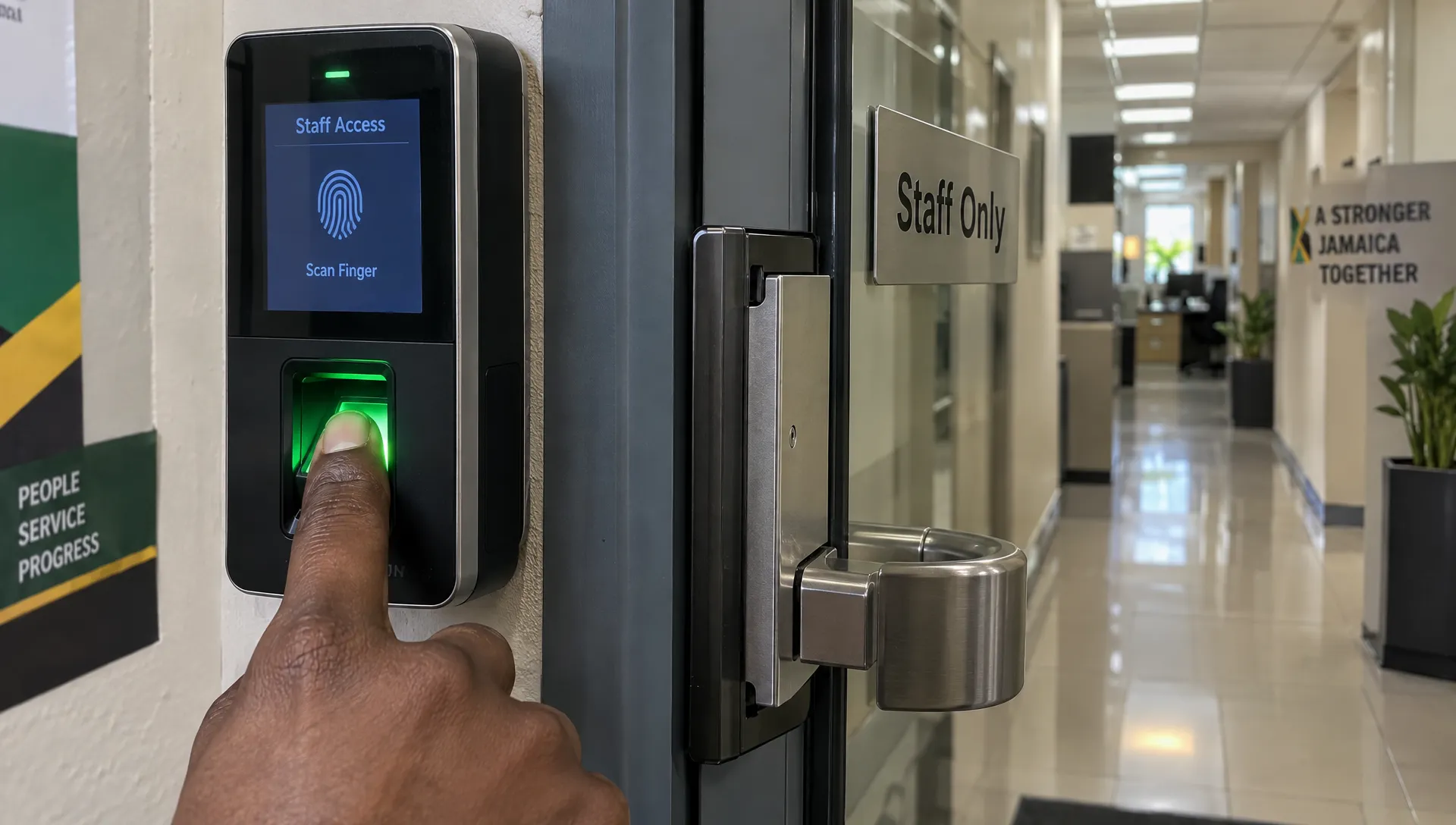
Facial recognition, fingerprint access systems, remote proctoring and productivity monitoring can turn routine operational decisions into significant privacy questions. The sensitivity is not limited to the information collected. It also concerns what the system infers and how those inferences affect people.
A photograph is not automatically biometric data in every legal context. Processing it to identify someone uniquely can change the analysis. Similarly, a workplace tool may collect ordinary activity records but use them to generate intrusive conclusions about performance or behaviour.
What to watch: Vendors adding identity verification, emotion analysis, location tracking or behavioural scoring to existing services.
Leadership decision: Require a documented assessment of necessity, proportionality and less intrusive alternatives before deployment. Examine accuracy limitations, access arrangements, retention and how someone can challenge an outcome.
Employee consent should not be treated as an automatic solution, particularly where workers may feel unable to refuse. The applicable legal basis and safeguards require separate consideration.
For organisations serving children, additional care is needed around understandable notices, age-appropriate design and the information collected. A feature that appears efficient for administrators may create a much larger privacy burden for the people using it.
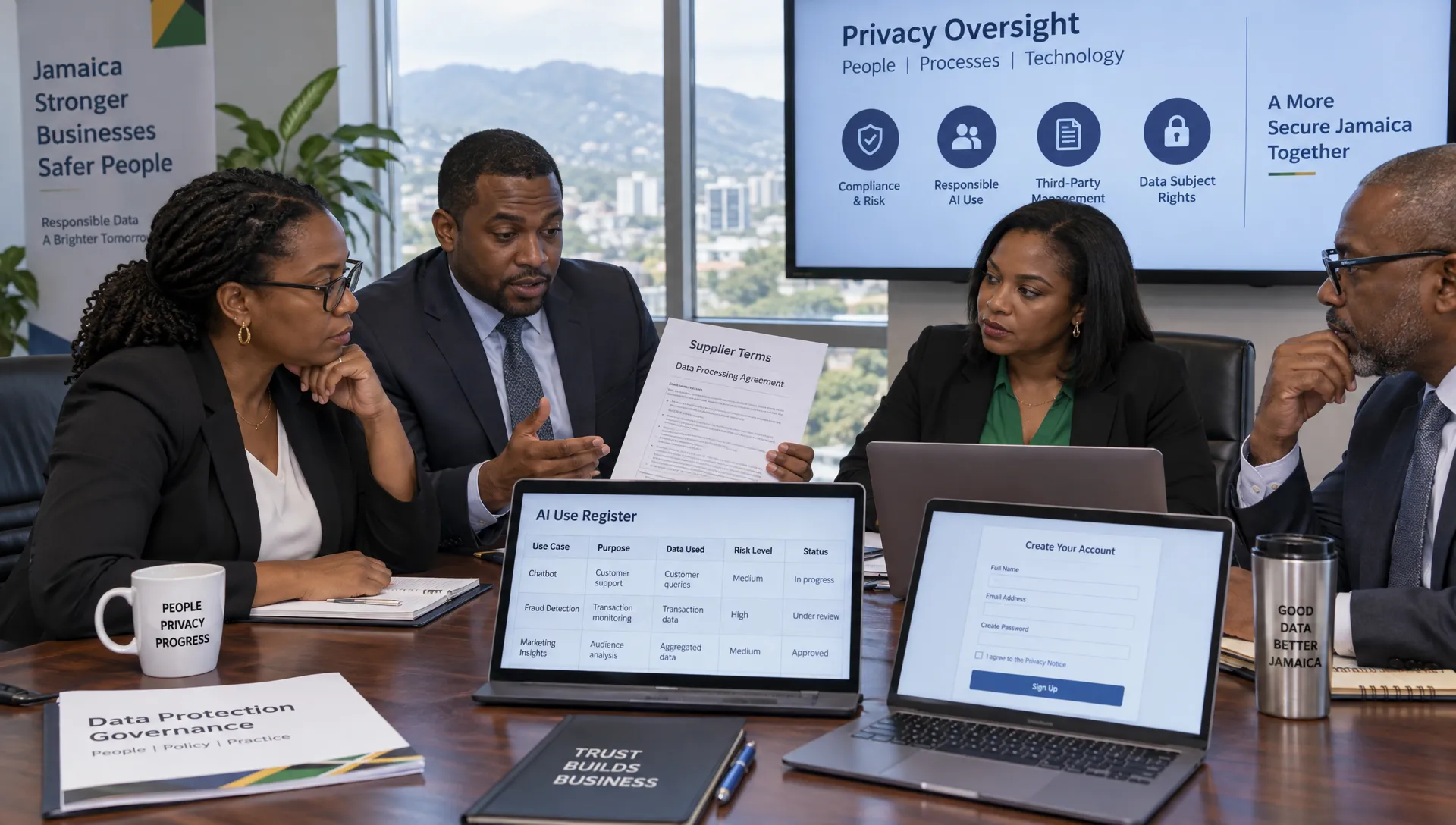
5. Cyber security and privacy oversight are converging, but remain different disciplines
Security controls protect personal data, yet strong security does not make every use of that data lawful or appropriate. An organisation can encrypt a database while retaining its contents too long, collecting unnecessary fields or giving information to the wrong business partner.
The reverse is also true: a carefully written privacy notice does not compensate for weak access controls. Leaders need oversight that connects both disciplines without treating either as a substitute for the other.
What to watch: Incident plans focused only on restoring systems, uncertainty about affected individuals and suppliers that report technical events without explaining the personal data involved.
Leadership decision: Test incident response across IT, legal, communications and the privacy function. A useful exercise should establish who evaluates notification duties, who preserves evidence and who communicates with affected clients or individuals. Applicable notification requirements may differ by jurisdiction and contract.
Integration also matters outside incidents. Anti-money laundering compliance may require particular records to be retained, while privacy governance requires retention to be justified and controlled. The answer is a documented schedule tied to applicable obligations, not a general decision to keep everything indefinitely.
Boards should receive both security and privacy indicators. System availability alone cannot reveal whether an organisation is respecting people’s rights or limiting unnecessary processing.
6. Privacy assurance is shifting towards evidence that stays current
A policy describes intended behaviour. Assurance requires evidence that the behaviour occurs and continues as systems, staff and suppliers change.
For Jamaican organisations working with international clients, this distinction can affect procurement discussions and contract negotiations. A questionnaire completed last year may no longer describe the current service if a new subcontractor, AI feature or hosting location has been introduced.
What to watch: Requests for evidence behind compliance statements, more detailed supplier reviews and contracts requiring notice of material operational changes.
Leadership decision: Define which records must remain current and assign an owner to each. Useful evidence can include processing inventories, training records, access reviews, retention decisions and assessments of higher-risk projects. The relevant set depends on the organisation’s activities and obligations.
Understanding what global clients expect from privacy controls can help management prepare evidence that supports the service being sold, rather than collecting documents without a clear purpose.
Corporate governance is central here. The board needs confidence that exceptions are identified, decisions have accountable owners and unresolved risks are escalated. More paperwork is not the objective. Reliable information for decisions is.
Turn the watchlist into a board agenda
Not every global development deserves immediate investment. Prioritise changes that affect substantial volumes of personal data, sensitive processing, important client relationships or decisions about individuals.
A concise watchlist can connect external developments to internal decisions:
Development | Internal signal to monitor | Decision for leadership |
AI governance | New AI features or proposed automated decisions | Set approval boundaries and require proportionate assessment |
Cross-border complexity | Changes in hosting, support access or subcontractors | Review transfer arrangements and contractual safeguards |
Privacy-focused product design | More collection fields or harder-to-use preference controls | Require justification for collection and usable choices |
Biometric and monitoring tools | New identification or behavioural analysis capabilities | Assess necessity, alternatives and safeguards |
Integrated incident oversight | Unclear ownership of personal-data incident decisions | Test escalation and notification decision-making |
Continuing assurance | Evidence that no longer matches the live service | Assign owners and refresh records after material changes |
Use business changes as review triggers. A major procurement, acquisition, new customer channel or AI rollout may warrant attention before the next scheduled compliance review.
Management reporting should explain what changed, which activities are affected and what decision is needed. Avoid reports that merely list new regulations without connecting them to the organisation. Legal developments with uncertain scope or implementation dates should be marked for verification, not presented as settled obligations.
Training should follow the same approach. Procurement teams need to recognise supplier changes, product teams need to understand collection choices and executives need to know when a proposal requires specialist review.
Frequently asked questions
Do global privacy trends automatically create new duties for Jamaican businesses? No. A trend may signal commercial expectations or emerging risk without creating a legal obligation. Duties depend on applicable Jamaican law, the scope of foreign laws and relevant contracts. Assess the connection to your activities before changing controls.
Does GDPR apply to every Jamaican organisation with European customers? Not automatically. Its territorial scope includes specific circumstances involving an EU establishment or offering goods or services to, or monitoring the behaviour of, individuals in the EU. A customer's location alone is not a complete scope assessment.
Which development should leaders review first? Start with the most consequential change already occurring inside the organisation. An AI deployment involving customer records, a new overseas processor or biometric monitoring may deserve attention before a distant regulatory proposal.
How often should a privacy watchlist be reviewed? Set a routine that matches the organisation’s risk and governance cycle, then add event-driven reviews. Significant changes in processing, suppliers or applicable requirements should not wait for the next scheduled meeting.
Identify the decisions your organisation needs to make
Privacy & Legal Management Consultants Ltd. supports Jamaican organisations with data protection implementation, corporate governance, cyber security, GRC integration and training. These services can help connect privacy obligations with operational responsibilities.
If your organisation is introducing AI, changing suppliers or reviewing its oversight arrangements, request a free consultation with PLMC to discuss the developments most relevant to your activities and the next steps for your compliance programme.