

Global Privacy Rules for Tourism and Hospitality
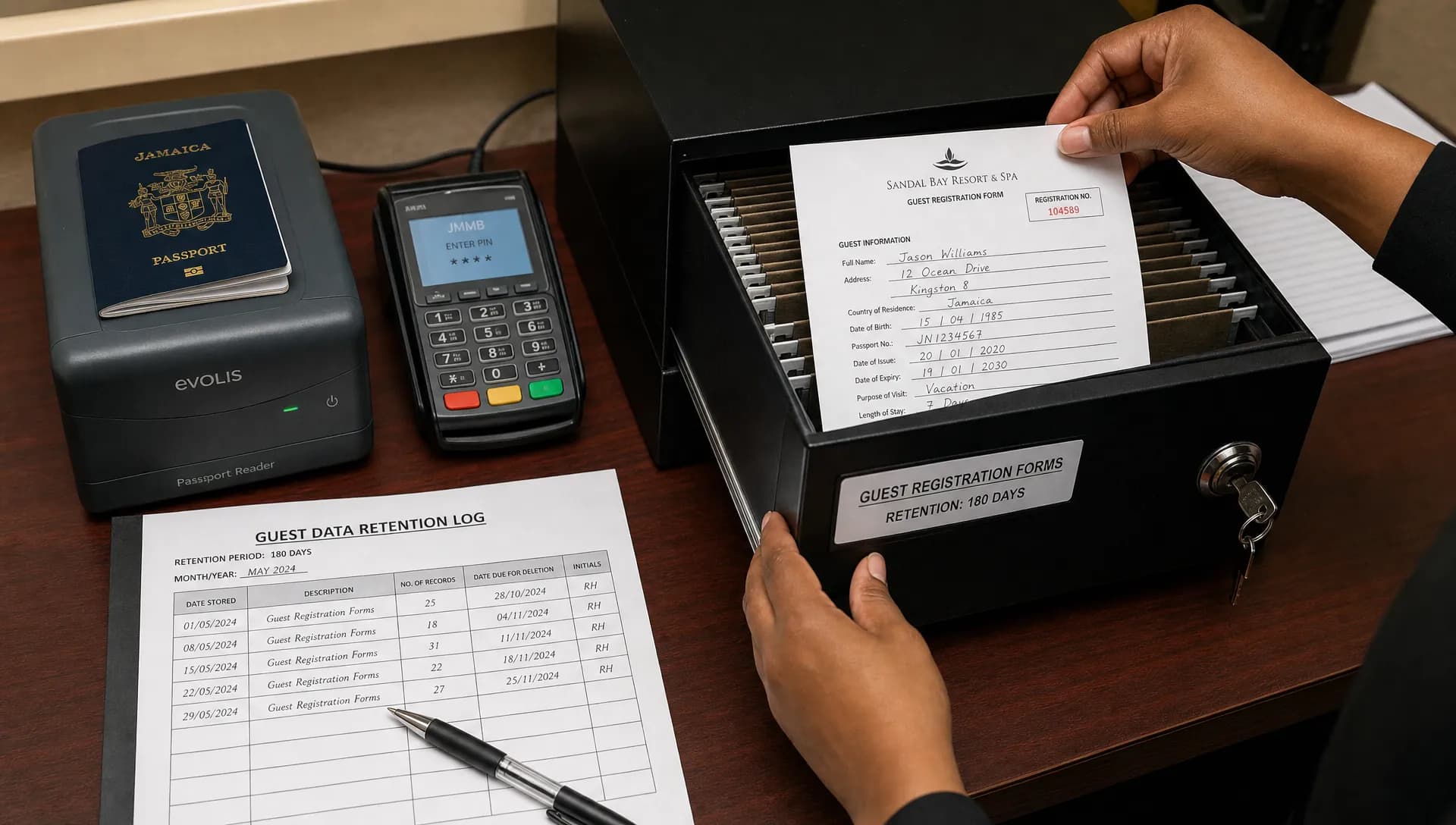
Tourism is one of the least local forms of business. A hotel in Kingston may receive a reservation from Germany, process a card issued in Canada, message a guest from New York and store preferences in a cloud property management system hosted overseas. That is why Global Privacy Rules for Tourism and Hospitality matter to Jamaican hotels, villas, attractions, tour operators, restaurants and destination management companies.
The sector collects more personal data than many guests realise: passports, payment details, dietary needs, accessibility requests, loyalty profiles, CCTV footage, Wi-Fi logs, guest complaints and sometimes children’s information. When that data crosses borders, privacy obligations can follow the guest, the booking channel, the marketing campaign or the technology provider. The aim is not to make service slower. The aim is to make privacy part of good hospitality.
Why privacy is now a board issue for tourism and hospitality
Privacy cannot sit only with IT or legal. In a hospitality business, personal data moves through reservations, front desk, housekeeping, spa teams, restaurants, transport desks, marketing, finance and security. A single weak point can expose the entire organisation, especially where staff turnover is high or where many vendors connect to guest systems.
For Jamaican organisations, the Data Protection Act 2020 makes data protection compliance a corporate governance matter. Businesses need to know what personal data they hold, why they hold it, who can access it, where it is stored and how long it is kept. That requires leadership, documented controls and staff awareness, not only a privacy policy on a website.
Global privacy rules for tourism and hospitality also affect trust. Travellers expect convenience, but they increasingly ask how their information is used. Corporate travel clients, airlines, online travel agencies and event partners may also require privacy commitments before sending business your way.
Global Privacy Rules for Tourism and Hospitality: which laws may apply
There is no single worldwide privacy law. Tourism and hospitality businesses should assess the laws that may apply based on where guests are located, where the business markets, where systems are hosted and where service providers process data. PLMC has also outlined when overseas data laws apply to Jamaican companies, which is a useful starting point for cross-border analysis.
Law or framework | When it may matter | Practical action for hospitality businesses |
Jamaica Data Protection Act 2020 | A Jamaican business processes personal data in its operations | Build a data inventory, issue clear privacy notices, control access and train staff |
EU GDPR and UK GDPR | The business targets, serves or monitors EU or UK guests | Confirm lawful bases, manage international transfers and respect data subject rights |
US state privacy laws and FTC expectations | The business markets to US consumers, runs loyalty programmes or uses targeted advertising | Be accurate in privacy notices, manage opt-outs and avoid unfair or deceptive practices |
Canada PIPEDA and similar rules | The business serves Canadian guests or corporate clients | Identify purposes, use consent where required and apply safeguards |
Brazil LGPD and other national privacy laws | The business markets to travellers in those countries or processes their data | Map data flows, confirm lawful grounds and review vendor contracts |
PCI DSS | The business accepts payment cards | Protect cardholder data, limit storage and use compliant payment providers |
The EU General Data Protection Regulation remains one of the most influential privacy laws for international travel. Jamaica’s Office of the Information Commissioner is also central for local guidance under the Jamaican regime.
Start with a guest data map
Before drafting procedures, map the guest journey. A data map helps you see where personal data enters, who uses it, which vendors touch it and where it leaves Jamaica. Without that view, compliance becomes guesswork.
A typical hospitality data map should cover direct bookings, online travel agency bookings, call centre enquiries, group sales, check-in, passport verification, room charging, spa or excursion bookings, guest Wi-Fi, CCTV, complaints, incident reports, loyalty marketing and post-stay reviews. Include manual records as well as digital systems. A paper registration card left at reception is still a privacy risk.
Guest data category | Common use | Privacy concern |
Identity and passport details | Check-in, legal records, security | Overcollection, insecure copies and excessive retention |
Payment information | Deposits, room charges, refunds | Card fraud, unauthorised access and PCI DSS exposure |
Preferences and special requests | Better service, personalisation | Sensitive inferences, such as health, religion or family status |
CCTV and access logs | Safety, incident management | Monitoring transparency, retention and access control |
Marketing and loyalty data | Promotions, segmentation, repeat bookings | Consent, opt-outs and profiling |
A good map does not need to be complicated at first. It needs to be honest, complete enough to guide decisions and updated when new systems or vendors are introduced.
Notices, consent and guest choice
A privacy notice should be easy to find before a guest shares personal information. Place it near direct booking forms, event enquiry forms, Wi-Fi registration, loyalty sign-ups, spa intake forms and mobile app screens. The notice should explain what data is collected, why it is used, who it is shared with, how long it is kept and how guests can exercise their rights.
Consent is important, but it is not the answer to every privacy question. Some processing may be necessary to perform a booking contract, meet legal obligations or protect legitimate business interests. Marketing, cookies, optional profiling, photos for promotional use and some uses of sensitive information often require more careful consent management.
Tourism teams should be especially cautious with special category or sensitive data. Allergy information, accessibility needs, medical incidents, religious meal preferences and children’s details should only be collected when there is a clear purpose. Access should be limited to staff who genuinely need the information to serve or protect the guest.
Vendors, OTAs and cross-border transfers
Modern hospitality depends on vendors. Booking engines, channel managers, property management systems, CRM tools, email platforms, cloud storage, revenue management software, digital room keys, guest messaging systems and Wi-Fi providers may all process guest data. The more connected the environment, the more important vendor governance becomes.
Contracts should explain whether the vendor is acting as a processor, service provider or independent controller. They should address confidentiality, security measures, sub-processors, breach reporting, data deletion, audit rights and cross-border transfer mechanisms. For EU or UK guest data, tools such as standard contractual clauses may be required, depending on the transfer route and risk.
Online travel agencies create another layer. A hotel may receive guest information from an OTA, but both parties may have separate privacy duties. The hotel should understand what data it receives, what it can use for direct marketing and what promises the OTA has made to the guest.
Staff conduct is where many incidents happen
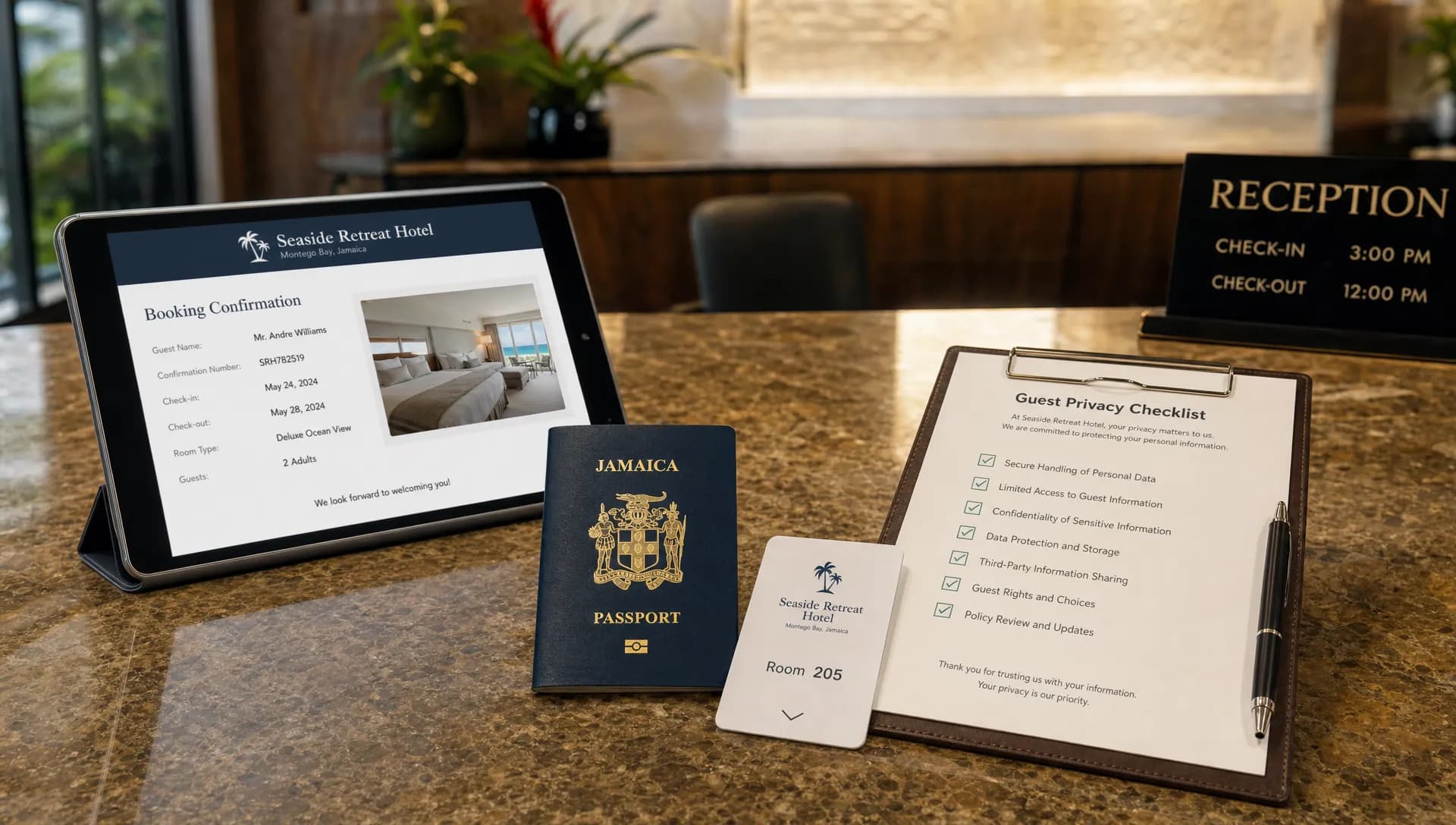
Many privacy incidents in tourism and hospitality are practical, not technical. A staff member emails a passport scan to the wrong address, discusses a VIP guest where others can hear, leaves registration cards at the desk or uses a personal messaging app to send guest details to a driver. These habits can create real risk even when the organisation has good systems.
Clear rules should cover how staff verify identity, handle passport copies, respond to guest rights requests, share information with third parties and dispose of paper records. Housekeeping, security and transport teams need training too, because they may encounter guest information outside traditional office systems.
For more operational examples, PLMC’s guidance on personal information privacy handling rules for staff explains how everyday work practices can reduce privacy incidents. In hospitality, training should be role-specific and repeated, especially before peak tourism seasons.
Security, breaches and high-risk hotel systems
Hospitality systems are attractive targets because they combine identity data, card payments and high-volume transactions. Security controls should include multi-factor authentication for administrative systems, strong vendor access controls, network segmentation, encryption where appropriate, secure backups and logging for critical platforms.
Payment data deserves special attention. Hotels should avoid storing full card details unless absolutely necessary and should rely on compliant payment processors and tokenisation where possible. Front desk workarounds, shared passwords and printed card details create avoidable risk.
Breach readiness is also part of privacy compliance. The team should know who investigates, who contacts vendors, who preserves evidence, who assesses legal notification duties and who communicates with affected guests. Under the GDPR, some personal data breaches must be reported to the regulator within 72 hours. Jamaican organisations should take local advice on notification duties under the Data Protection Act 2020 and any sector-specific obligations.
Where a hospitality business includes gaming, luxury transactions, travel services or high-value events, anti-money laundering controls may also intersect with privacy. Collect what AML rules require, protect it carefully and avoid using compliance records for unrelated purposes.
A practical compliance programme for hotels, villas and tour operators
A workable privacy programme should match the size and risk profile of the business. A small villa operator will not need the same structure as a multi-property resort group, but both need accountability, basic records and staff awareness.
Useful actions include:
Create a guest data inventory covering systems, paper records and vendors.
Review privacy notices across booking pages, Wi-Fi portals, event forms and loyalty sign-ups.
Set retention periods for passport copies, incident reports, CCTV, guest messages and marketing data.
Train front desk, reservations, sales, security, housekeeping and management teams on practical privacy rules.
Review contracts with booking engines, OTAs, payment processors, cloud providers and marketing platforms.
Prepare a breach response plan that includes legal review, vendor escalation and guest communication.
These steps support Jamaica data privacy obligations and help with overseas requirements. They also make audits, corporate client questionnaires and regulator enquiries easier to manage because the organisation can show how decisions were made.
Frequently Asked Questions
Do global privacy rules apply to a Jamaican hotel if the guest is from overseas? They can. The answer depends on how the hotel markets, books, monitors or serves overseas guests and where data is processed. EU, UK, US, Canadian or other rules may apply in addition to Jamaica’s Data Protection Act 2020.
Is a hotel allowed to copy a guest’s passport? It depends on the purpose, legal basis and local requirements. If a copy is necessary, access should be restricted, storage should be secure and retention should be limited. Do not keep passport copies indefinitely just because it is convenient.
Can a hotel use guest email addresses for marketing after checkout? Only if the hotel has a valid basis to do so and gives guests proper notice and opt-out options. Consent rules may differ depending on the guest’s jurisdiction and the marketing channel used.
What is the biggest privacy risk in hospitality? The biggest risk is often uncontrolled data sharing across staff, vendors and systems. Passport scans, payment details, guest complaints, CCTV footage and special requests need clear rules and access limits.
How often should tourism staff receive privacy training? Training should occur during onboarding, when roles change, when new systems are introduced and at regular intervals. Seasonal refreshers are useful for hotels and attractions with peak staffing periods.
Strengthen privacy before it becomes a guest issue
Privacy is now part of the guest experience. Travellers want convenience, but they also expect organisations to respect their personal information. For tourism and hospitality businesses in Jamaica, a strong privacy programme supports compliance, trust, vendor readiness and better corporate governance.
Privacy & Legal Management Consultants Ltd. helps organisations understand privacy, data protection, governance, risk and compliance requirements in practical business terms. If your hotel, villa, attraction or travel business needs help assessing its obligations, training teams or preparing for data protection compliance, start with a structured review before the next busy season begins.