

Data Protection Policy for Schools: A Ready-to-Use Framework
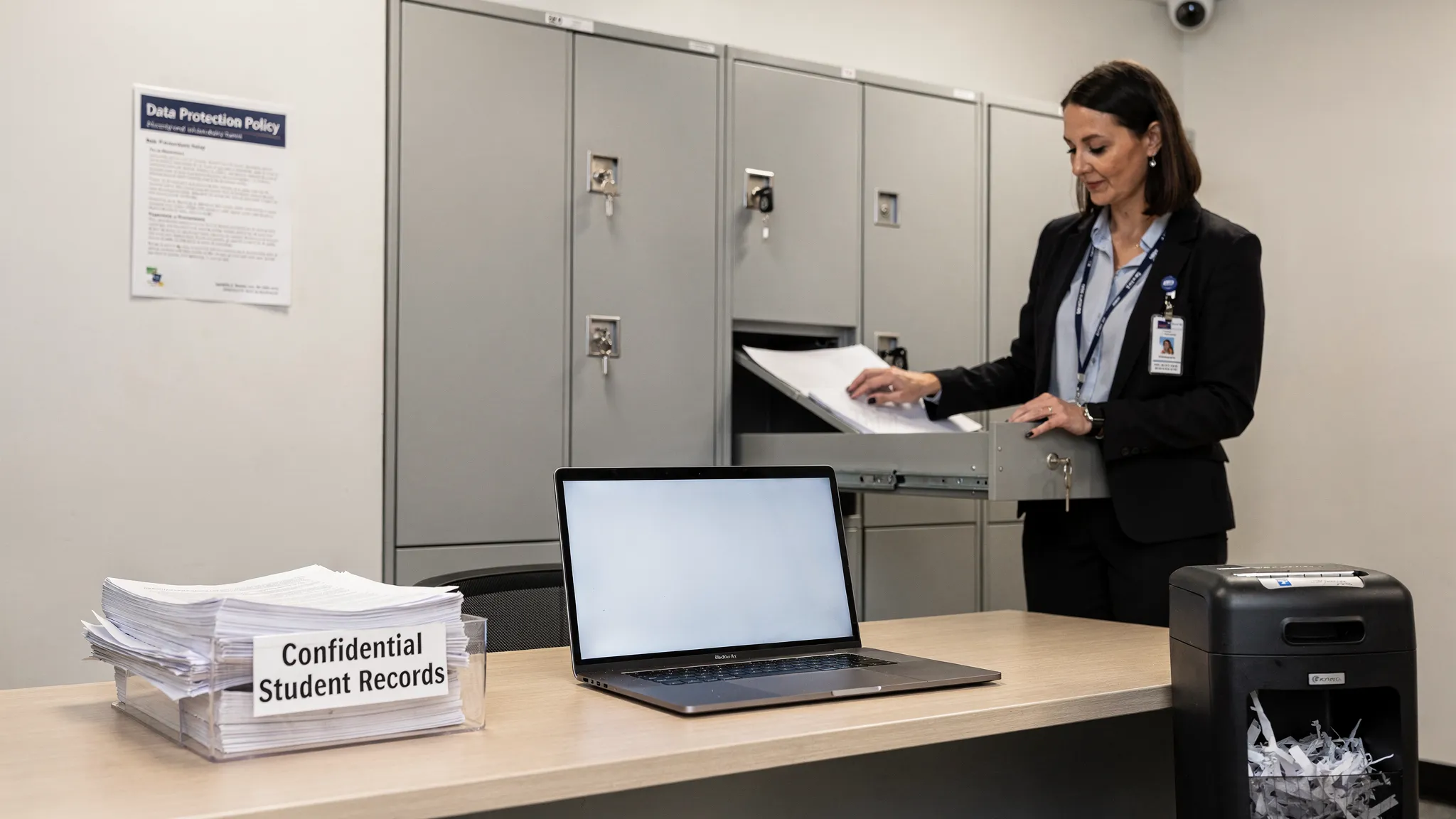
Schools handle some of the most sensitive information in any community: children’s identities, addresses, grades, disciplinary records, welfare notes, medical details, photographs, and sometimes even CCTV footage. In Jamaica, that information is not “just admin”, it is personal data that must be handled in line with the Data Protection Act, 2020. A clear, workable policy helps a school protect students, build trust with parents and staff, and reduce the risk of complaints or incidents.
This article provides a ready-to-use data protection policy for schools framework you can adapt for your institution (public or private, early childhood to tertiary). It is written for principals, boards, bursars, registrars, IT admins, guidance counsellors, and education leaders who need something practical, not theory.
This framework is general guidance, not legal advice. You should tailor it to your school’s structure, systems, and any Ministry, board, or statutory requirements.
What a school data protection policy must achieve
A data protection policy is not meant to be a long document that no one reads. It should do three things well:
Set rules people can follow (what staff can do, what they must not do, and who approves what).
Explain how the school meets the Data Protection Act (principles, rights, security, accountability).
Create evidence (so the school can show it has governance and controls, not only good intentions).
For reference, you can review the legislation directly: Jamaica’s Data Protection Act, 2020.
Data Protection Policy for Schools (ready-to-use framework)
Use the sections below as your policy structure. Where helpful, you will see sample wording you can copy and adapt.
1) Policy statement (purpose)
Sample wording
The School is committed to protecting the privacy and personal data of our students, parents and guardians, staff, alumni, and visitors. This policy sets out how we collect, use, store, share, and dispose of personal data in accordance with the Data Protection Act, 2020 (Jamaica) and good governance practices.
2) Scope (who and what it covers)
Define who must follow it and what information it covers.
Include in scope
All staff (permanent, temporary, contracted), volunteers, and board members
All systems and records (paper files, email, cloud platforms, messaging apps used for school business, CCTV)
All personal data relating to students, parents and guardians, staff, job applicants, vendors, and visitors
Sample wording
This policy applies to all personal data processed by the School in the course of its operations, whether the data is held electronically, on paper, or otherwise.
3) Roles and responsibilities (make accountability real)
Schools often struggle with privacy because “everyone” is responsible, which usually means no one is responsible. Assign roles clearly.
Role | Key responsibilities | Typical evidence to keep |
Board / School leadership | Approves the policy, sets risk appetite, ensures resources | Approved policy, review minutes |
Principal (or Head) | Ensures implementation across departments | Annual compliance plan, incident reports |
Data Protection Lead (DPL) or assigned officer | Coordinates privacy work, handles rights requests, advises on sharing | Rights request log, DPIA register |
Registrar / Admin | Controls student records lifecycle and access | Access lists, retention schedule |
IT Admin / Service provider | Technical safeguards, user accounts, backups, security monitoring | Account provisioning logs, backup reports |
Teachers and staff | Follow rules, report incidents, protect student data daily | Training records, signed acknowledgements |
Sample wording
The School shall appoint a Data Protection Lead responsible for coordinating compliance activities, maintaining required records, and serving as the internal point of contact for data protection matters.
4) Definitions (keep them simple)
Define a few terms in plain language. Do not turn this into a legal dictionary.
Recommended definitions to include
Personal data: information relating to an identified or identifiable individual.
Sensitive personal data: information that requires higher protection (for schools, this often includes health information, special education needs, welfare concerns, and other high risk student records).
Processing: anything done to personal data (collecting, storing, sharing, deleting).
5) What data we collect (and why)
List categories of data, then tie them to school purposes. This supports data minimisation and transparency.
Typical school data categories
Student identity and contact data (name, DOB, address, TRN where applicable)
Parent/guardian contact and emergency contacts
Academic records (grades, assessments, attendance)
Behaviour and disciplinary records
Health and welfare information (allergies, medication instructions, incident reports)
Photos and videos (events, school ID, yearbook, social media)
Staff HR data (contracts, payroll details, performance notes)
Security data (visitor logs, CCTV)
Digital learning data (accounts on learning platforms, device identifiers)
Sample wording
The School collects only the personal data that is necessary for education delivery, student safety, administration, compliance obligations, and legitimate school operations.
6) Lawful, fair, and transparent processing (the operating rule)
This is the heart of your policy. Your staff should understand: just because a school can access data does not mean the school should use it for any purpose.
Sample wording
The School will process personal data lawfully, fairly, and in a transparent manner. Personal data will be collected for specified purposes and will not be used in ways that are incompatible with those purposes.
Practical school examples (include as guidance)
A phone number collected for emergency contact should not automatically be used for broad marketing.
Photos taken for internal records should not be posted publicly without an appropriate basis and safeguards.
A disciplinary issue should be shared only with staff who need to know (not circulated casually).
7) Privacy notices (what we tell people)
A policy is internal. A privacy notice is what you give to parents, students (age appropriate), staff, and visitors.
Include in your policy
The School will provide clear privacy information at or before the point of collection, including the purpose for collection, how the data will be used, who it may be shared with, and how individuals can exercise their rights.
Where notices should exist in schools
Admissions and enrolment pack
Staff onboarding (HR privacy notice)
Website forms and contact pages
CCTV signage and visitor sign-in
Online learning platform onboarding
If you need a broader organisational checklist, PLMC’s Privacy and Data Protection: A Practical Checklist complements this school policy framework.
8) Consent (use it carefully, especially with children)
Schools sometimes over rely on consent. In practice, many school activities are necessary for education delivery, safeguarding, or administration. Consent should be specific and meaningful, not buried.
Sample wording
Where the School relies on consent, consent shall be informed, specific, and documented. Individuals may withdraw consent where applicable, and the School will document and action withdrawals within a reasonable time.
Common “consent needed” areas to address clearly
Public use of student images (website, social media, marketing)
Optional programs delivered by third parties (clubs, external tutoring)
Certain data sharing not strictly required for education delivery
9) Data minimisation and access control (need-to-know)
This section reduces day-to-day risk immediately.
Sample wording
Access to personal data is restricted to authorised persons who require access for their role. Staff must not access student or staff records out of curiosity, convenience, or for personal reasons.
Recommended controls (plain language)
Unique user accounts for staff (no shared logins)
Role based access (teachers see their class data, finance sees billing, not everything)
Locked storage for paper files, controlled key access
Clear rules for WhatsApp and personal email (avoid where possible for sensitive data)
10) Security safeguards (paper, people, and technology)
Schools do not need to be “perfect”, but they must be reasonable and consistent.
Sample wording
The School will implement appropriate technical and organisational measures to protect personal data against accidental or unlawful destruction, loss, alteration, unauthorised disclosure, or access.
Security measures to include in the policy
Password and MFA requirement for school email and cloud services
Device security (screen locks, encryption where available)
Secure disposal (shredding paper, wiping devices)
Backups and recovery testing for core systems
Secure sharing (avoid posting lists, grades, or medical notes in group chats)
For a widely used security baseline reference, you can align your practices to the NIST Cybersecurity Framework (even if you implement it lightly).

11) Special care for sensitive student information
Schools frequently process sensitive information, even when they do not label it that way. Your policy should explicitly require extra safeguards.
Sample wording
Sensitive personal data (including health, welfare, safeguarding, and special education needs information) is subject to enhanced access controls and may only be shared on a strict need-to-know basis.
Practical safeguards
Separate, restricted folders for welfare and health records
Written sharing decisions for external referrals
Clear redaction rules when sharing reports
12) Sharing data with third parties (and other schools or agencies)
This is where many school breaches happen: informal sharing, unclear authority, or vendor platforms.
Sample wording
The School will share personal data with third parties only where there is a clear purpose, appropriate authority, and suitable safeguards. Where third parties process personal data on behalf of the School, the School will require contractual commitments on confidentiality, security, and permitted use.
Common school third parties
School management software providers
Cloud email and learning platforms
Payment processors
Security service providers (CCTV maintenance)
Bus transportation providers
Photography and yearbook vendors
13) Vendor due diligence (EdTech and cloud)
Many schools use platforms hosted outside Jamaica. Your policy should require checks before adoption.
Minimum vendor checks to write into the policy
What data is collected and why
Where it is stored (including overseas hosting)
How long it is retained
Security measures (MFA support, encryption, access logs)
Whether the vendor uses sub processors
How the school can export and delete data
Sample wording
The School will evaluate privacy and security risks before adopting new systems that process personal data. Higher-risk systems require documented assessment and leadership approval.
14) Cross-border transfers (when data leaves Jamaica)
If student or staff data is stored or accessed abroad, your policy should treat it as a managed risk, not an afterthought.
Sample wording
Where personal data is transferred or made accessible outside Jamaica (including through cloud services), the School will take steps to ensure appropriate safeguards are in place and will document the transfer arrangements.
If you are building a full 2026 operational plan across governance and controls, PLMC’s Data Protection Jamaica: Compliance Roadmap for 2026 can help you structure deliverables over the school year.
15) Retention and disposal (keep what you need, delete what you do not)
Retention is a frequent gap in schools. The risk is not only digital, it is also old filing cabinets, archived boxes, and staff laptops.
Sample wording
The School will retain personal data only for as long as necessary for the purposes for which it was collected, or as required by applicable laws and education obligations. At the end of the retention period, personal data will be securely destroyed or anonymised.
A simple, workable way to implement this is to publish a one page schedule. Below is a starter structure you can tailor.
Record type | Examples | Suggested control approach |
Student academic record | Report cards, transcripts, assessments | Define retention by year level and school requirements, restrict access |
Attendance and punctuality | Daily registers, sign-in logs | Retain for operational and reporting needs, then dispose securely |
Health and welfare | Allergy notes, incident reports, counselling referrals | Higher protection, limited access, clear retention trigger |
Photos and video | Website photos, event recordings | Separate “marketing” vs “internal” use, manage consent and takedown |
Staff HR files | Contracts, disciplinary notes | Restrict access, define retention after exit |
CCTV | Security recordings | Short retention by default, extend only for investigations |
16) Individual rights requests (parents, students, staff)
Your policy should establish a predictable process and stop staff from responding informally without oversight.
Sample wording
Individuals have rights regarding their personal data under the Data Protection Act. The School will provide a process for requests, verify identity where appropriate, and respond within required timeframes. All requests will be logged and handled by the Data Protection Lead in coordination with relevant departments.
Operational guidance to include
Requests should be made through a designated email or form
Staff should forward any request immediately to the Data Protection Lead
Records should be reviewed for third-party data before disclosure
17) Data breaches and incident response (act fast, document everything)
A breach is not only hackers. In schools, it is often:
A report card emailed to the wrong parent
A spreadsheet of student details shared in the wrong group
A lost phone with school email still logged in
A misplaced discipline file
Sample wording
Any suspected loss, unauthorised disclosure, or misuse of personal data must be reported immediately to the Principal and Data Protection Lead. The School will assess impact, contain the incident, preserve evidence, and determine whether notifications are required.
For staff, make this concrete by including a simple “first hour” rule.
Sample wording
In the first hour after a suspected incident, staff must (1) stop further sharing, (2) secure the device or record, (3) notify the Data Protection Lead, and (4) not delete evidence (emails, messages, logs).
18) Training and awareness (privacy is a daily habit)
A school policy that is not taught becomes a document exercise. Training should be role-based.
Sample wording
The School will provide periodic training and guidance to staff and relevant third parties. Training will cover secure handling of student data, appropriate communications, recognising incidents, and reporting obligations.
Recommended training rhythm
Induction for new staff (within first month)
Annual refresher for all staff
Extra sessions for high risk roles (admin, HR, finance, guidance, IT)
19) Monitoring, review, and enforcement
Sample wording
Compliance with this policy is mandatory. Breaches of this policy may result in disciplinary action and may be reported to relevant authorities where required. This policy will be reviewed at least annually, and after any significant incident or operational change.
Implementation tips (so the framework works in a real school)
A good policy fails when it is disconnected from daily operations. These steps help you operationalise without overwhelming your team.
Start with three “high impact” fixes
Create one official channel for parent communications (and define what must never go in class group chats).
Lock down access to student records (role-based access, remove shared logins, remove ex staff accounts promptly).
Publish a simple retention and disposal rule (including secure shredding days and device wipe procedures).
Build a small compliance folder (your evidence)
Keep a shared folder (restricted access) with:
Approved policy and version history
Training attendance records
Vendor contracts or data processing addendums (where applicable)
Rights request log
Incident log and lessons learned
When to get support
If your school is updating enrolment processes, adopting new EdTech platforms, rolling out CCTV, or handling increased sensitive student welfare needs, it can be helpful to get structured support to reduce risk and document decisions properly.
Privacy & Legal Management Consultants Ltd. (PLMC) supports Jamaican organisations with data protection implementation, training, risk assessments, and broader GRC integration. If you want help tailoring this framework into an auditable school policy pack (policy, notices, forms, vendor checks, and staff training), you can explore PLMC’s resources at privacymgmt.org or request a consultation.