

Data Protection for Businesses in Jamaica: Practical 2026 Guide

In 2026, data protection is no longer something Jamaican businesses can treat as a “policy on the website.” Customers, employees, regulators, banks, and international partners increasingly expect you to prove how you collect, use, store, share, and dispose of personal data. The good news is that a practical programme does not have to be complicated. It just has to be real, documented, and repeatable.
This guide explains data protection for businesses in Jamaica in practical terms, with a focus on what to implement, what evidence to keep, and how to reduce risk under the Data Protection Act.
What “good” data protection looks like in 2026 (in plain English)
A strong programme typically has four visible characteristics:
You know your data: what you collect, where it sits, who can access it, and why you need it.
You control your data: permissions, retention, vendor contracts, and security controls match the risk.
You can respond: rights requests, complaints, and incidents are handled consistently.
You can evidence it: you can show policies, logs, training records, and decisions, not just intentions.
Many organisations in Jamaica already do pieces of this (HR files, accounting records, CCTV, customer databases), but the gap is often that these controls are not joined into one accountable operating model.
Step 1: Assign ownership and make privacy a business process
Data protection programmes fail when “everyone” is responsible. Start with clear accountability and a simple operating rhythm.
Practical actions
Appoint a privacy lead (and a backup). This does not have to be a new hire, but it must be an assigned role.
Create a small, repeatable forum (monthly or quarterly) for decisions on:
new projects and systems
vendor onboarding
incidents and near misses
metrics and outstanding risks
Record decisions and approvals. In 2026, “we discussed it” is less useful than “here is the decision record.”
Evidence to keep
A regulator or client audit will usually expect to see at least:
an accountability statement (who owns what)
privacy and data protection policies (approved and versioned)
risk decisions and action tracking
If you want a structured starting point, PLMC’s existing resources like the privacy and data protection practical checklist can help you assess maturity and document gaps without guessing.
Step 2: Map your data in a way staff can actually use
A “data map” is not a wall-sized diagram. For most Jamaican SMEs and mid-sized firms, the most useful output is:
a simple inventory of the personal data you process
a data flow summary for your highest risk activities (payments, HR, health data, minors, CCTV, marketing)
Start with the systems you already know:
HR and payroll
CRM and marketing tools
accounting and invoicing
customer support channels (email, WhatsApp, call recordings)
CCTV and access control
cloud drives and shared folders

A practical classification table you can adapt
Use a table like this to connect data types to sensible controls (avoid overengineering low-risk data, but do not under-protect high-risk data).
Data type (examples) | Typical business area | Risk level (often) | Practical control to prioritise |
Contact details (name, email, phone) | Sales, support | Medium | Limit access by role, retention rules, secure exports |
Government identifiers (where applicable) | HR, compliance | High | Strict access, encryption at rest/in transit where possible, audit logs |
Financial details (invoices, payment refs) | Finance | High | Least privilege access, strong vendor due diligence, secure storage |
Health-related information | HR, benefits | High | Segregate storage, tighter access, documented justification |
CCTV footage | Facilities, security | Medium to High | Signage/notice, limited viewing access, retention schedule |
Note: the exact risk level depends on your context, volume, and threat profile. The table is a starting point for decision-making, not a substitute for assessment.
Step 3: Tighten collection and notices (reduce what you collect, explain what you do)
Two of the fastest ways to reduce data protection risk are:
Collect less (data minimisation)
Explain clearly (transparency)
Collection: common “easy wins”
Remove optional fields from forms unless you can justify them.
Stop copying IDs “just in case” if you do not have a defined requirement and retention rule.
Avoid collecting sensitive information in free-text fields (for example, “tell us about yourself”).
Review “staff convenience” spreadsheets and shared drives. These often become uncontrolled shadow databases.
Notices: what to check in 2026
A practical privacy notice should match what your business actually does today, including:
what personal data you collect
why you collect it (purposes)
who you share it with (categories of vendors)
how long you keep it (or how you decide)
how people can contact you about their data
If your marketing uses pixels, analytics, or targeted advertising, make sure your notice and internal settings align. For cross-border tools (common for Jamaican businesses using US-based SaaS), your notice should reflect that transfers may occur and that vendor controls are in place.
Step 4: Make security measurable (not just “we have antivirus”)
Data protection for businesses in Jamaica is inseparable from basic cyber security. You do not need a full SOC to be safer, but you do need consistent controls.
A useful approach is to align to well-known frameworks and pick the controls that match your size and risk, such as the NIST Cybersecurity Framework or the CIS Critical Security Controls.
The security controls that prevent most everyday incidents
Focus on these first:
Multi-factor authentication (MFA) on email, finance tools, admin accounts, and remote access
Strong access management (joiners, movers, leavers) so ex-staff do not retain access
Backups that are tested (restoration is the real test)
Patch management for operating systems, browsers, routers, and key business apps
Encryption on laptops and mobile devices where feasible
Logging for key systems (even basic logs are better than none)
What to avoid: security theatre. For example, a password policy on paper is not effective if shared accounts are still used, or if MFA is not enabled.
Step 5: Fix vendor risk and cross-border sharing (where most gaps hide)
Most Jamaican organisations rely heavily on third parties: payroll providers, cloud hosting, HR platforms, email marketing tools, payment processors, outsourced IT, and external consultants.
That means vendor governance is not “procurement paperwork.” It is a core privacy control.
Vendor governance, simplified
For each vendor that touches personal data, maintain:
what data they process
why they need it
where the data is stored/processed (as far as you can determine)
the contract clauses or assurances you rely on
the security measures they claim and what you verified
A helpful mindset is: if your business is accountable for the processing, you should be able to explain why this vendor is appropriate.
A real-world example (creative and service businesses too)
Even small service providers can process high volumes of personal data across borders. A destination elopement studio like Stories by DJ may collect passports (for travel logistics), contact details, preference information, and location details while coordinating international vendors. The lesson for Jamaican businesses is that privacy and transfer controls are not only for banks and telecoms. Any business that serves overseas clients, uses international SaaS, or shares data with foreign partners needs clear vendor checks, contracts, and customer transparency.
Step 6: Operationalise people’s rights requests (without panic)
Under modern data protection laws, individuals may request access, correction, deletion (in applicable cases), and other actions regarding their personal data.
In practice, many businesses struggle because the request arrives via:
customer support
a personal email to a staff member
social media or WhatsApp
an attorney letter
What to implement
A single intake route (email address or form) that staff are trained to use.
An identity verification step proportionate to the risk.
A playbook for common requests (access, correction, objections to marketing).
A tracking log to show you met statutory timelines and handled decisions consistently.
The operational benefit is big: when you can locate data quickly, you also reduce incident impact and internal confusion.
Step 7: Prepare for incidents with a “ready to use” breach workflow
Incidents are not only ransomware. They include:
mis-sent emails with attachments
a lost laptop or phone
a shared drive link that was public
unauthorised access by a former employee
a vendor compromise that exposes your customer list
What “ready” looks like
A short incident response procedure that says who to call, what to do first, and how to preserve evidence.
A decision template for whether notification is required (and to whom).
A tabletop exercise at least annually for high-risk teams (IT, HR, customer support, compliance).
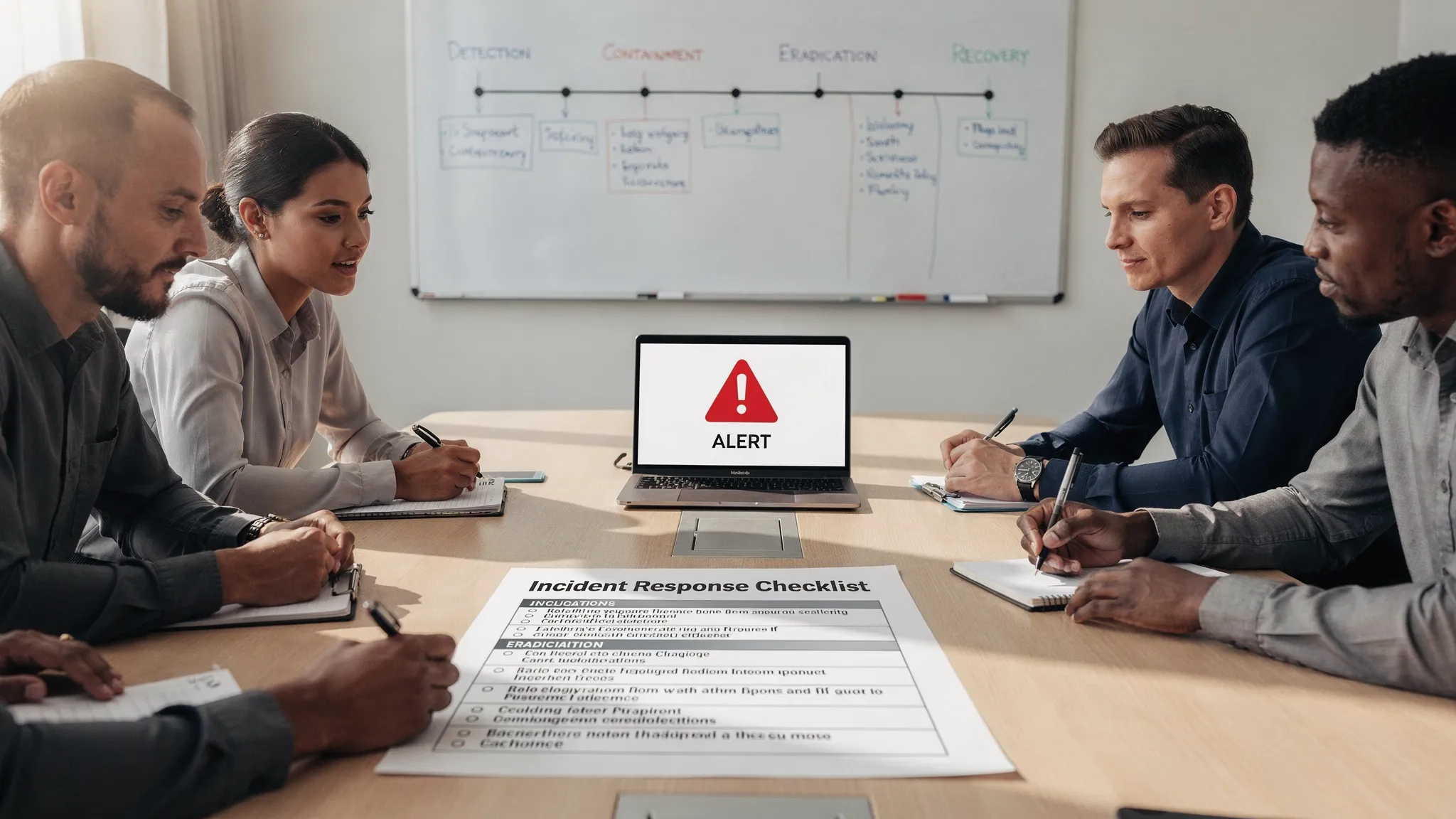
For guidance on establishing the privacy side of readiness, you can also reference PLMC’s article on data protection basics for Jamaican firms and adapt it into a short operational runbook.
A 30-day implementation plan (built for busy Jamaican teams)
If you need traction fast, aim for deliverables that create immediate risk reduction and evidence.
Week | Outcome | What you produce (evidence) |
Week 1 | Ownership and scope | Named privacy lead, approved action list, system list |
Week 2 | Visibility | Data inventory (top systems), vendor list, draft retention rules |
Week 3 | Control | MFA enabled where possible, access review started, vendor due diligence template |
Week 4 | Response readiness | Rights request intake process, incident workflow, staff awareness session |
This approach also scales: once the basics exist, you can deepen them with risk assessments, role-based training, and periodic assurance.
Common Jamaica-specific pitfalls to avoid in 2026
These issues come up repeatedly across industries:
WhatsApp as a system of record: great for speed, risky for long-term storage and uncontrolled forwarding.
Shared logins for front desks, customer service, or finance tools: convenient, but weakens accountability.
CCTV without clear retention and access rules: footage piles up, access expands, and purpose becomes unclear.
Vendor onboarding without privacy review: tools get purchased first, privacy questions come later.
Policies without training: staff cannot follow what they do not understand.
The fix is not perfection. The fix is a workable baseline that you continuously improve.
Frequently Asked Questions
Does the Data Protection Act apply to small businesses in Jamaica? Yes, in many cases. If you collect or use personal data about customers, employees, or clients, you should assume obligations apply and confirm your specific responsibilities.
What is the fastest way to improve data protection in my organisation? Reduce the data you collect, enable MFA on key accounts, and build a simple data inventory and vendor list. These steps reduce risk quickly and create evidence.
Do I need a dedicated Data Protection Officer (DPO) in Jamaica? Not every organisation needs a dedicated role, but every organisation needs clear accountability. Many businesses start by appointing a privacy lead and scaling the function as risk increases.
How should we handle employee personal data? Treat HR and payroll as high-risk: limit access, define retention periods, document lawful purposes, and separate sensitive information where possible.
What should be in a vendor contract for data protection? At a minimum, define the processing purpose, security expectations, confidentiality, breach notification duties, subcontractor controls, and return or deletion at end of service (as applicable).
If we use US-based or cloud tools, are we automatically non-compliant? Not automatically. Cross-border processing is common. The key is to understand the transfers, assess vendor safeguards, document your decisions, and be transparent with individuals.
Get practical help with data protection for your business
If you want to move from “we have a policy” to “we can prove compliance,” PLMC can support your organisation with Data Protection Act implementation, risk assessments, training, and broader GRC integration.
Start with a conversation and identify the highest-impact actions for your business: visit Privacy & Legal Management Consultants Ltd. to request a free consultation or explore available educational resources and training sessions.