

Cloud Exit Planning: Protecting Data When You Change Vendors
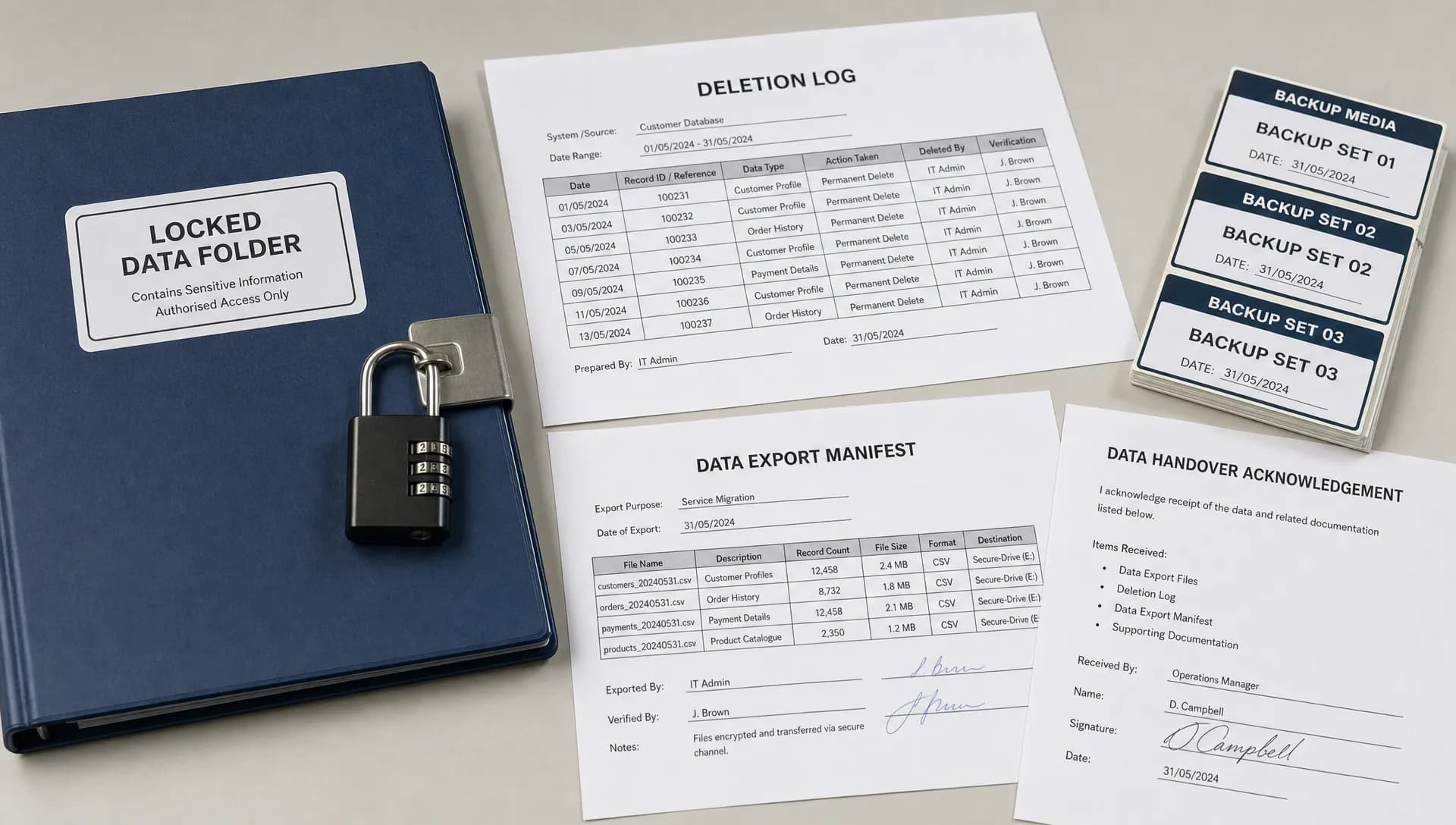
Changing cloud vendors can look like a technical project, but it is also a privacy, security, and governance event. For a short period, the same personal data may exist in the old cloud, the new cloud, exported files, temporary migration tools, staff laptops, logs, backups, and integration queues. If that transition is rushed, an organisation can lose control of the very data it is trying to protect.
For Jamaican organisations, cloud exit planning is especially important because the Data Protection Act, 2020 places accountability on organisations that determine why and how personal data is processed. Changing a vendor does not transfer that accountability away. If a cloud provider retains data longer than necessary, gives unclear deletion evidence, or moves data through an unapproved region, the organisation still has to answer for the risk.
A good cloud exit plan protects data before, during, and after the move. It also gives directors, executives, procurement teams, privacy leads, and IT managers confidence that the exit can be defended if a regulator, auditor, customer, or business partner asks what happened.
What cloud exit planning really means
Cloud exit planning is the documented process for ending or changing a cloud service while maintaining control over data, systems, access, records, and legal obligations. It applies to infrastructure, software as a service platforms, managed service providers, cloud backup providers, HR systems, CRM tools, accounting platforms, collaboration suites, and any other service that stores or processes organisational data.
The plan should not begin on the day the termination notice is sent. Ideally, it begins before the original contract is signed. If the business cannot answer how data will be returned, deleted, verified, and protected at the end of the relationship, it has not fully assessed the vendor risk.
Cloud exit planning should answer practical questions such as:
What data does the vendor hold, and in what format?
Which data must be migrated, archived, deleted, or retained for legal reasons?
Who approves the export, transfer, deletion, and final sign-off?
How will access be controlled while two environments are active?
What evidence will prove that the old vendor no longer holds data outside agreed retention periods?
These questions may seem operational, but they directly affect data protection compliance, business continuity, cyber security, anti-money laundering recordkeeping, and corporate governance.
Why data risk increases when changing cloud vendors
A cloud exit creates risk because normal controls are often stretched. Staff may be working against a contract deadline. IT teams may need to keep systems running while migrating data. Business users may export files to avoid disruption. Vendors may follow standard retention and backup schedules that do not match the organisation’s expectations.
The result is a period where duplication, confusion, and informal workarounds become more likely. This is where privacy failures often occur, not because anyone intended to mishandle data, but because no one clearly owned the exit process.
Exit risk | What can go wrong | Practical control |
Residual data | The former vendor keeps production data, backups, archives, or support copies longer than expected. | Require deletion timelines, backup handling rules, and written deletion evidence. |
Excessive migration | Teams export more personal data than needed to avoid missing anything. | Use data minimisation and migrate only what is required for business or legal purposes. |
Access drift | Old vendor accounts, admin users, API keys, or service accounts remain active after the move. | Maintain an access revocation checklist with named owners and dates. |
Loss of audit evidence | Logs and configuration records are deleted before the organisation preserves them. | Export relevant logs and change records before termination. |
Cross-border uncertainty | Data is routed or stored in locations not reviewed during the original assessment. | Confirm hosting regions, sub-processors, and transfer safeguards before migration. |
Business pressure | Teams bypass controls because the old service is about to expire. | Build a transition timetable with privacy, IT, legal, procurement, and business sign-off. |
The key lesson is simple: during a vendor change, data protection risk is not limited to the old provider. It also sits in the handover process.
Build exit rights into the contract before you need them
The best cloud exits are negotiated at the start of the vendor relationship. A contract that says only that data will be returned on termination is usually not enough. The organisation needs clear operational rights, timeframes, responsibilities, and evidence requirements.
If your organisation is still selecting a provider, the exit conversation should sit alongside onboarding due diligence. PLMC has previously outlined how privacy and compliance teams can approach vendor due diligence before engaging third parties, and cloud exit requirements should be part of that same risk-based review.
Strong exit clauses usually cover the following areas:
Data return format, including whether exports will be machine-readable, structured, complete, and usable without proprietary tools.
Transition assistance, including the level of vendor support available, the notice period required, and any limitations during contract termination.
Secure deletion, including deletion from production systems, staging environments, test environments, support repositories, and backups where feasible.
Sub-processor responsibilities, including how downstream providers will return or delete data.
Audit and evidence, including certificates of deletion, logs, tickets, or other proof that agreed actions were completed.
Costs, including any extraction, transition, storage, professional service, or early termination fees.
Incident obligations, including breach notification duties that continue during and after the exit period.
Contract wording should be specific enough for a project team to execute. A vague promise to assist with transition can become expensive or unhelpful when the organisation is under pressure.
Start with a data inventory, not the migration tool
Many cloud exit projects begin with a technical question: how do we move the data? A safer approach starts with a governance question: what data should move at all?
A data inventory helps the organisation separate active business data from obsolete, duplicate, unnecessary, or legally restricted records. This matters because a cloud migration is an opportunity to reduce risk, not simply copy old problems into a new environment.
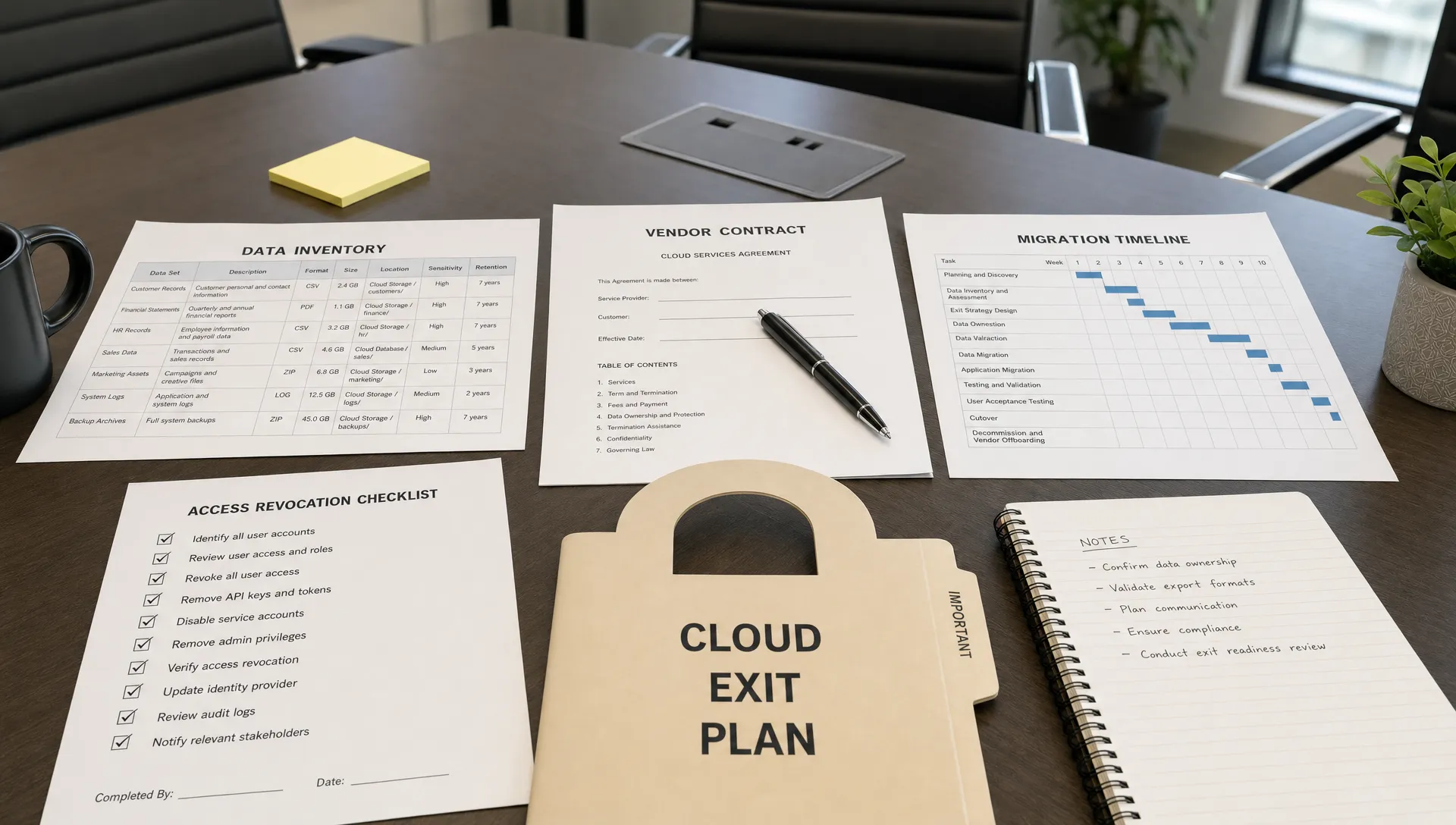
A practical exit inventory should identify the dataset, business owner, system owner, data categories, sensitivity level, retention requirement, legal or contractual restrictions, hosting location, and destination. It should also identify integrations, API feeds, user exports, automated reports, and third-party connectors that may continue sending data to the old vendor unless they are disabled.
This is particularly important for personal data, employee records, customer records, financial data, health-related information, children’s data, identification documents, and anti-money laundering records. Some records must be retained for legal or regulatory reasons. Others should be deleted because the organisation no longer has a valid business need for them.
A simple inventory does not have to be perfect to be useful. It must be accurate enough to support decisions, assign accountability, and show that the organisation considered data protection obligations before acting.
Protect the migration window
The migration window is often the highest-risk stage of the exit. Data may be in transit, users may have access to both platforms, and project teams may create temporary files for testing or reconciliation. Controls during this stage should be planned, documented, and monitored.
Start by limiting who can export, receive, transform, and upload data. Migration access should be role-based and time-limited. Privileged accounts should use multi-factor authentication. Temporary accounts should have expiry dates. Shared accounts should be avoided because they make accountability difficult.
Data should be encrypted in transit and, where appropriate, at rest during staging. Exports should be stored in approved locations only, not personal drives or unmanaged devices. If files must be transferred between teams or vendors, the method should be agreed in advance and logged.
Validation is also essential. Before the old environment is retired, the business should confirm that required records moved correctly, data relationships were preserved, access permissions were applied correctly, and unnecessary data was not migrated. This is not only a technical quality check. It is part of protecting confidentiality, integrity, and availability.
For organisations strengthening the security side of this process, practical measures such as multi-factor authentication, asset visibility, backup discipline, and access control are covered in PLMC’s guide to cyber data protection controls that reduce real risk.
Do not treat deletion as an informal promise
Once migration is complete, the old vendor should not become a forgotten data repository. Deletion must be managed as a formal compliance task.
The organisation should confirm what data was returned, what data was migrated, what data was intentionally retained, and what data must be deleted. It should also understand how the vendor handles backups. Some providers cannot immediately delete individual customer data from immutable backups without affecting system integrity, but they should be able to explain the backup retention cycle, access restrictions, and eventual overwrite or deletion process.
A deletion certificate can be helpful, but it should not be treated as magic. The organisation should know what the certificate covers, who issued it, whether sub-processors are included, and whether any exceptions remain. If the vendor retains limited data for legal, billing, security, dispute, or audit purposes, that retention should be documented and justified.
An evidence pack for a cloud exit may include:
Final data inventory and migration scope.
Export records, transfer logs, and reconciliation results.
List of accounts, keys, tokens, and integrations disabled.
Confirmation of deleted environments, support files, test data, and temporary exports.
Vendor deletion certificate or written attestation.
Backup retention explanation and final deletion date where applicable.
Internal approval from privacy, IT, legal, procurement, or executive owners.
Good evidence protects the organisation if questions arise months later. It also helps the next vendor review because the organisation can show that it manages vendor exits in a disciplined way.
Align the exit with Jamaica data protection compliance
Cloud exit planning should be tied to the organisation’s wider privacy programme. The Data Protection Act, 2020 is built around principles such as fair and lawful processing, purpose limitation, data minimisation, accuracy, retention control, security, and respect for data subject rights. A vendor change can affect all of these principles.
For example, if the organisation migrates customer records that are no longer needed, it may be increasing retention risk. If access permissions are copied incorrectly, employees may see personal data they should not access. If the former vendor continues to store data after the contract ends, the organisation may struggle to show control over processing. If data moves through another country, cross-border transfer considerations may arise.
The exit should also reflect sector obligations. A financial institution, for instance, may need to preserve certain records for anti-money laundering compliance. A healthcare provider may have heightened confidentiality concerns. A school, insurer, employer, charity, or professional services firm may face different expectations from clients, regulators, and contractual partners.
This is why cloud exits should not be left only to IT. A well-governed exit brings together technology, privacy, legal, procurement, records management, risk, and business leadership. Each group sees a different part of the risk.
A practical cloud exit checklist
Use the checklist below as a planning tool before issuing termination notice or starting migration.
Phase | Key question | Evidence to keep |
Planning | Do we know what data the vendor holds and why? | Data inventory, system map, processing summary. |
Contract review | Do we have clear rights to export, migrate, delete, and verify data? | Contract clauses, data processing terms, service schedules. |
Migration design | Are we moving only the data we need? | Approved migration scope, retention decisions, business sign-off. |
Security controls | Is migration access restricted, monitored, and time-limited? | Access list, MFA confirmation, transfer logs, admin activity logs. |
Cutover | Have integrations, API keys, user accounts, and automated feeds been changed or disabled? | Revocation checklist, configuration records, vendor tickets. |
Closure | Can we prove what was returned, retained, deleted, or scheduled for deletion? | Deletion certificate, backup statement, final sign-off pack. |
This checklist should be adapted to the size and risk profile of the organisation. A small business moving a payroll platform may need a lighter version. A regulated entity moving large volumes of sensitive customer data will need a more formal process, stronger documentation, and earlier legal and privacy review.
Common mistakes to avoid
The most common mistake is waiting too late. Once the contract is ending, the organisation has less leverage, less time, and fewer options. Exit requirements should be negotiated before onboarding and reviewed before renewal.
Another mistake is assuming that migration equals deletion. Moving data to a new cloud provider does not automatically remove it from the old one. Temporary exports, backups, logs, support tickets, email attachments, and test environments can all keep data alive after the business thinks the project is finished.
Organisations also underestimate the importance of user access. During a cloud change, staff may ask for broader permissions so they can move quickly. That may be reasonable for a short period, but it must be approved, monitored, and removed. Permanent emergency access is a governance failure waiting to happen.
Finally, many teams fail to preserve records before closing the old account. Audit logs, configuration settings, consent records, access histories, and incident records may be needed later. Export them before the vendor relationship ends.
Frequently Asked Questions
What is cloud exit planning? Cloud exit planning is the process of ending or changing a cloud vendor while protecting data, maintaining business continuity, controlling access, and documenting return, migration, retention, and deletion decisions.
When should an organisation create a cloud exit plan? The best time is before signing the cloud contract. Exit clauses, data return formats, deletion evidence, support obligations, and transition costs should be agreed before the organisation depends on the service.
Does the old vendor have to delete all data immediately? Not always. Some data may need to be retained for legal, security, billing, backup, or dispute reasons. The organisation should document what remains, why it remains, who can access it, and when it will be deleted.
How does cloud exit planning support data protection compliance in Jamaica? It helps organisations demonstrate accountability under the Data Protection Act, 2020 by showing that personal data was migrated, secured, retained, or deleted in a controlled and documented way.
Who should be involved in a cloud exit project? IT should be involved, but not alone. Privacy, legal, procurement, risk, records management, cyber security, and the relevant business owner should all participate based on the sensitivity and importance of the data.
Make cloud exit planning part of your governance programme
Changing cloud vendors should not create hidden data exposure. With the right planning, your organisation can reduce vendor risk, preserve evidence, protect personal data, and support compliance with Jamaica’s Data Protection Act, 2020.
Privacy & Legal Management Consultants Ltd. supports organisations with data protection implementation, governance, risk, compliance, cyber security alignment, training, and privacy awareness. If your organisation is preparing to change cloud vendors or review an existing vendor relationship, consider seeking guidance before the exit begins through Privacy & Legal Management Consultants Ltd..