

What Does Jamaica’s Office of the Information Commissioner Do?
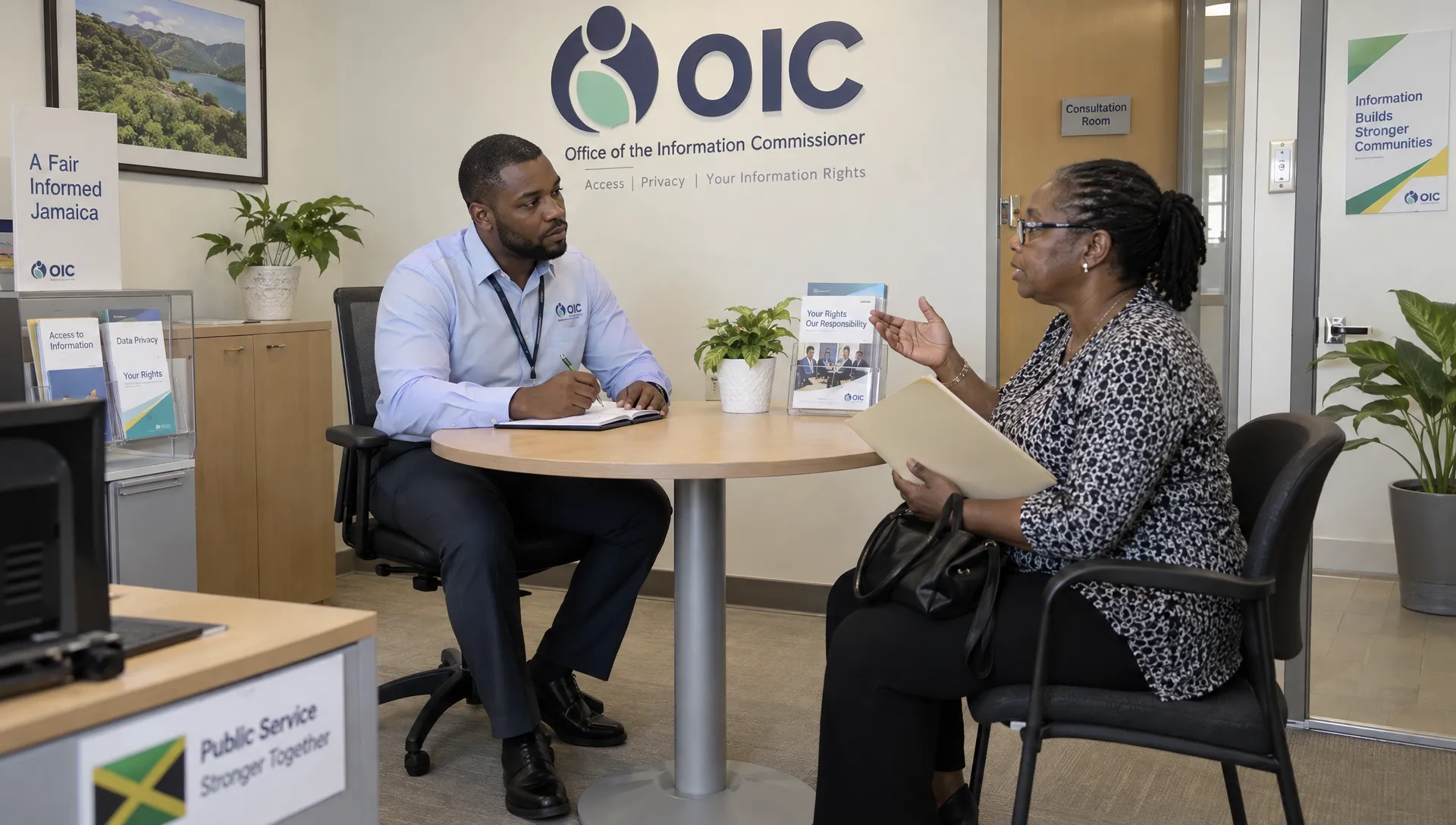
Jamaica’s Office of the Information Commissioner (OIC) oversees how organisations comply with the Data Protection Act, 2020. Its work includes supervising data protection, administering data controller registration, considering privacy complaints and using statutory powers to address non-compliance. It also helps organisations and individuals understand their responsibilities and rights.
For a business, the OIC is the regulator to understand when handling customer, employee or other personal information. For an individual, it provides a route to raise concerns about how that information is being used. Knowing the difference between those roles helps you approach the right organisation with the right evidence.
What is Jamaica’s Office of the Information Commissioner?
The OIC is Jamaica’s data protection supervisory authority. The Commissioner exercises powers provided by the Data Protection Act, while the office supports the regulatory and administrative work needed to carry out that mandate.
Its remit concerns personal data, meaning information relating to an identifiable individual. This can include employee records, customer contact details, identification documents and patient information. Data protection is therefore not limited to cybersecurity or information stored on computers. Paper files and other records can also fall within the Act’s scope.
The distinction between the regulator and the regulated organisation matters. A company that decides why and how personal data is processed is generally acting as a data controller. It remains responsible for meeting its obligations. The OIC supervises compliance; it does not take over the company’s privacy programme.
For current forms, official notices and published guidance, consult the OIC’s official website. Registration procedures and regulatory instructions should be checked against current official material rather than an old checklist.
The OIC’s main responsibilities
The office combines oversight, administration and public education. These functions support compliance, but they serve different purposes.
Responsibility | What it means in practice | Why it matters |
Data controller registration | Administering registration requirements under the Act | Helps establish regulatory visibility of controllers and their processing activities |
Compliance supervision | Assessing whether personal data processing follows the law | Encourages organisations to maintain lawful, accountable practices |
Complaint handling | Considering concerns about the processing of personal data | Gives individuals a route to seek regulatory scrutiny |
Investigation and enforcement | Using statutory powers to obtain information and address contraventions | Makes compliance more than a voluntary commitment |
Guidance and awareness | Explaining rights, responsibilities and good data protection practices | Helps organisations and the public understand the law |
Administering data controller registration
Registration is a regulatory obligation, not a marketing badge. Organisations need to determine their registration duties under the Act and applicable rules, then provide accurate information through the prescribed process.
The OIC administers that process. However, registration does not certify that every activity an organisation carries out is compliant. A registered controller can still mishandle an access request, retain records unnecessarily or use inadequate security measures.
If registration is your immediate concern, PLMC’s guide to data controller registration in Jamaica explains the issue separately. The broader point is that registration and day-to-day compliance are distinct responsibilities.
Promoting understanding of data protection
The OIC also has an educational role. Public information and regulatory guidance help people understand their rights and help organisations interpret their responsibilities.
This matters because privacy failures are not always caused by sophisticated cyberattacks. Sending a document to the wrong recipient, giving staff unnecessary access to personnel files or collecting more information than a service requires can all create problems.
Guidance can inform an organisation’s decisions, but it does not remove the need for its own assessment. A business must consider its actual processing activities, the information involved and the risks to individuals. A generic privacy notice copied from another website is not a substitute for that work.
Investigating concerns and enforcing the Act
The Commissioner has statutory mechanisms for examining compliance, including powers to require information and issue enforcement notices where the legal conditions are met.
These powers allow the regulator to look beyond what an organisation says in its privacy policy. Relevant evidence may include records of processing, correspondence, access controls and explanations of why information was collected or disclosed.
An enforcement notice is a formal regulatory measure, not simply informal advice. Organisations receiving one should identify the required action, applicable deadlines and any available legal review or appeal procedures. Serious matters can also engage offences and court processes under the Act. A complaint does not, however, automatically produce a fine, prosecution or compensation payment.
How the OIC helps people with privacy complaints
An individual may approach the OIC with concerns about personal data processing that appears inconsistent with the Act. Examples include an unexplained disclosure, disputed handling of an access request or continued use of information for a purpose the person questions.
Where appropriate, raising the matter with the organisation first can clarify what happened and create a useful record. This is a practical step, not a reason to delay urgent regulatory contact when circumstances warrant it.
A clear complaint should identify the organisation, explain the processing at issue and include relevant correspondence. Dates, copies of requests and the organisation’s responses are more useful than an unsupported statement that it has “breached privacy”. Avoid submitting unrelated personal information about yourself or others.
The OIC considers the issue within its legal remit. It is not the individual’s private lawyer, and it does not guarantee the outcome requested by a complainant.
For organisations, a complaint is also an opportunity to identify a recurring weakness. PLMC’s guidance on handling data subject complaints fairly and quickly explains how to manage the internal response without treating every concern as an adversarial dispute.
What falls outside the OIC’s role?
The OIC is not a general customer service complaints body. A disagreement about a refund, an employment decision or the quality of a service does not become a data protection matter simply because the organisation holds personal information.
A dispute can nevertheless involve more than one legal issue. For example, an employee challenging dismissal may also have a separate concern about disclosure of medical information. The privacy element and the employment element may require different routes.
The office also does not replace the police when a matter involves suspected crime, or the courts where judicial remedies are needed. Nor should it be confused with the process for obtaining public records under Jamaica’s Access to Information Act. Access to your own personal data and access to government-held information are related concepts, but they operate under different legal frameworks.
Does the OIC regulate overseas organisations?
The Act’s territorial provisions determine whether an overseas organisation or processing activity falls within Jamaica’s data protection framework. Location alone does not settle every case.
For someone in Jamaica seeking care from Beenleigh Dental, a dental clinic in Queensland, the relevant privacy regulator would need to be identified by considering the provider and the processing involved. The presence of a Jamaican customer does not, by itself, establish OIC jurisdiction.
Likewise, sending personal data abroad does not automatically remove a Jamaican controller’s responsibilities. Cross-border transfers require their own assessment, separate from the question of which regulator can oversee a particular provider.
What should an organisation do when the OIC contacts it?
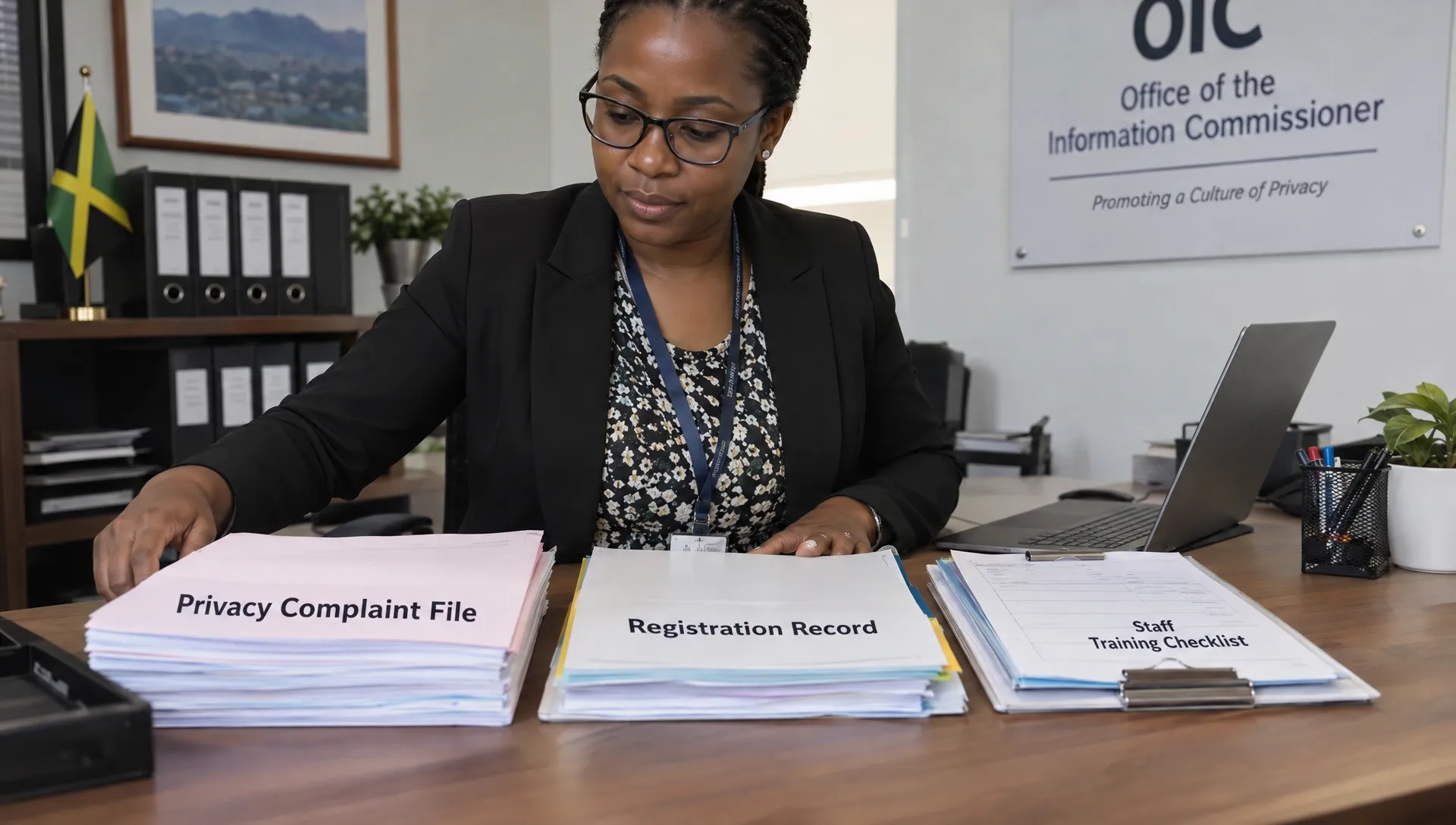
Start by establishing what the communication actually requires. A request for information, a registration query and an enforcement notice should not be treated as interchangeable.
Assign responsibility to someone with the authority to coordinate the response. Depending on the issue, that may involve the data protection officer, legal advisers, information security staff and the team responsible for the affected records.
Preserve relevant material and check the facts before responding. Do not delete records to make a problem disappear or send an unverified explanation merely to meet an internal target. Identify any deadline in the communication and seek clarification promptly if its scope is unclear.
A useful response explains the processing activity, provides the requested evidence and distinguishes established facts from matters still being investigated. If corrective action is necessary, describe what will change and who will implement it.
For a personal data breach, assess the Act’s notification requirements immediately. Reporting to the Commissioner and notifying affected individuals are legal questions with their own requirements; they should not be postponed until a customer complains or every technical detail is known.
The OIC, your data protection officer and a consultant have different jobs
These roles complement one another, but they are not substitutes.
The OIC supervises and regulates. An organisation’s data protection officer, where required, performs the functions assigned under the Act and supports internal oversight. Operational teams implement controls, while management must ensure the organisation has the resources and accountability to meet its duties.
A consultant can help assess gaps, design procedures and train staff. That support does not transfer the controller’s legal responsibilities to the consultant or make the consultant a representative of the regulator.
This distinction is particularly useful when preparing for regulatory scrutiny. The goal is not simply to produce a folder for the OIC. It is to demonstrate that the organisation understands its processing and can explain how its safeguards work in practice.
For example, a written access-control policy should match actual staff permissions. A retention schedule should correspond to what happens to old records, including paper files and copies held by service providers.
Frequently asked questions
Is the OIC responsible for Jamaica’s Data Protection Act, 2020? The OIC supervises compliance with the Act and carries out the Commissioner’s statutory functions. Organisations remain responsible for complying with their own legal obligations.
Does registering with the OIC mean my organisation is fully compliant? No. Registration addresses a specific regulatory requirement. Lawful processing, security, data subject rights and other duties continue to apply after registration.
Should I send a request for my personal data directly to the OIC? Normally, an access request goes to the organisation holding or controlling the relevant information. The OIC’s role is regulatory oversight, including consideration of concerns about how a request or other processing activity has been handled.
Can a small business come under the OIC’s oversight? Yes. Size alone does not determine whether the Act applies. A small organisation handling personal data should assess its activities and the applicable legal requirements rather than assume it is exempt.
Is the OIC the same as a GDPR regulator? The OIC administers Jamaica’s data protection framework. The European Union’s GDPR is a separate law with its own supervisory authorities, although some organisations may need to assess obligations under both frameworks.
Get practical support with your organisation’s responsibilities
Understanding the OIC’s role helps you distinguish regulatory requirements from internal implementation work. The next step is to assess whether your organisation’s records, procedures and staff practices support its legal duties.
Privacy & Legal Management Consultants Ltd. provides data protection implementation, risk assessment, training and wider governance, risk and compliance services for organisations in Jamaica. You can request a free consultation with PLMC to discuss your organisation’s needs and identify practical next steps.